Get email alerts on the Environment topic
No spam. Unsubscribe anytime.
Tiered PFAS limits for biosolids proposed to protect farms and drinking wells; utilities ask for timing and method flexibility
Summary
SB 719 would set tiered combined‑PFOA+PFOS thresholds for land application of biosolids (mitigation for 25–50 ppb; ban above 50 ppb) and expand pretreatment/source‑tracking authority for wastewater utilities. Farmers and waterkeepers supported limits; utilities sought method and timeline amendments to avoid large cost shifts to ratepayers.
Sen. Sarah Love presented SB 719 as a targeted, stakeholder‑driven bill to address PFAS accumulating in land‑applied biosolids and to protect farmers, groundwater users and local food systems.
The bill establishes a three‑tier approach: biosolids that test above 50 parts per billion (combined PFOA+PFOS) would be prohibited from land application; biosolids between 25 and 50 ppb would trigger a mitigation framework administered with MDE (setbacks, timing restrictions, blending and other risk‑reduction measures); utilities would be empowered to use and strengthen pretreatment authorities to identify and require actions from high‑concentration dischargers upstream.
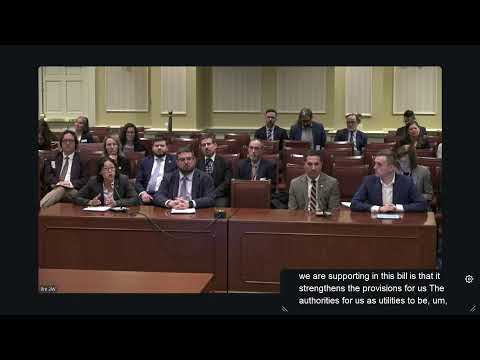
Utility, county and municipal witnesses backed the policy goal but requested technical amendments on deadlines, analytical method sensitivity and temporary risk‑reduction measures to preserve operational continuity and affordability. WSSC and Baltimore City asked for extended compliance timelines and clarified authorities to manage cross‑jurisdictional discharges.
Farmers and waterkeepers urged prompt limits, citing cases in other states where biosolids PFAS contamination damaged farms and markets. Public‑health testimony emphasized risks to private well users and farm families. MDE supported a framework with reasonable, evidence‑based limits and called for a phased implementation and regulatory detail to ensure reliable lab methods and startup support.
Senators closed the hearing with praise for the collaborative interim process. The sponsor and agency indicated they would work on technical amendments to address lab method, ratepayer and timeline concerns.
AI generated
The text on this page is AI generated. Summaries, highlights, analysis, and video transcripts are all produced from the original source material.
AI can make mistakes, so if you spot one, and we will fix it for everyone.
Note: the source content is unaltered by us. Any content source we link to, be it a video, an audio recording, or a document, is presented exactly as its publisher released it. That publisher is usually a government body, sometimes an individual official or another organisation.