
Appeals court confronts claim that judge’s handling of holdout juror coerced verdict
Get AI-powered insights, summaries, and transcripts
Subscribe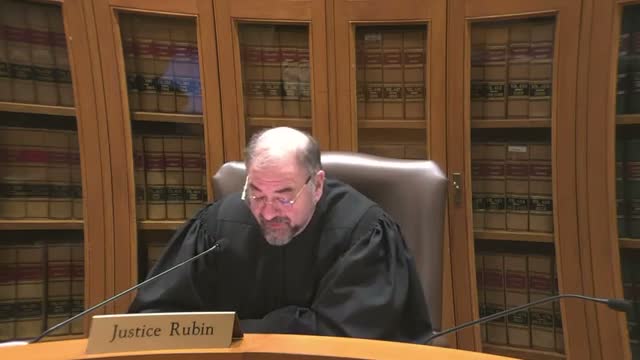
Summary
In Commonwealth v. Pero, defense counsel said the trial judge’s colloquy with juror No. 9 and return to deliberations created a coercive environment requiring a mistrial or Tuohy/Rodrigues instruction; the Commonwealth argued the judge acted within discretion under SJC guidance.
Jennifer Peterson told the panel she believed the jury’s deliberations produced a lone holdout (juror No. 9) who reported pressure and that the judge’s post-colloquy instructions effectively pushed the juror back into the room and risked coercion. Peterson urged that the trial judge’s conduct created structural error, arguing the judge should have given a full Tuohy/Rodrigues instruction or declared a mistrial.
The court queried the standard of review and the appropriate remedy. One justice observed the trial judge avoided asking deliberation content, as required by precedent, and asked whether that limited what could be done to explore possible coercion. Peterson argued the judge should have given Tuohy again and emphasized that the juror repeatedly said “no” to conceding his position; she characterized the exchange as leaving the juror “squeezed” by fellow jurors and then by the judge.
Jesse Crane, arguing for the Commonwealth, responded that the judge followed SJC protocols (the appendix guidance) and that Tuohy/Rodrigues is not mandatory; the court has discretion and the record did not compel a conclusion of coercion. The panel debated whether the juror’s statements (and subsequent public affirmation of the verdict in court) were sufficient to show coercion.
Why it matters: The court’s decision will clarify how lower courts must respond when a juror appears ambivalent or indicates pressure during deliberations, and what limited remedies appellate courts may require when jury-management choices are contested.
Outcome: The case was submitted following argument.