
Appeals court asked to weigh bounds of police testimony about field-sobriety training and impairment
Get AI-powered insights, summaries, and transcripts
Subscribe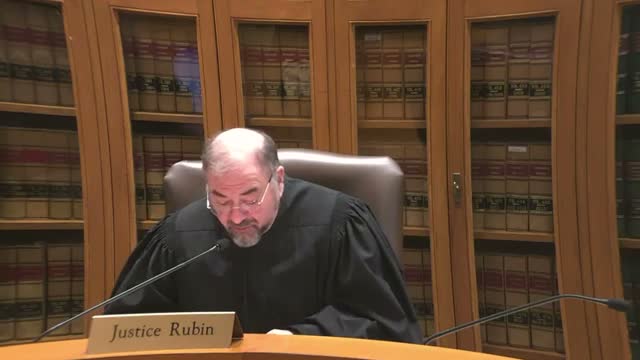
Summary
In Commonwealth v. Aguilar, the defense argued police testimony and prosecutorial framing linked officers’ training to the ultimate issue of ability to drive, requiring a model jury instruction; the Commonwealth said testimony was factual and not expertized and that jury instructions sufficed.
Ann Maurrer argued the trial court erred by permitting testimony and argument that, when taken together, allowed the jury to treat officers’ training and field-sobriety administration as proxy expert opinion about whether the defendant could safely operate a motor vehicle. Maurrer pointed to testimony where an officer described field-sobriety tests as designed to detect whether a person is ‘good to operate a motor vehicle’ and argued that linking training, test descriptions, and prosecutorial remarks risked converting lay testimony into an impermissible ultimate-issue opinion.
The justices asked whether the record supported a finding of substantial risk of prejudice, and whether the defense waived some remedial requests. Commonwealth counsel replied that officers’ testimony was factual, contextualized, and that the judge granted supplemental field-sobriety instructions the defense requested; the court heard extended colloquy on the choice of words such as ‘impaired’ versus ‘intoxicated,’ and whether the prosecutor’s opening and closing arguments improperly blended training and ultimate-issue assertions.
Why it matters: The court’s ruling will refine when police testimony about training and field-sobriety administration crosses the line into an expertized statement about driving ability and under what circumstances model jury instructions are required.
Outcome: Argument submitted.