
Harahan police department seeks major funding increases as council questions deficits and staffing plans
Get AI-powered insights, summaries, and transcripts
Subscribe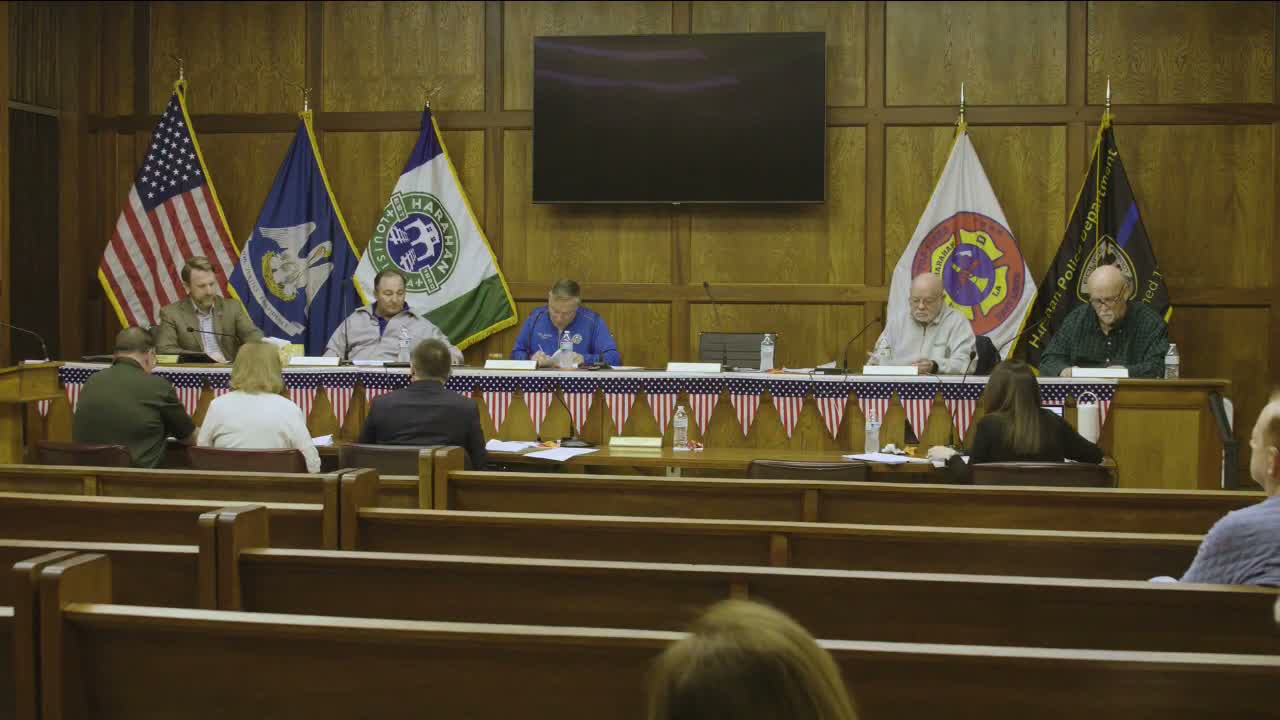
Summary
Police Chief Lapre asked the council for substantial increases to the department’s budget, citing contract costs, equipment needs and lawsuits; council members pressed for data tying part-time hires to overtime savings and discussed millage renewal options to cover gaps.
Police Chief Lapre told the Harahan City Council during a Dec. 11 budget hearing that the police department is operating on tight resources and requested significant additional funding for 2026.
"You can't get Cadillac service on a Prius salary," Chief Lapre said, summarizing his view that the department’s current funding will not sustain the staffing and equipment levels he wants. He outlined several drivers of higher costs: ongoing contracts for Flock cameras (about $12,500 a year), an Axon body-camera contract he said totals roughly $33,000 a year with three years remaining, and an estimate of roughly $50,269 to upgrade computer units in 18 police vehicles.
Chief Lapre also highlighted legal costs and pending claims: he said the department is carrying a claim settlement and legal-fee exposure under a $100,000 deductible and that attorney fees have been incurred by outside counsel. He noted donations used for one-time purchases should not be treated as recurring revenue when preparing the 2026 budget.
Council members questioned detailed entries and whether part-time hires would meaningfully reduce overtime. The chief proposed hiring post-certified part-time officers at about $25 an hour to fill gaps; councilors asked to see a direct reconciliation showing that the proposed $78,000 in part-time wages would reduce overtime and total payroll burden. Finance Director Todd Turney and other council members pointed out civil service constraints that limit how part-time hiring can be used to replace full-time positions.
Members also discussed grants that appear in both expense and revenue lines. One councilor described grant entries as "blowing up" an expense total; the finance director explained such grants are budgeted with matching revenue entries and, under government accounting, typically net to a wash on the city’s bottom line.
Several council members said the police budget is the largest driver of the preliminary $846,000 citywide projected deficit for 2026 and committed to meet with the chief and finance staff to review line items and possible reallocations. Options discussed included midyear adjustments, using excess fire sales-tax dollars to help the police or pursuing a millage ballot measure to increase dedicated police funding. No new recurring appropriation was approved at the hearing.
Next steps: the council scheduled follow-up budget review meetings with the chief and finance staff to examine assumptions, verify retirement and overtime calculations, and model the savings (if any) from hiring part-time post-certified officers.
(Quotes and budget numbers are drawn from council discussion as recorded in the hearing transcript; final approved budget figures will be published in the adopted 2026 budget documents.)