
Harahan council considers reallocating fire sales-tax windfall and a millage strategy to close a budget gap
Get AI-powered insights, summaries, and transcripts
Subscribe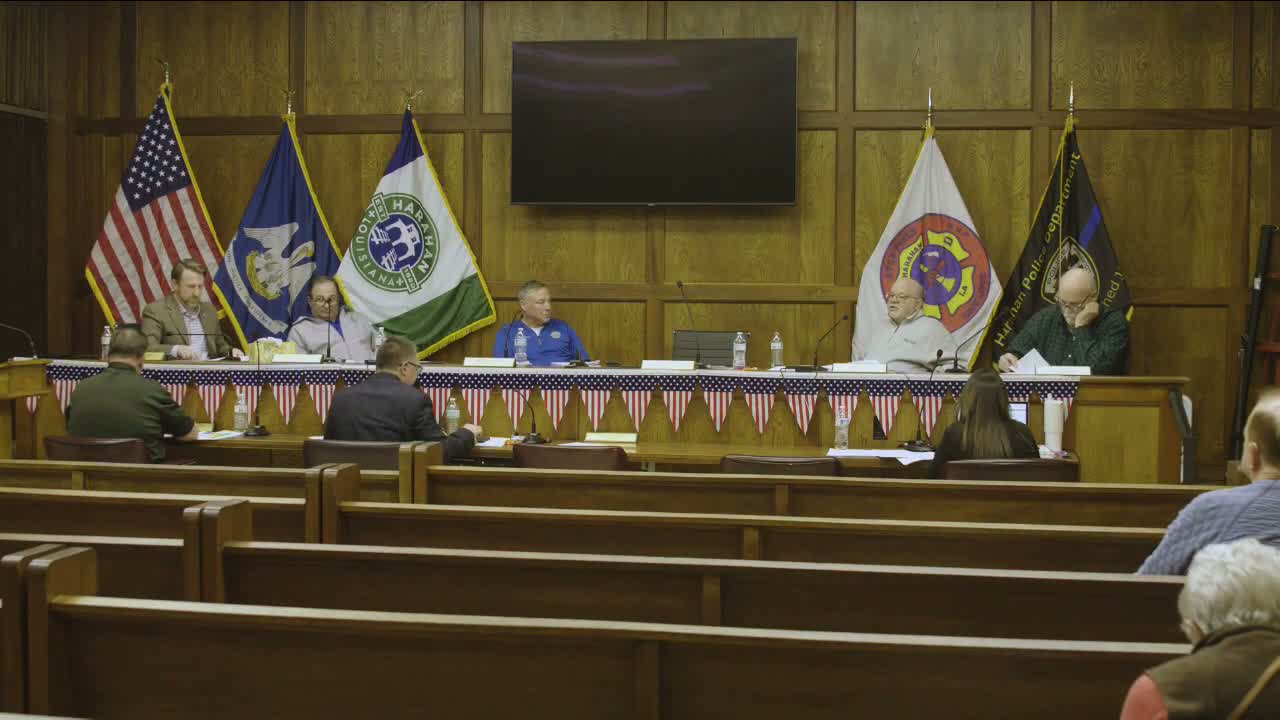
Summary
Facing a projected $846,000 city deficit, councilors discussed using excess fire sales-tax revenue to cover police shortfalls, creating a police capital fund from reallocations, and a possible repeal-and-replace millage strategy to increase dedicated police funding.
At the Dec. 11 budget hearing, Harahan council members debated short- and long-term approaches to closing a projected $846,000 city deficit in the preliminary 2026 budget.
One councilmember proposed reducing a planned $388,000 general-fund contribution to the fire department—leaving the fire department largely self-funded from an unexpected sales-tax windfall—and directing roughly $288,000 of that money to the police operating budget with $100,000 moved into a police capital fund for equipment and vehicles. The councilmember said the fire fund would still grow under the proposal and that the reallocation could plug a substantial portion of the police shortfall.
Council members emphasized this is a proposal for discussion rather than a finalized decision and said they would fine-tune numbers with the finance director before taking formal action. At the same time, members discussed a ballot strategy to renew the police millage (currently 5 mills) or pursue a "repeal-and-replace" measure to ask voters for a higher dedicated millage (for example, a 7-mill question with fallback to a 5-mill renewal if the larger measure fails) in upcoming elections.
Officials warned that relying on grant reimbursements or assumed increases in traffic-enforcement revenue carries risk and that one-time state capital or ARPA funds cannot sustain ongoing operating costs. Several councilors reiterated a preference for scrubbing line items, modeling scenarios, and using surplus or one-time funds for capital rather than recurring operating expenses.
The council agreed to meet with department heads and the finance director in the coming days to produce a set of options for balancing the 2026 budget and to determine whether a millage election should be scheduled in 2026 or 2027.