
Judge hears five pretrial motions in Krieger case, sets written rulings and trial logistics
Get AI-powered insights, summaries, and transcripts
Subscribe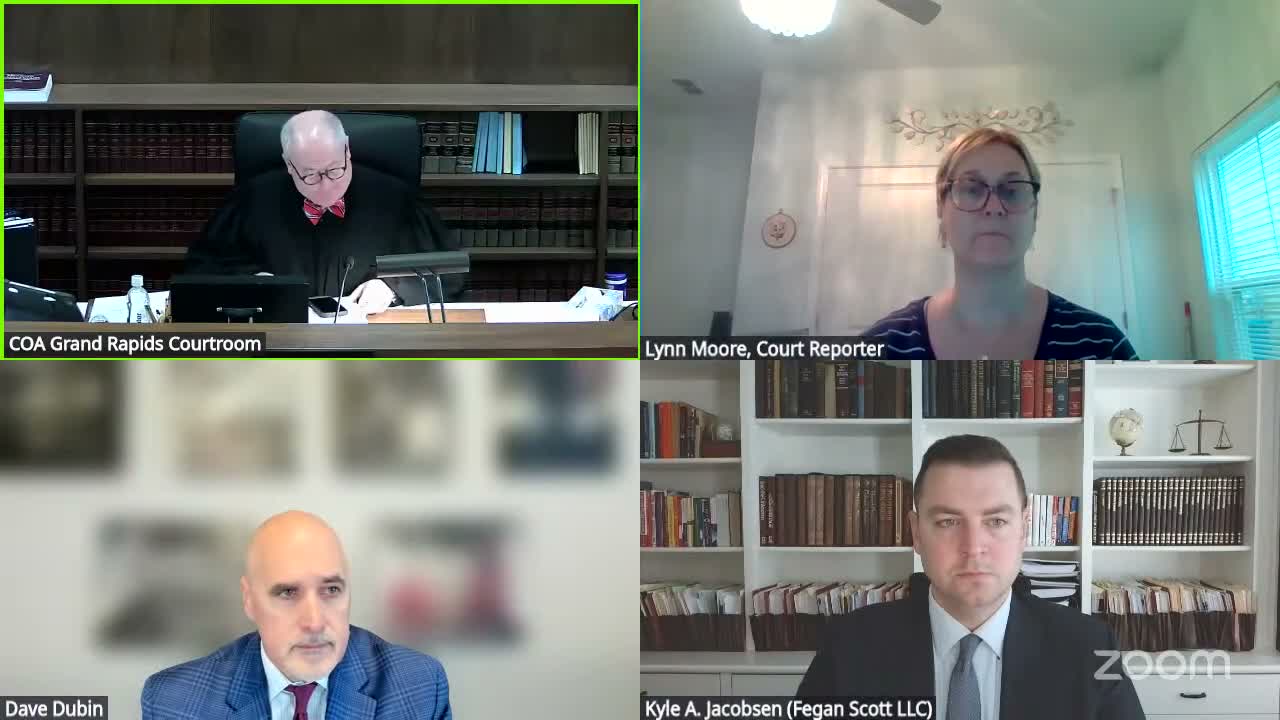
Summary
Judge Redford took five pretrial motions under advisement in Krieger v. Michigan agencies and told parties he will issue a written opinion by Thursday; he reiterated a Jan. 5 pretrial conference and a Jan. 12 trial start and told lawyers to finalize exhibits and witness logistics.
Judge John Redford convened a Dec. 5, 2025 hearing on five pretrial motions in David Krieger et al v. Michigan Department of Environment, Great Lakes and Energy et al., Court of Claims case number 20-94MM. The judge opened the record by noting the date and the caption and then invited appearances from plaintiff and defense counsel.
The court listed the five motions to be argued — a defense motion to bar evidence based on a May 28, 2019 circuit‑court order about the "normal lake level," two plaintiff motions seeking to exclude the Independent Forensic Team (IFT) report and opinion testimony from nonretained IFT members, a defense motion to preclude testimony about governmental inaction, and a defense motion to exclude or limit reliance on modeling by Dr. David Williams. Each side had 15 minutes per motion, with up to three minutes for rebuttal.
Throughout the morning the court actively questioned counsel about legal thresholds, evidentiary foundations and discovery efforts — pressing defendants on how collateral‑estoppel elements would be met and plaintiffs on why nonretained IFT members had not produced individual expert disclosures. Assistant Attorney General Richard Cole argued that the May 28, 2019 order had findings plaintiffs either joined or were in privity with; plaintiffs replied that many class members were not parties and that concealment and notice issues matter for due process and admissibility.
On the IFT disputes, defense lawyers told the court the 500‑page IFT report is relied upon industry‑wide and by many experts, and that some IFT authors (including John France) could be called to testify. Plaintiffs said that while raw facts and data in the report are admissible, the testimonial opinion portions prepared by non‑testifying IFT members are hearsay under People v. Fackelman and MRE 702/703 unless the authors are available for live testimony and their methodologies disclosed.
Defense counsel also pressed the court to preclude testimony framed as "governmental inaction" because Michigan law, they said, has required affirmative government action for inverse‑condemnation (takings) claims; plaintiffs countered that context and a pattern of acts and omissions are relevant under Rule 401 even if inaction alone does not establish constitutional liability.
Judge Redford did not announce rulings from the bench. He told the parties he planned to issue a relatively brief opinion and order addressing all five motions by the end of business next Thursday so that counsel could prepare for the January schedule. For planning purposes he said he expected the Jan. 5 pretrial conference and a Jan. 12 trial start to proceed and instructed parties to deliver exhibit binders and final witness logistics in accordance with existing orders. The judge cautioned that, while parties have a right to seek interlocutory review, he would be likely to deny motions for stays that would delay the scheduled trial.