
Supreme Judicial Court hears dispute over hotel screening, standing and Anti-SLAPP review
Get AI-powered insights, summaries, and transcripts
Subscribe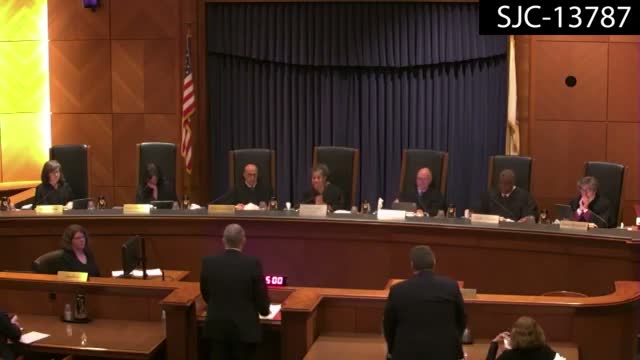
Summary
The Supreme Judicial Court heard arguments in an appeal by Lynn Allagard contesting a zoning board's approval of a hotel expansion and the hotel's counterclaim alleging abusive process under the Anti-SLAPP statute, focusing on whether Allagard has standing and whether the trial court properly applied the Anti-SLAPP second-prong test. Counsel disputed factual evidence about screening vegetation and whether privacy concerns are cognizable under zoning.
The Supreme Judicial Court on oral argument considered whether a neighbor has standing and whether an abusive-process counterclaim properly falls within the Anti-SLAPP statute in a dispute between Lynn Allagard (trustee) and Harborview Hotel Owner LLC over a hotel expansion and a requirement to maintain screening between properties.
At argument, Neil Hartsell, counsel for Allagard, told the court that Allagard agreed in 2008 to support hotel renovations on the condition that screening be installed to prevent guests from looking into her backyard and that the contract includes a successors-and-assigns clause. "She agreed to support your construction provided that screening was put in that would prevent the whoever's on the hotel side looking into her backyard," Hartsell said, citing a written agreement dated April 16, 2008.
Hartsell said the hotel is a long-established, preexisting nonconforming commercial use and that a later permit relocated what he identified as the Pease Cottage, changing the effectiveness of screening and allowing views into Allagard's yard. He argued the zoning board abused its discretion by granting the 2023 permit without adequately considering neighborhood impacts and whether the screening requirement, as applied, would prevent the new views.
Defense counsel Kevin O'Flaherty, representing Harborview Hotel Owner LLC, told the court the trial judge (Judge Buckley) conducted the second-prong Anti-SLAPP analysis and that the record supports finding Allagard's claims were frivolous. O'Flaherty said the hotel complied with permit conditions requiring screening and noted a regulatory path for final landscape approval: "We will comply with the conditions of the special permit and go back to the Martha's Vineyard Commission with a landscape plan," he said, arguing that until the Commission reviews the landscaping, Count 1 is legally infirm.
The justices pressed both sides on the applicable legal baseline for standing: whether a challenger must show the 2023 permit is materially worse than what the 2018 permit allowed, or whether the comparison is to conditions actually on the ground at the time of the zoning board's decision. One justice phrased the question as whether standing requires showing a material change from the 2018 permit to the 2023 permit or a change between the permit and existing physical conditions; counsel disagreed about how narrowly to define the baseline.
The defense also urged the court to consider material factual evidence in the affidavit and photographic record (including an affidavit by Mr. Janay and site photos) and to reject a broad reading of appellate dicta that would treat abusive-process claims as always subject to Anti-SLAPP dismissal. O'Flaherty further said the record contains evidence of a sustained campaign of appeals by neighbors and pointed to language in the record about the hotel's new owner, Bernard Chu, as context the court should review, though the justices noted Judge Buckley did not make findings on alleged motives in the first instance.
Both sides acknowledged unresolved factual disputes in the underlying case, including where particular photographs show landscaping on the property line and whether screening already installed satisfies conditions. The justices explored whether an evidentiary hearing would be required and whether the Anti-SLAPP framework demands a heightened showing beyond a simple failure on the merits.
The court heard argument but did not issue a ruling at the hearing. The case concerns the interplay of contract obligations, zoning review of nonconforming-use expansions, standing standards for adjacent owners raising privacy-related complaints, and when an abusive-process counterclaim may be resolved under the Anti-SLAPP statute. The justices will take the matter under advisement and issue a decision in due course.