Applicant outlines 100‑mile Cascade Renewable Transmission Project: 1,100 MW mostly underwater HVDC cable
Get AI-powered insights, summaries, and transcripts
Subscribe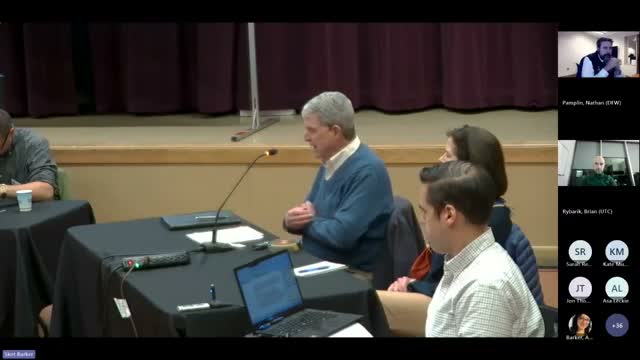
Summary
PowerBridge and partners described a roughly 100‑mile transmission link from The Dalles to Portland — about 80 miles underwater — using HVDC technology with 1,100 MW capacity, converter stations and seasonal in‑water construction windows; the proposal drew technical, tribal and environmental questions at an FSEC informational and land‑use hearing.
PowerBridge and project partners presented the Cascade Renewable Transmission Project on the evening the Energy Facility Site Evaluation Council (FSEC) held a public informational hearing in Stevenson, Washington. The company said the line would run roughly 100 miles from the Big Eddy substation near The Dalles, Ore., to a converter station in the Rivergate industrial area of Portland. "It is about 100 miles in length, of which about 80 is underwater," an applicant representative said.
The applicant described the proposal as a high‑voltage direct‑current (HVDC) cable buried roughly 10 to 15 feet beneath river sediment for much of its route, with converter stations at each end to change alternating current to direct current and back. Company speakers said construction would take about 3.5 years, in‑water work would be confined to winter “work windows” to avoid migration and spawning periods, and horizontal directional drilling would be used at river landings to avoid open‑trench shore impacts.
Why it matters: state law and regional clean‑energy goals were cited as drivers for the project. Applicants said the line would help move power from clean‑energy resources east of the Cascade Range to load centers west of the mountains and relieve long‑standing east‑west transmission constraints. The applicant said the corridor would transport about 1,100 megawatts — a significant but not sole contribution toward the multi‑thousand‑megawatt needs the region has identified.
Applicants outlined environmental and technical study work already undertaken, including biological assessments, sediment transport and geophysical surveys of the riverbed, and modeling of magnetic fields and temperature effects. They also identified permits and approvals they expect to need from FSEC in Washington, Oregon’s counterpart FSEC, and the U.S. Army Corps of Engineers.
What they told the council: the applicant emphasized routing choices intended to minimize shoreline impacts by staying toward the river center where permissible, avoiding navigation channels when possible, and siting above‑ground converter facilities on existing industrial land. "We have mapped the river bottom to know where there are areas of solid rock or steep side slopes where you can't run a jet plow," the speaker said.
Remaining questions and next steps: applicants said they are coordinating with Bonneville Power Administration and Portland General Electric on interconnection agreements and continuing tribal and agency consultation (including Section 106 cultural‑resource engagement). They provided contact details and directed members of the public to the project website and FSEC comment portal for written comments. The FSEC process outlined by staff includes SEPA review and the potential for an adjudicative hearing unless the project qualifies for expedited processing.