
San Mateo commission backs keeping Humboldt bike lanes, asks staff to add safety, lighting and parking relief
Get AI-powered insights, summaries, and transcripts
Subscribe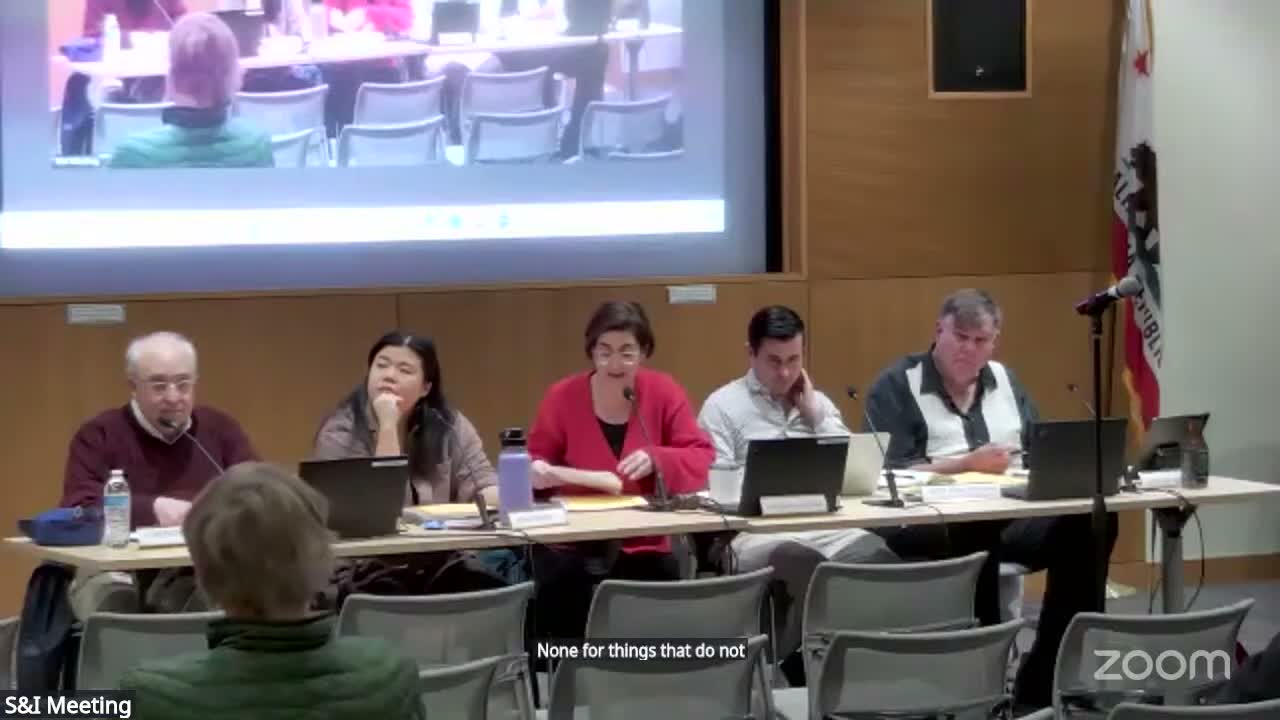
Summary
After months of outreach and hundreds of survey responses, the Sustainability and Infrastructure Commission recommended keeping Humboldt Street’s class 2 bike lanes while pursuing targeted safety and lighting upgrades and exploring parking-relief options; staff will bring a recommendation to City Council Feb. 2, 2026.
The San Mateo Sustainability and Infrastructure Commission on Dec. 10 recommended that City Council retain the class 2 bike lanes on Humboldt Street and direct staff to pursue additional safety and lighting upgrades while exploring targeted parking-relief measures.
Jey Yoo, engineering manager for Public Works, told the commission that staff "is seeking direction and recommendation from the commission on alternatives in this presentation to bring to city council on 02/02/2026." He presented Phase 2 findings from three community workshops, in-person and online surveys and mailed responses, and laid out four options: keep Humboldt as-is (alternative 1, $0), keep Humboldt and add calming/lighting plus explore a residential parking permit program (alternative 2, about $225,000), move the bike facility to Idaho (alternative 3, roughly $1.5 million including restoration), or move it to Fremont (alternative 4, roughly $1.46 million including restoration).
The presentation summarized extensive outreach — multilingual handouts and meetings, door-to-door canvassing, and over 400 validated survey responses — and reported that, overall, mailed, online and in-person tallies favored retaining Humboldt’s lanes. Yoo also described pilot lighting tests and engineering measures planned for bike-boulevard alternatives, and estimated that Idaho and Fremont concepts could reduce vehicle speeds into the mid-to-high-teens in many locations while restoring roughly 100 on-street parking spaces if the Humboldt lane were removed.
Public comment was lengthy and sharply focused: dozens of speakers supported keeping Humboldt’s lanes for safety and student access, while many neighborhood residents urged relief for chronic parking shortages. "Safety is obviously the number 1 concern for the city of San Mateo and its residents," said Mike Swire, co-lead of Move San Mateo, who presented petition and crash-data concerns during the group comment. By contrast, resident Kevin Simpson told commissioners that "alternatives 3 and 4 ... are simply unworkable," citing narrow cross streets and concerns about driveway visibility.
Commission discussion centered on three practical questions: whether grant money (including CDBG/HUD funds mentioned in the presentation) would have to be repaid if the lane were removed (staff said none is anticipated), how well the surveys were validated (staff said they removed redundant IPs and cross-checked video counts), and what a tailored parking program might require (staff described the city policy threshold of 50% response and two-thirds support and noted costs for administration and signage).
Several commissioners spoke in favor of alternative 2 — retaining Humboldt’s class 2 facility but adding lighting and calming measures and pursuing concrete parking relief. "I do support alternative 2," Commissioner Robbins said, while asking that the commission include a stronger commitment to parking-relief planning. Commissioner Kranz and others additionally asked staff to explore whether a one-way conversion on parts of Humboldt could create space for protected facilities or other compromises.
Yoo and staff emphasized trade-offs: removal-and-restoration options would require repaving and centerline work and could be difficult to fund with typical transportation grants. Staff also warned that some grant programs or regional funding (the San Mateo County Transportation Authority measure funds) may not fund projects that remove previously implemented bike facilities.
Next steps: staff will incorporate the commission’s feedback and return the recommended alternative package to City Council on Feb. 2, 2026. The commission did not take a formal binding vote on a single alternative at the meeting; rather, multiple commissioners indicated support for alternative 2 with additional direction to pursue focused parking relief and feasibility analyses for one-way conversions in specific blocks.
The commission scheduled routine reports for January and adjourned after noting logistics for attendees and staff.