
Council appoints negotiators for Mary Avenue affordable‑housing project after heated debate; motion passes 3‑2
Get AI-powered insights, summaries, and transcripts
Subscribe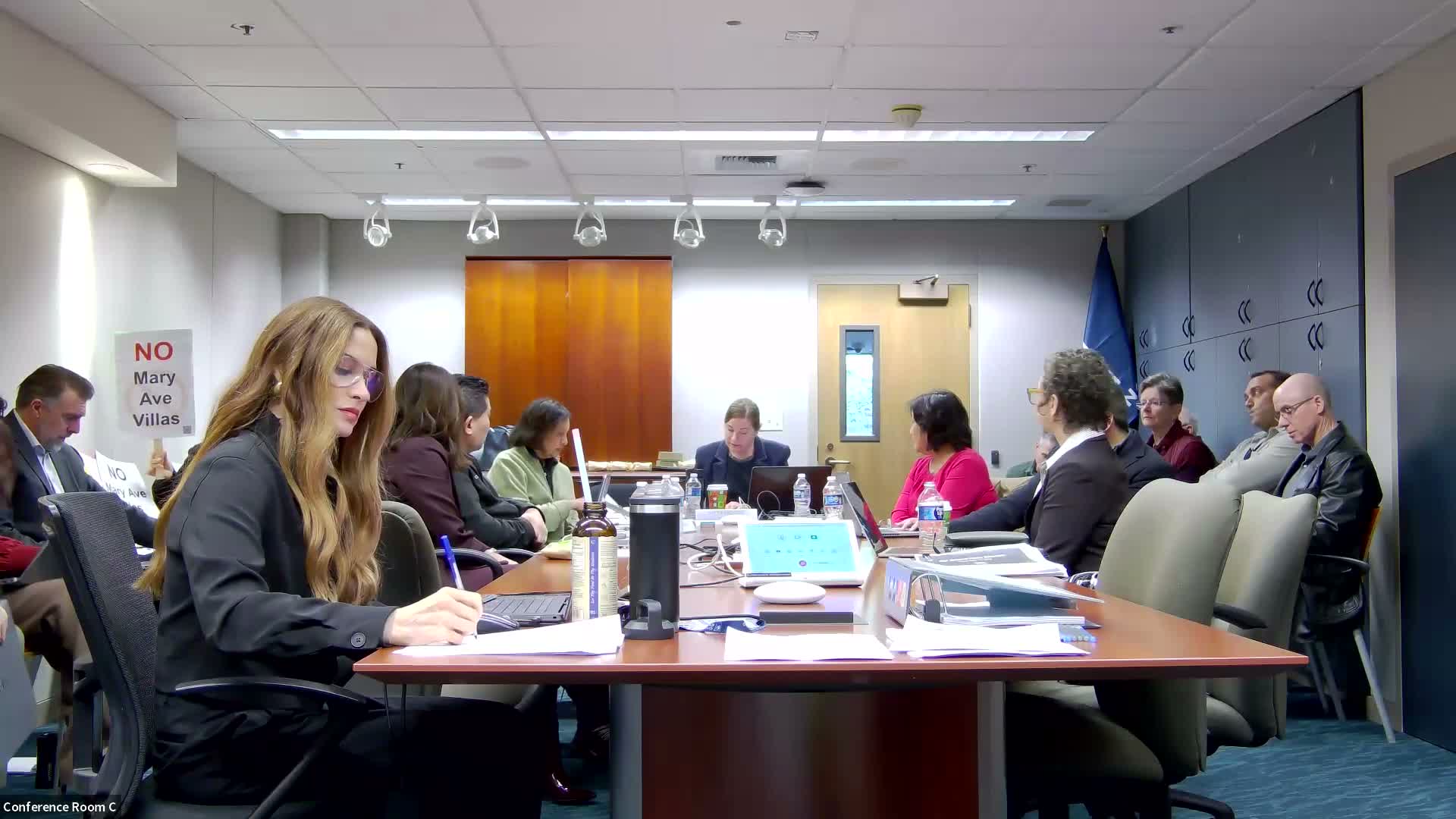
Summary
The Cupertino City Council voted 3‑2 to appoint staff negotiators for the Mary (Marriott) Avenue affordable‑housing project, approving staff’s recommended next steps after debate over parking, environmental review, unit count and resident prioritization.
The Cupertino City Council voted to appoint city negotiators to continue talks with the developer of the Mary (Marriott) Avenue affordable‑housing project, approving staff’s recommended next steps after more than an hour of debate and public comment.
The council’s action — to continue the study session, appoint the city manager and the interim city attorney as negotiators, and direct staff to pursue entitlements, surplus‑land exemptions and timeline support for a tax‑credit application — passed on a 3‑2 roll call. Mayor Moore and two other council members voted in favor; Council members Wong and Vice Mayor Chao voted no.
Why it mattered: the item, continued from a December study session, concerns the possible transfer of rights to city‑owned property in the form of a ground lease or sale with the city’s future right to repurchase. Staff told the council that completing several steps (including site control and certain entitlement actions) is necessary to make a federal tax‑credit application viable.
What council members said: several council members pressed for more information before negotiating. One member said they were ‘‘very concerned about the parking’’ and requested alternative configurations; another warned the council was ‘‘putting the cart before the horse’’ and urged completion of environmental and traffic studies before negotiations begin. A council member summarized concerns about transparency and changing designs, saying residents felt confused and that designs had ‘‘continued to change’’ each time they were presented.
Public and technical issues raised: residents and members raised parking impacts for Memorial Park and nearby neighborhoods, the potential cost and responsibility for moving utility infrastructure (including a fiber‑optic line), environmental cleanup liability, and whether the city should prioritize long‑term Cupertino residents for Below‑Market‑Rate (BMR) unit allocations. Staff said some studies (traffic) are already posted on the project webpage and that developer control of the property is required by tax‑credit rules.
Vote details and procedure: a substitute motion to limit the action failed earlier; the main motion (staff recommendation) then passed. The clerk conducted a roll‑call vote that recorded three ayes and two noes. Council directions recorded in the motion included preparing entitlements, pursuing surplus‑land exemptions or right‑of‑way vacations as needed, and maintaining timing to support a 2026 tax‑credit application window.
What happens next: with negotiators appointed, staff will continue discussions with the developer and return to council with further details and any proposed development‑level agreements, entitlements or fiscal commitments. Council members who opposed the motion asked that staff provide clearer environmental and parking analyses and consider resident priorities as part of any negotiated agreement.