
Staff orientation: clerk’s PRA workload, permit trends, capital projects and IT AI initiatives
Get AI-powered insights, summaries, and transcripts
Subscribe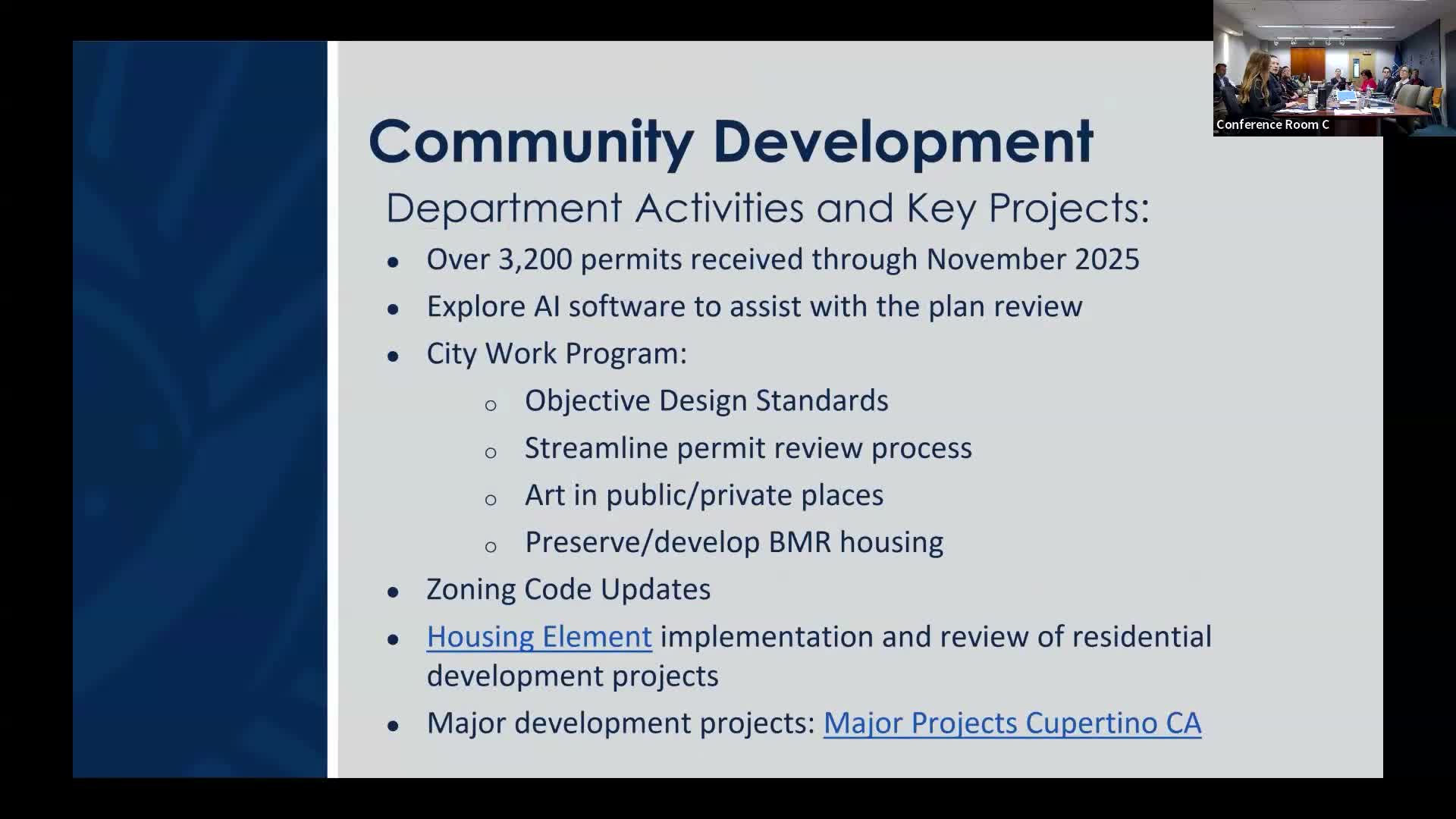
Summary
Department heads summarized recent workload and priorities: the clerk’s office reported rising public records requests, community development reported higher permit volumes and AI-assisted plan checks, public works outlined infrastructure projects and savings from LED streetlight conversion, and IT described ERP and cybersecurity priorities.
City department leaders used the orientation to summarize operations, current projects and emerging priorities.
Clerk and transparency: the city clerk reported a sustained increase in Public Records Act requests (from roughly 48/year in 2013 to about 339/year recently), with requests more complex and requiring significant redaction and staff time. The clerk also reviewed agenda‑setting procedures, supplemental materials timelines and the role of desk items.
Community development and building: Community Development Director Ben Fu said the department processed over 3,200 permits through November (a rise from a five‑year average of ~2,500) and is exploring AI tools to assist with permit plan review to meet state deadlines for expedited reviews. He highlighted ongoing work implementing objective design standards and preserving and expanding Below‑Market‑Rate (BMR) housing.
Public works and capital projects: Public Works Director Chad Mosley highlighted completed projects (LED streetlight conversion, Jollyman inclusive playground), upcoming projects (Stevens Creek Bike Lanes phase 2 beginning in January, I‑280/Wolff interchange currently out to bid), and an estimated electricity savings of about $100,000/year from the LED conversion.
IT, ERP and AI: CTO Terry Gerhardt outlined cybersecurity and infrastructure upgrades, an ERP procurement where Tyler ERP ranked highest and is in contract negotiations, and internal AI deployments (an automated plan‑check tool for building plans and an AI DevOps environment). Gerhardt also emphasized device and email policies for council members and planned WCAG 2.1 accessibility upgrades by April 2026.
What this means: staff presentations highlighted capacity pressures (records and permits), technology investments to improve efficiency (AI and ERP), and a slate of capital projects that will shape city operations in the next 12–24 months.