
Mooresville staff to continue design of downtown parking structure after $33M estimate sparks funding debate
Get AI-powered insights, summaries, and transcripts
Subscribe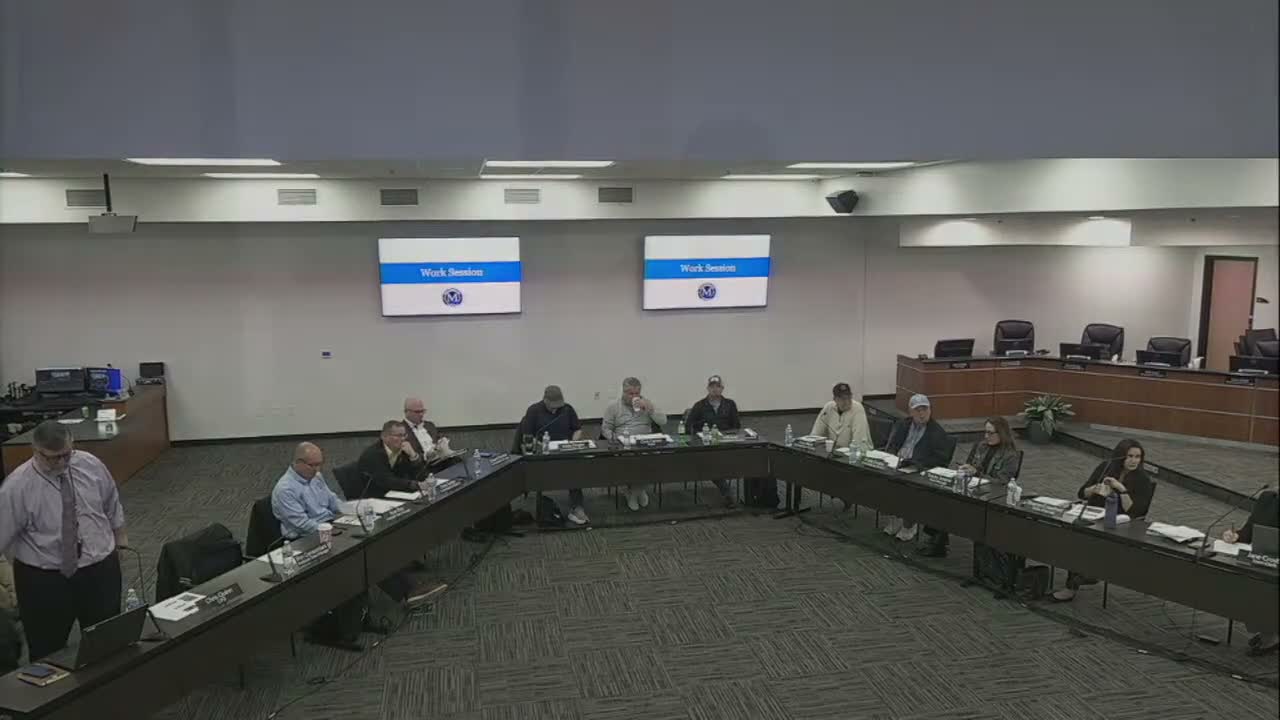
Summary
Engineering staff presented a 70% design for a downtown parking structure with 481 spaces and a schematic cost of roughly $33 million (structure, sitework, undergrounding utilities, fees). Commissioners asked for phasing and financing scenarios; staff will prepare financial models for a February retreat and continue design work to complete construction documents and permitting.
The Mooresville Board of Commissioners on Dec. 16 heard a comprehensive update on the downtown parking structure project and gave staff direction to continue design through construction documents while the board considers funding and phasing options.
Ashton Walker, engineering services manager, said the project site is the 100 block of North Church Street and that the design-development deliverable is roughly 70% complete. The proposed structure includes three full parking tiers plus a partial lower level, two vehicular entrances, multiple pedestrian access points and two elevators (one on each side) to improve accessibility. Walker said the deck would provide 481 parking spaces and would also include ground-floor shell space for retail or restaurant tenants and a potential downtown police annex.
Walker presented schematic-level costs broken down as: structure $17,800,000; site work (including streetscape and adjacent improvements) $5,900,000; underground utility conversion $5,000,000; and project administration/fees $4,365,000, for a schematic total of approximately $33,000,000. She cautioned that the Duke Energy utility undergrounding figure is schematic and that some savings may be realized by contractor-led conduit installation.
Commissioners debated scope and cost. Commissioner Dingle and others voiced concern that the project had grown in scale and cost over time; Commissioner Dingler and Commissioner West urged pursuit of value engineering and asked staff to model a 25‑year eligibility scenario for the adjacent personnel policy discussion. CFO Chris Quinn said the town could bundle this project with other capital needs in a bond issue, but cautioned that the board cannot approve and begin building without a funding plan. Quinn estimated a debt-service payment on a $33M bond would be about $2.5M per year over 20 years (roughly 2 cents on the tax rate) and said debt service payments for new debt would likely begin in 2028‑29 depending on the bond schedule.
Board members asked staff to prepare a financial model showing alternatives (phasing, value‑engineering savings, impact to operating budget and tax-rate scenarios) in time for a February retreat. After discussion the board gave informal consensus (a thumbs-up) to allow the design team to continue work through final construction documents and permitting so the project schedule is not pushed further out.
What happens next: staff will provide detailed DD/CD cost breakdowns and a bond/financing model for board review at the retreat; property-owner easements and utility‑provider agreements remain critical path items for schedule and scope.