
West Bend launches wbsdfunding.org and reviews October fiscal performance
Get AI-powered insights, summaries, and transcripts
Subscribe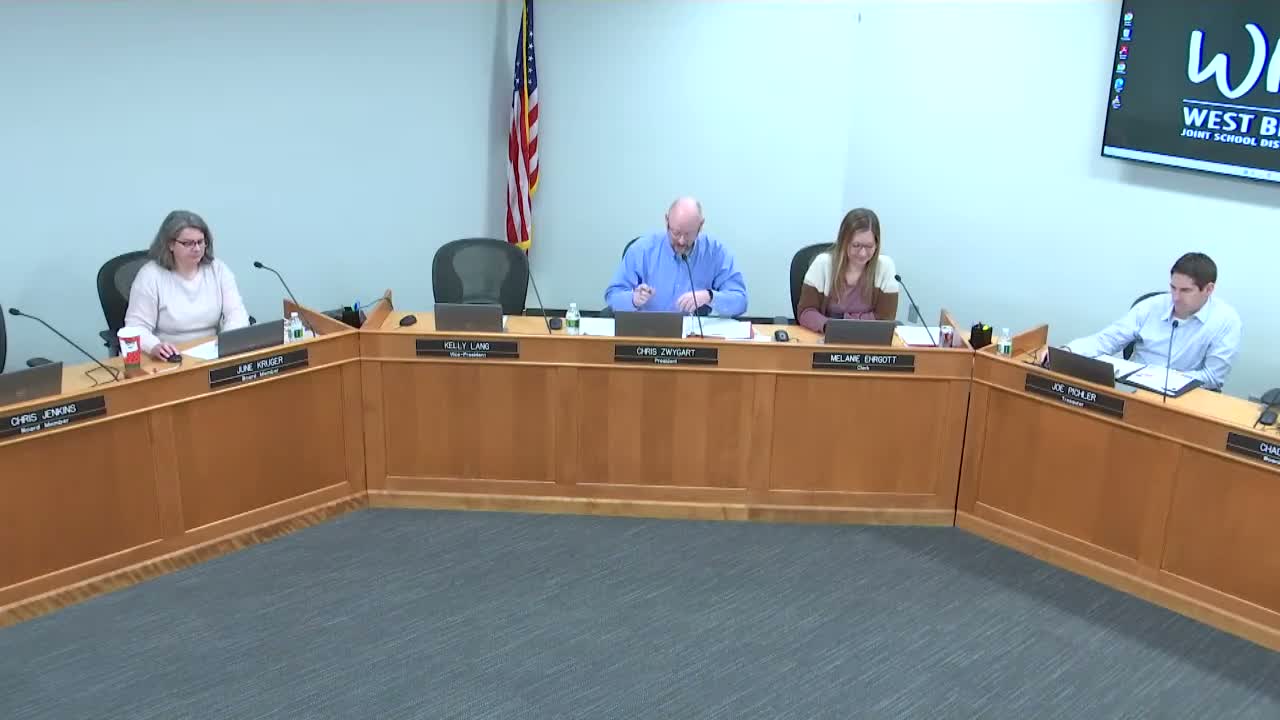
Summary
Assistant Superintendent Lenny Hanson presented October fiscal performance (15.99% of the budget expensed) and introduced wbsdfunding.org, a public FAQ site to explain school funding, mill-rate impacts, and the local cost of the state voucher program.
At the Dec. 8 meeting Assistant Superintendent Lenny Hanson presented a monthly fiscal performance review through October and introduced a new public resource, wbsdfunding.org, designed to explain how the district is funded and how items such as the state voucher program show up on a local tax bill.
Hanson said the district had expensed 15.99% of its budget through October (funds 10 and 27) and that cash flow is seasonal, with November–January typically the district’s lowest point. He explained the end of federal ESSER claiming as a reduction in revenue compared with the prior year. Hanson told the board the public site will include FAQs on the mill rate vs. tax bill, a breakdown of what portion of the levy funds voucher-program costs versus direct district spending, and additional municipal data as it becomes available.
On vouchers Hanson said the state’s structure routes local property-tax dollars to voucher schools and that voucher schools do not receive state aid the way public schools do: “The voucher program is funded entirely by local property tax dollars, whereas the state does provide some funding for public schools.” He said the district’s public-school levy rose about 5.2% over a four-year span (roughly 1.3% per year), a figure Hanson used to contrast levy growth with inflation trends discussed in the presentation.
The board thanked administration for the new web resource and asked that it be updated as municipal data becomes available. Hanson said the district will continue monthly fiscal presentations and provide additional context at future meetings.