
Central York policy committee refines draft suicide-prevention policy, flags definition and referral wording
Get AI-powered insights, summaries, and transcripts
Subscribe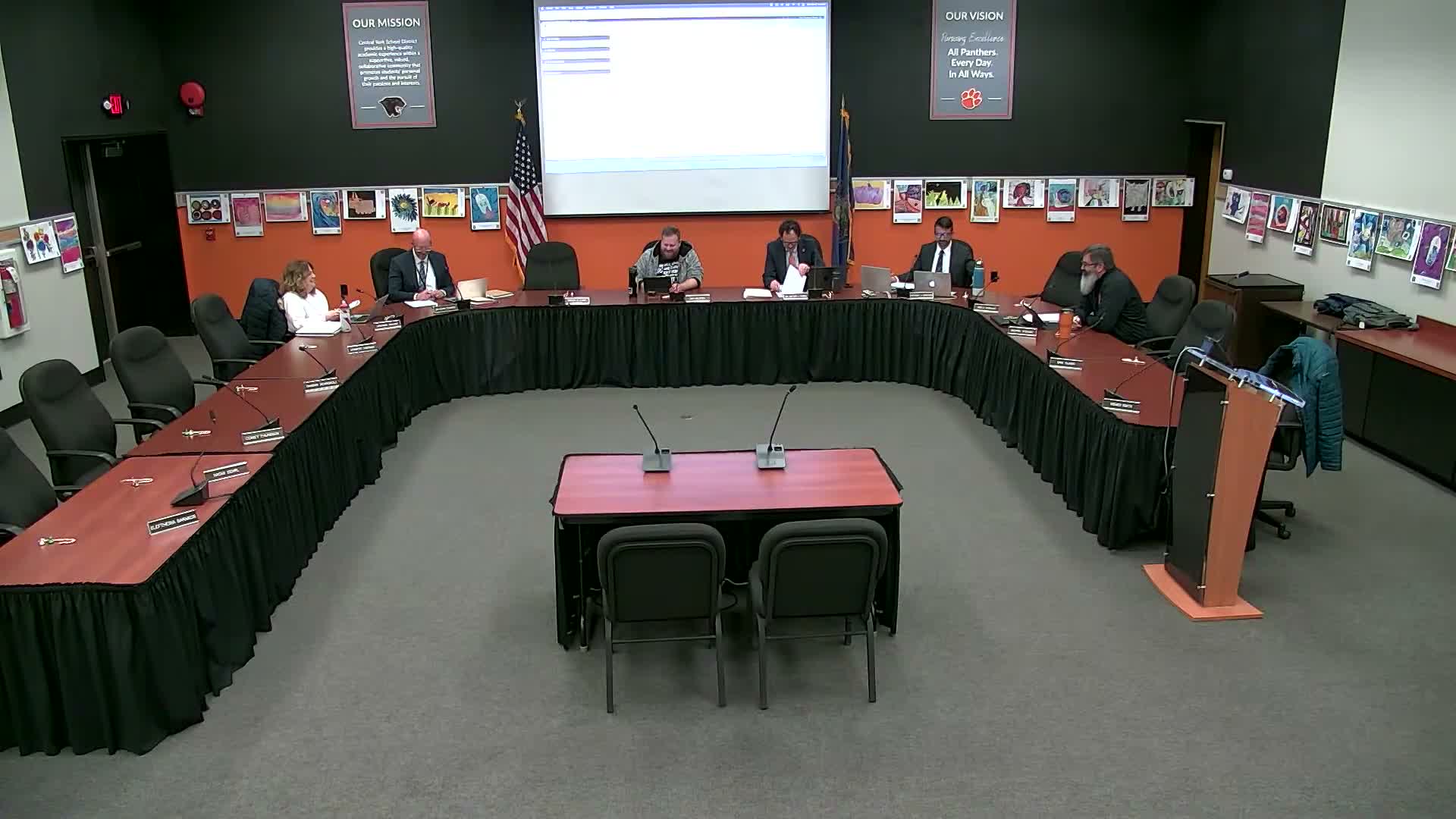
Summary
The Central York policy committee reviewed a draft 'suicide awareness, prevention and response' policy (8-19), debated wording on coordinator/team roles, 'and/or' notification language, and distinctions between individualized management plans and safety plans; staff will rework definitions and ARs for a future meeting.
Central York policy committee members spent their meeting continuing page-by-page work on a draft suicide awareness, prevention and response policy (policy 8-19), focusing on definitions, notification wording and referral procedures. Moderator (Speaker 1) opened the session and said the committee would resume the definitions it left off at during the prior meeting.
Board members expressed concern that several definitions and phrases in the draft were unclear. Speaker 3 objected to repeated 'and/or' constructions for notifying parties and asked whether the policy intended to allow notifying law enforcement but not a district team in some situations. "You can't have 'and/or'," Speaker 3 said, urging clearer, more consistent wording on who must be informed. District staff (Speaker 4) and committee members agreed the language should be simplified in many places to avoid ambiguity.
The committee debated whether the draft should name a 'team' or a 'coordinator' in specific paragraphs. Members said the text had been edited in places to replace 'team' with 'coordinator' and that the draft should make clear when a single suicide prevention coordinator is intended and when multiple teams (for example, threat assessment or crisis response teams) are referenced. The group agreed to remove a phrase that suggested the district-level suicide prevention coordinator "may be an existing district employee" (keeping the option for building-level coordinators) and asked staff to return a cleaned-up version.
Speakers also pressed for clearer distinctions between the individualized management plan (IMP) and the safety plan. The committee read the definitions aloud and discussed sequencing: IMPs typically document concerns when a student is referred to a team, while safety plans are developed after screening and focus on resources for the student and family. "The IMP is more documentation-driven and initial; the safety plan follows screening and is more resource-driven," Speaker 2 summarized. Members suggested emphasizing keywords (for example, "referred" vs. "following") or adding a sentence to the IMP definition to note it may be used for non-suicide threats as well.
On terminology related to postvention, Speaker 2 said the draft should explicitly add "suicide contagion" to the definitions and explained contagion refers to copycat or repeating behaviors after an event. "The missing word that is omitted there would be 'suicide contagion'," Speaker 2 said, recommending that inclusion clarify the postvention purpose.
The committee reviewed required education and training language in the draft. The policy requires age-appropriate classroom lessons integrated into health curricula, restricts prevention programming to small-group or classroom settings rather than large assemblies, and directs the district to provide counselors and resources for students who may struggle with the topic. For staff, the draft sets a minimum of four hours of youth suicide awareness and prevention training every five years; staff confirmed online refresher options exist.
On referral procedures and confidentiality, the draft instructs school personnel who observe warning signs or suicide risk factors to refer students immediately for screening or assessment and allows disclosure of confidential information to parents/guardians, principals, threat assessment teams, crisis response teams or other appropriate authorities when safety is at risk. Committee members recommended changing discretionary language such as "should" to mandatory wording ("shall") in several referral sentences to ensure timely action, while also noting that routing all ideation reports to the full threat assessment team may be impractical and that appropriate staff (for example, school counselors or designated building coordinators) are often the correct first contact.
There were no formal motions or roll-call votes recorded on the policy during the meeting. Staff (Speaker 4) noted the draft draws on an updated PSBA-based model and said administrative regulations (ARs) to implement the policy will be developed once the policy text is finalized. The committee asked staff to rework the flagged definitions and notification/referral language and to bring revisions back at the next meeting in January. The meeting adjourned with no formal action taken.
Next steps: staff will revise definitions (including adding "suicide contagion"), simplify and clarify "and/or" notification language, refine the IMP vs. safety plan distinctions, draft ARs, and present the changes at a future committee meeting.