
Scotland County planning board recommends special-use permit for proposed 51-site RV park with conditions
Get AI-powered insights, summaries, and transcripts
Subscribe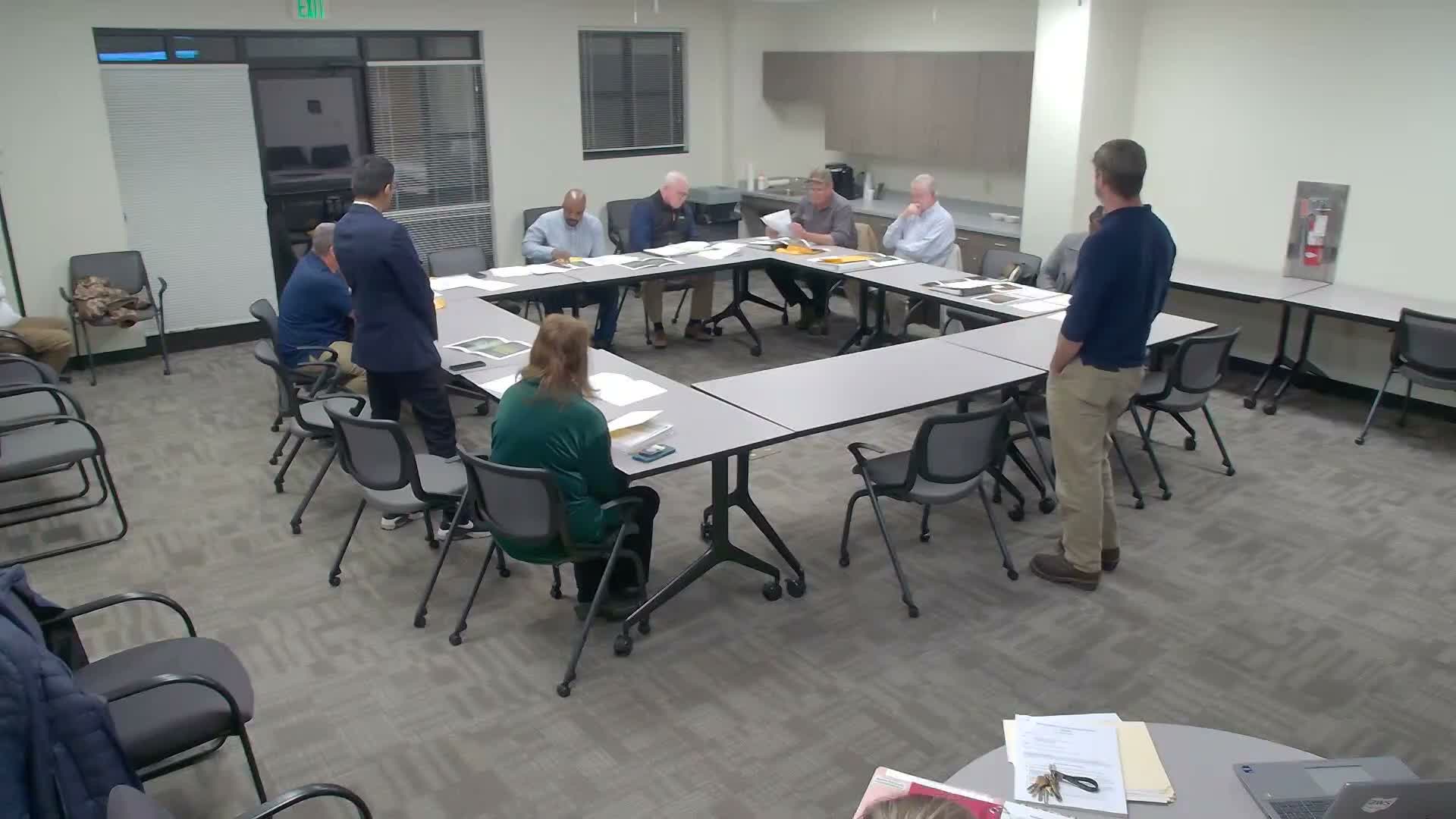
Summary
The planning board voted to forward a recommendation to the Board of Commissioners to approve a special‑use permit for a proposed RV park capped at 51 sites, attaching conditions including buffers, 24‑hour security, background checks and a performance bond.
The Scotland County planning board voted to recommend that the Board of Commissioners approve a special‑use permit for a proposed RV park, directing conditions that would cap buildout at 51 pads and require buffered setbacks, on‑site security and a performance bond.
The board’s recommendation follows an extended technical review during which a county engineering consultant told members that the project would need a trip‑generation analysis, soil investigations for on‑site wastewater systems and permitting from DEQ, DOT and the county fire marshal before final construction could proceed. ‘‘You would need to do analysis and design, submit plans, get permits for those,’’ Speaker 1 said when summarizing the regulatory steps that remain.
Why it matters: Board members and residents pressed the applicant on whether the site can support the wastewater and circulation infrastructure necessary for 51 pads and whether the county can enforce protective conditions. The board’s vote sends the permit application to the Board of Commissioners with a package of conditions intended to limit impacts on neighbors and infrastructure.
The applicant, represented in the hearing by Speaker 4, repeatedly told the board the plan has always been for a maximum of 51 pads and that the development would be phased. ‘‘We are not gonna exceed 51,’’ Speaker 4 said, adding that the project would begin with about 10 pads and expand over time as demand dictates. The applicant also told the board the development team plans landscaping, on‑site management and 24‑hour security.
Board members pressed technical staff on wastewater design and traffic safety. The engineering consultant said a licensed soil scientist must map soil types on the site, calculate long‑term acceptance rates and size leach fields accordingly; that process, the consultant said, could reduce the number of pads the site can support. The consultant also described DOT driveway review as focused on stacking distance and peak trips rather than internal circulation.
Residents and several board members raised enforcement and quality‑of‑life questions, saying the county has limited code‑enforcement capacity to police permit conditions. ‘‘If we put conditions on it and nobody enforces them, what’s the point?’’ one resident asked. Planning staff and board members suggested conditions such as a performance bond, required buffers, chain‑link fencing adjacent to the railroad and background checks as tools to increase accountability.
The planning board’s recommended conditions—read into the record before the vote—included a 90‑foot front buffer, 30‑ to 50‑foot side or rear buffers in places, a 6‑foot chain‑link fence along the railroad right‑of‑way, requirements for a paved entrance apron per DOT standards, 24‑hour on‑site security or camera coverage, criminal background screening for occupants as handled by a third‑party provider, and a performance bond subject to approval by the county manager and county attorney.
The motion to forward the recommendation was made by Speaker 6 and seconded by Speaker 5; the planning board then voted to send the application, with the listed conditions, to the Board of Commissioners for final action. The commissioners will review the planning board’s recommendation at their next meeting.
What comes next: The applicant will need to complete soils testing, detailed septic and stormwater designs, an application for public‑water main extension through DEQ, DOT driveway approval and fire marshal review. Any technical changes that reduce feasible pads below 51 would be reflected in subsequent permitting and inspections, county staff said.