
Sayville officials outline budget pressures, stress reserves and urge fiscal prudence
Get AI-powered insights, summaries, and transcripts
Subscribe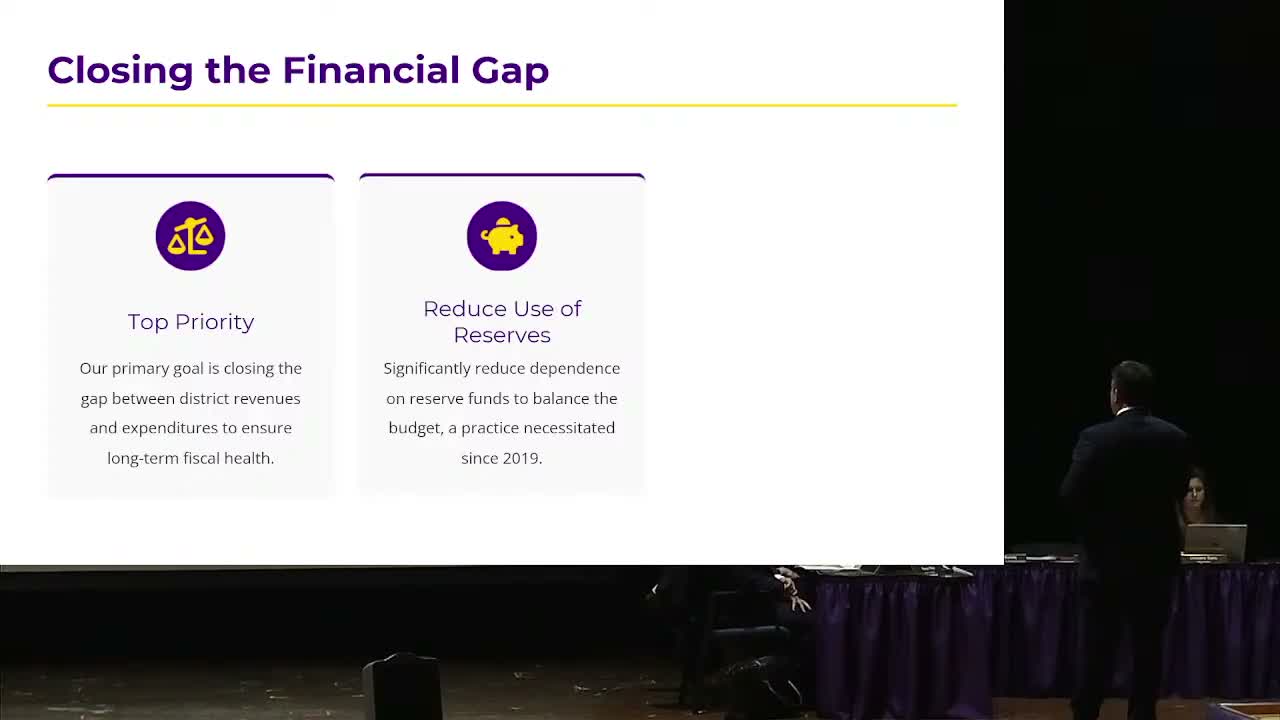
Summary
District staff presented a budget update showing reliance on reserves since about 2019, rising insurance costs and uncertain state aid; board members pressed for revenue options and clarified the tax levy and tax‑cap implications.
District staff provided the board with an update on the district’s fiscal outlook, describing persistent pressures that have led administrators to draw on reserves in recent years and the need to reduce dependence on those funds.
Administrators said the district began drawing from reserve balances around 2019 and is focused on fiscal planning to support instructional goals while rebuilding reserves. A written figure spoken in the presentation appears garbled in the transcript and could not be verified; officials identified no clean, auditable dollar total for long‑term reserve use during the meeting.
The presentation covered salary "breakage" — the savings realized when a higher‑paid employee is replaced by a lower‑paid hire — and other expense drivers including a projected 9% increase in health insurance premiums. The administration also reported potential upside from state aid projections tied to the current legislative budget, transportation aid that requires careful coding and building‑aid filings that can affect revenue timing.
During Q&A, board members asked whether unspent savings would return to the general fund and whether better projections would affect the tax cap. Administrators said the tax levy process is monitored yearly and that mid‑year savings would not change the tax‑cap calculation directly; the district is working to avoid a fiscal‑stress designation.
Why it matters: The board emphasized financial stewardship as foundational to preserving instructional programs and maintaining borrowing capacity. Several members pressed staff to pursue alternative revenue sources while minimizing reliance on reserves.
What happens next: Board members suggested continued review of conservative budgeting assumptions, exploration of outside revenue opportunities and a deep dive at the January workshop meeting.