
Staff: expired federal CREP notices confuse landowners; county to send reminders and hire contractor for preservation plan update
Get AI-powered insights, summaries, and transcripts
Subscribe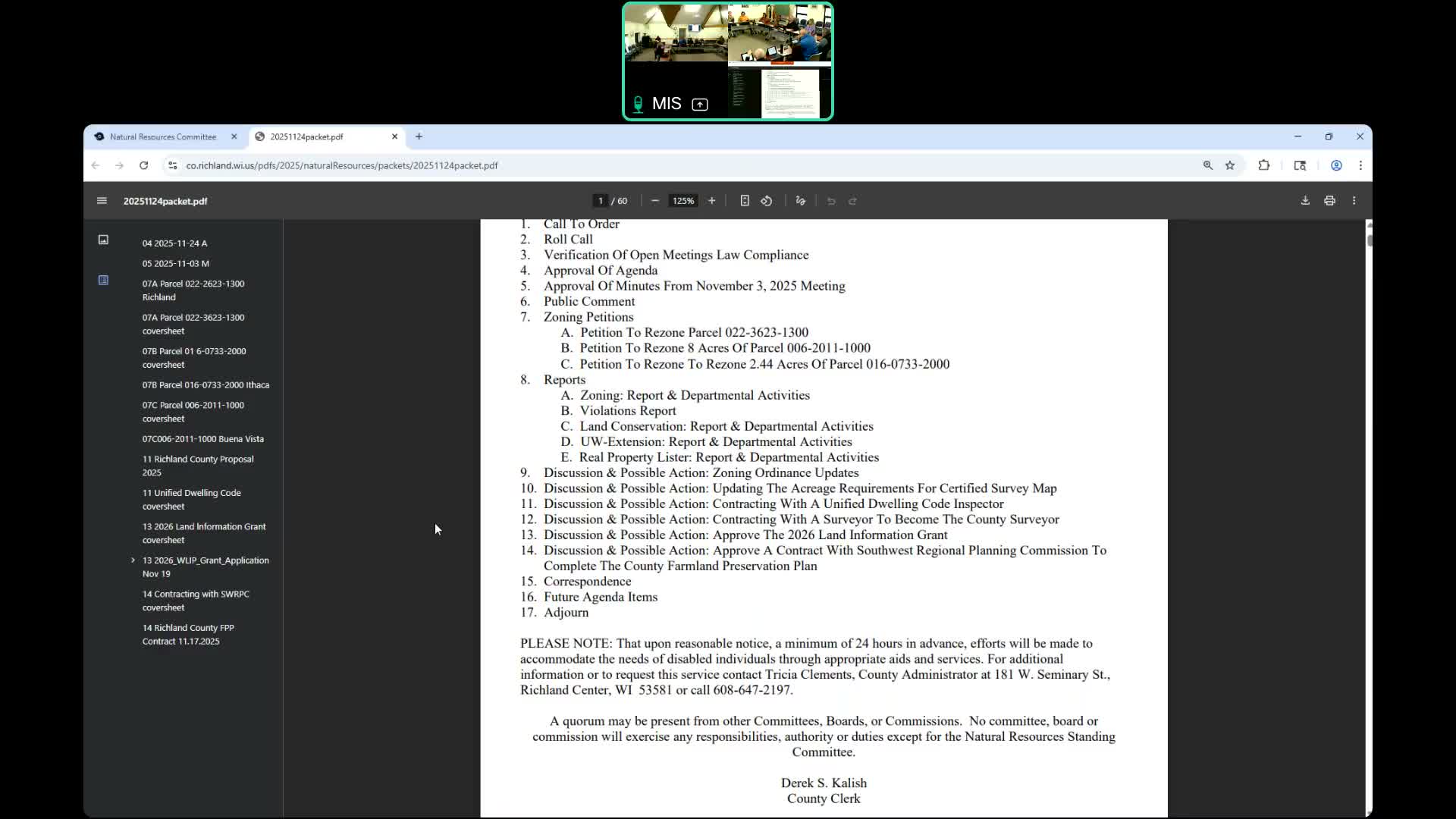
Summary
Corey Rogers, the county conservation planner, said some landowners received FSA letters saying 15-year federal CREP contracts had expired even though state perpetual easements remain; the county will resend notices and contracted Southwest Regional to update the county farmland preservation plan with partial state grant funding.
Corey Rogers, Richland County’s conservation planner, told the committee that notices of noncompliance for the farmland preservation program mostly related to landowners not returning an annual conservation compliance checklist. She said most appellants later submitted required certificates and late filing fees, and staff will send the annual checklists again in December with a January 31 deadline.
Rogers described a recurring problem with the Conservation Reserve Enhancement Program (CREP): some landowners received federal letters from the Farm Service Agency (FSA) indicating a 15-year federal agreement had expired. "Your federal 15 year agreement is expired. You can either re-enroll or..." she said, and added that those federal letters do not always reflect a separate state perpetual easement recorded on the deed.
Because state perpetual easements can remain binding even when federal participation lapses, Rogers said staff will follow up with affected landowners, adjust conservation plans to allow limited annual mowing for vegetation management where appropriate, and send reminder notices to owners whose federal agreements recently lapsed. Rogers recommended a targeted outreach campaign and one-time technical adjustments to conservation plans to reduce confusion.
Separately, the committee approved contracting Southwest Regional to update the county’s farmland preservation plan. Staff said the total project cost is about $20,000, with approximately $10,000 expected from a Department of Agriculture grant; the work must be completed and accepted by the Department of Agriculture no later than Dec. 31.
What happens next: staff will send the annual checklists and late-fee notices, proceed with appeals already honored where applicable, amend conservation plans for management allowances where necessary, and manage the Southwest Regional contract to deliver the updated farmland preservation plan.