Texas high court hears dispute over whether flight manual restarts federal statute of repose
Summary
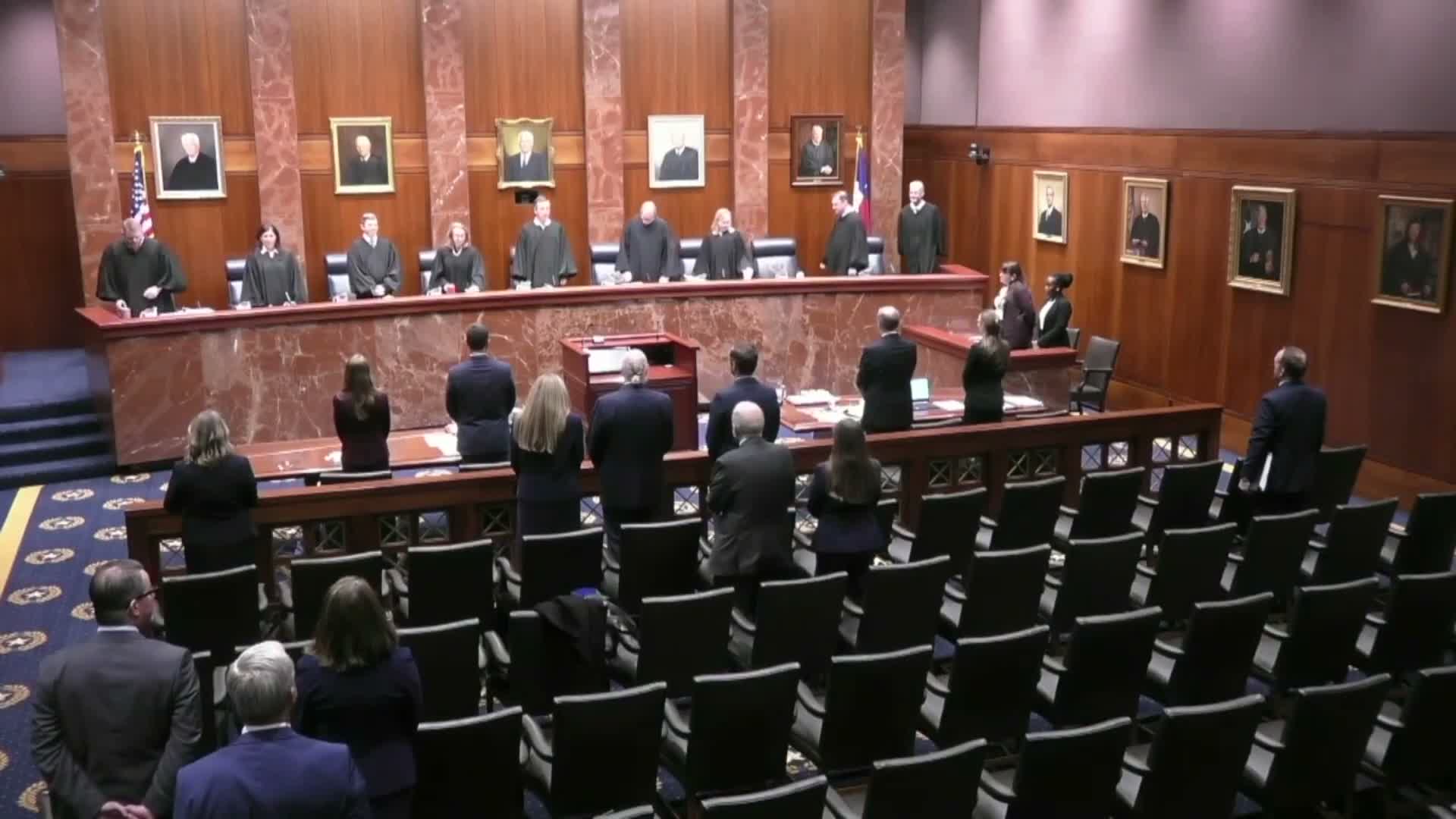
The Supreme Court of Texas heard oral arguments in case no. 240883 over whether a federal statute of repose bars a wrongful-death suit tied to a Bell helicopter and whether a flight manual (or a subsection of it) qualifies as a "part" that can restart the repose period.
The Supreme Court of Texas heard arguments in case number 240883 that asked the court to decide whether a federal statute of repose preempts state-law product-liability suits against aircraft manufacturers and, specifically, whether a helicopter flight manual (or a subsection of it) counts as a "part" under that federal provision.
Relators' counsel argued the trial court committed a clear abuse of discretion by allowing the case to proceed despite the federal statute. Counsel contended the relevant safety feature here—the engine cowling and instructions about securing it—have been present for more than 18 years and are addressed in the manual, so no manufacturer action within the repose window has caused the accident. Counsel summarized the position this way: the manual and its instructions were in place "from the beginning," and the plaintiffs "have not identified anything" the manufacturer did within the last 18 years that caused the accident.
Several justices pressed on what it means for a manual to be a "part." One justice asked whether adding a new safety procedure to a manual or publishing an updated manual would count as replacing or adding a part that restarts the repose period. Counsel for the relators replied that courts generally treat flight manuals as parts but resisted a plaintiffs' theory that would treat every subsection or single editorial change as a separate new part. Counsel warned that treating a manual's text or an omission as a part would improperly fragment the statutory definition and would allow an endless line of claims based on minor edits.
Opposing counsel (announced in court as Mister Henry) disputed the idea that the statute operates as immunity from suit. He told the court that federal statutes using the phrase "suit may not be brought" have not uniformly been read to create an absolute immunity from proceeding in state courts; such statutes frequently coexist with state procedures that allow cases to be filed and litigated until disposition through established mechanisms (for example, dismissal on summary judgment or motion to dismiss). He emphasized the distinction between an immunity from liability and procedural rules about when a cause of action accrues. The real-parties' counsel also noted that many federal statutes modeled similarly to the provision at issue place repose and limitations side-by-side and that ordinary state procedural mechanisms remain available to screen unmeritorious suits.
Justices on the bench repeatedly returned to factual versus legal questions. Several asked whether disputed factual issues—about how and when the manual text was revised, whether a particular subsection was first addressing a subject only recently, or whether a manufacturer's communications with regulators created a new actionable event—would preclude interlocutory mandamus review. Counsel across the argument acknowledged there are cases where fact disputes weigh against mandamus, while also arguing that where the underlying facts are undisputed, the question is one of statutory interpretation appropriate for immediate review.
The argument also touched on precedent the court has considered in other contexts. Both sides invoked federal and state decisions (identified in argument as "Academy," "Facebook," "Robinson," and "Kennedy") to distinguish cases where interlocutory relief was allowed from those where it was not. The court asked whether the federal statute's preemption language (described in argument as a superseding clause) transforms the provision into something that must be treated differently than typical limitation or repose provisions in state law.
On the factual issue central to this case, relators' counsel said plaintiffs and their experts point to the engine cowling as the "sole cause" of the accident and that the cowling and the manual instruction to secure it have been in place for decades. Counsel argued the plaintiffs did not identify a discrete manufacturer action within the last 18 years that could restart the repose period. Opposing counsel answered that other cases with different fact patterns could present closer calls—for example, where a manual contains a line that was once correct but, because of later component changes, becomes misleading within the repose period.
After extended questioning from the court and back-and-forth about the statutory text, granularity (whole manual v. subpart), the consequences of deletions or additions to an existing manual, and the policy Congress sought to effect with the repose provision, the court took the case under submission and recessed briefly. The justices did not announce a decision from the bench.
The case revolves around narrow statutory questions with potentially broad consequences for aircraft manufacturers, plaintiffs in product-liability suits, and the scope of interlocutory review under Texas law. The court's eventual opinion will clarify whether republishing or amending a flight manual (or one of its subsections) can constitute a new "part" that restarts a federal 18-year repose period and whether that issue is susceptible to immediate mandamus review.