
Health Department staff outline how to report concerns about licensed and unlicensed practitioners
Get AI-powered insights, summaries, and transcripts
Subscribe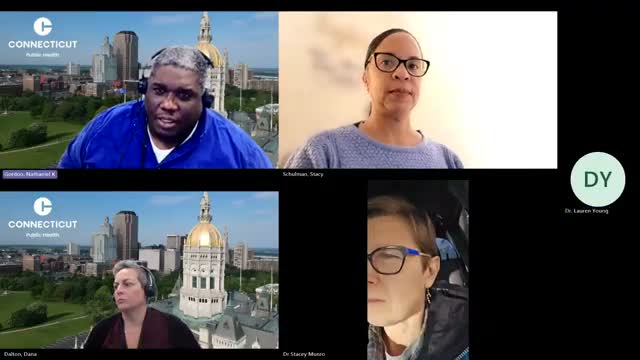
Summary
Dana Dalton of the Department of Public Health told the Practitioner Licensing Board that complaints must be submitted in writing and that investigators can issue cease-and-desist orders only for unlicensed practice; telehealth jurisdiction depends on where the patient is located.
Dana Dalton, supervising nurse consultant in the practitioner investigation unit at the Department of Public Health, told the Practitioner Licensing Board how the department handles complaints about licensed and unlicensed practitioners.
"Any complaints regarding any licensed practitioners come to our office, and we also get complaints regarding unlicensed practitioners," Dalton said, adding that "we need our complaints in writing" and that the department—s website includes a link to a complaint form that can be mailed or faxed. She told board members the form asks for the name of the person filing the complaint, information about the patient and the respondent.
Dalton said the department accepts anonymous complaints but weighs them against how much information they contain. "We do receive anonymous complaints. We kinda give them their due weight as to the information we get on them," she said. Without a named petitioner or patient record, Dalton said investigators are often unable to open a case or keep the complainant informed of case status.
On enforcement, Dalton said the department—s investigators evaluate whether the alleged conduct would amount to the practice of naturopathy if proven, and if there is supporting evidence they refer the matter to the department—s legal office. "We refer it over to our attorneys who would then bring either charges or offer them a consent order or a cease and desist," she said, adding that a cease-and-desist is the primary remedy available against unlicensed practitioners.
Board members asked about jurisdictional limits and telehealth. One member noted the board—s jurisdiction applies only to providers practicing in Connecticut; Dalton confirmed that telehealth jurisdiction follows the location of the patient. "With the telehealth rules ... if they're located in Connecticut, that provider, if it's an naturopathic provider, would have to be licensed here," she said.
The discussion clarified that investigations are complaint-driven rather than initiated proactively by investigators. Dalton said staff perform preliminary checks but rely on records and petitioner-provided details to establish a connection between patient and provider.
The board did not take formal action on the complaint protocols at this meeting. Dalton said any investigations that produce legal enforcement would be handled by the department's legal office and then brought to the board as appropriate.