
Judge denies expunction petition, accepts several pleas and enforces bond at 252nd District Court
Get AI-powered insights, summaries, and transcripts
Subscribe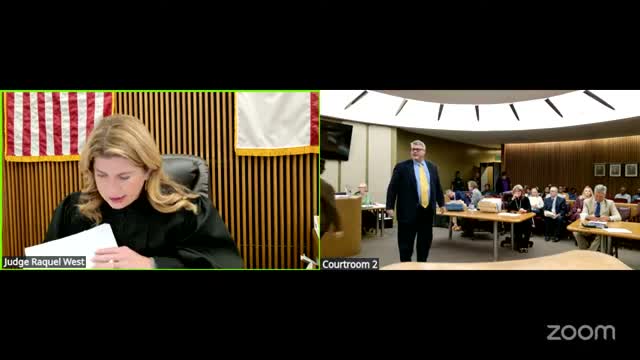
Summary
At the 252nd District Court docket call, the judge denied a petition to expunge one case, accepted guilty pleas in multiple matters (with deferred probation or presentence reports ordered), enforced a $75,000 bond in one matter and ordered several defendants to consult at least three attorneys before the next setting.
BEAUMONT, Texas — A judge at the 252nd District Court denied a petition for expunction in cause 25DCCV2098 and handled a slate of initial appearances, plea agreements and procedural resets during a busy docket call on Dec. 15, 2025.
The court reviewed a contested petition to expunge records tied to multiple cause numbers. Defense counsel argued some files had been dismissed or resolved with deferred adjudications; the state maintained at least one file reflected a conviction-equivalent finding. After reviewing amended filings, the judge denied the expunction for cause 25DCCV2098 and ordered a written denial entered. The judge said that nondisclosure might be appropriate for related matters but declined to expunge the contested file.
Several defendants entered pleas or received reset dates for sentencing and probation reports. Donell Coleman pleaded guilty to abandoning or endangering a child; the judge deferred proceedings and placed Coleman on three years' probation with a $500 fine, and ordered compliance with standard probation conditions. Precious Eaglin pled guilty to assault on a peace officer; the court required a presentence report and reset the case for sentencing under the parties’ deferred-probation agreement. Sammy Morris pled guilty to unlawful possession of a firearm by a felon; the plea was accepted and the court ordered a presentence report to inform final sentencing, with the agreement indicating a term that would be probated and five years on probation.
The judge enforced bond and attendance rules in several matters. In one case the court announced that a defendant who failed to appear (Mark Garcia) would have his bond forfeited and the matter reset with bond set at $100,000 for nonappearance. In multiple initial appearances the judge reminded defendants who had posted bond that they must attempt to hire counsel and, if unable, consult at least three lawyers and bring the names to the next court date; the judge warned that failure to follow that order could result in an increase in bond and incarceration.
Defense counsel in Ronnie Green’s matter told the court he needed time for discovery tied to a canine search and handler records; the attorney described the search as problematic, saying, "after reviewing the evidence, it's pretty clear to me that it is a definitely a bad canine search." The judge scheduled a hearing to allow time for discovery and an updated probation report before ruling on motions to revoke probation.
Throughout the docket the judge emphasized statutory and procedural limits — for example, declining to waive presentence investigation reports when the statute required them — and repeatedly ordered defendants to consult probation staff before leaving the courtroom. Most contested matters were reset to give parties time to prepare, to allow probation to complete reports, or to permit counsel to file additional motions or responses.
The court handled numerous other initial appearances and routine resets; defendants were repeatedly instructed to provide proof of job-seeking, re-enrollment in school, or payments to retain counsel where applicable. The next settings were scheduled individually for the cases discussed.