
Oshkosh district outlines $6 million budget gap; community urges board to protect electives, peer coaches and equity staff
Get AI-powered insights, summaries, and transcripts
Subscribe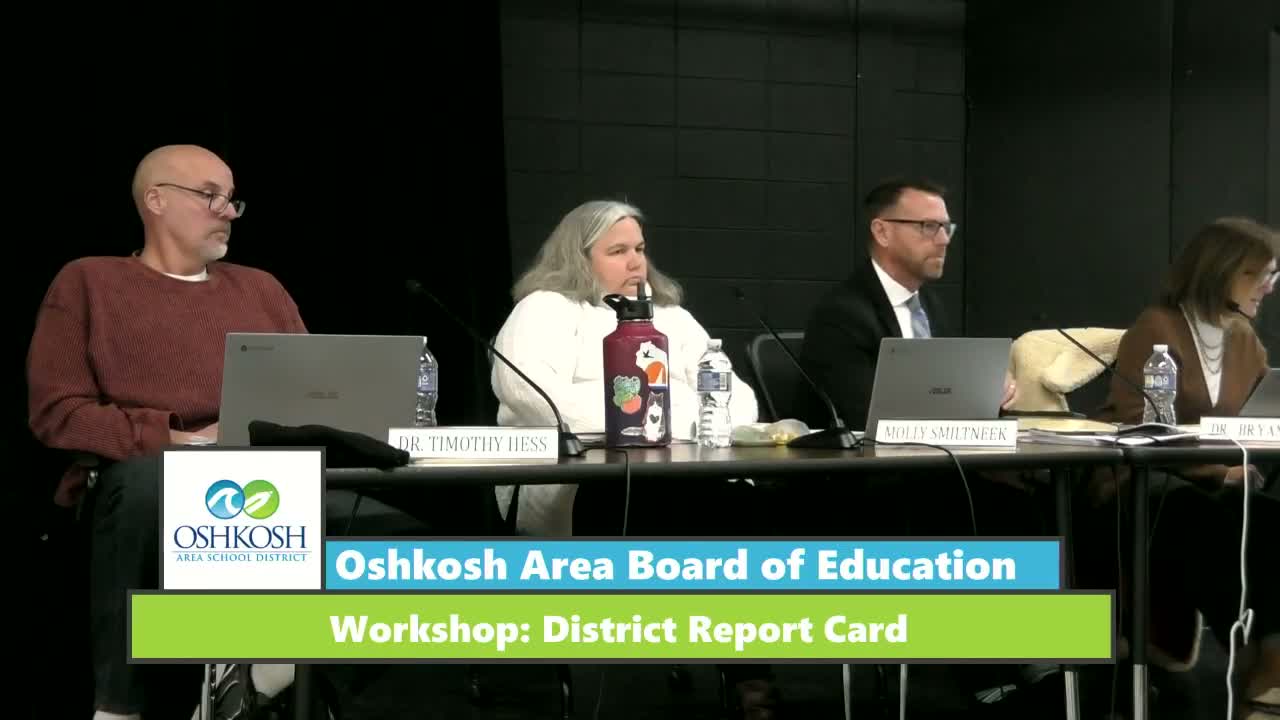
Summary
Administrators told the board the Oshkosh Area School District must identify roughly $6 million in recurring reductions for 2026–27; teachers, students and parents urged alternatives and warned cuts to electives, peer‑coaching and community‑engagement roles would harm students. Board set an accelerated January decision timeline.
The Oshkosh Area School District presented an approximately $6,000,000 recurring budget shortfall for the 2026–27 school year and outlined proposals that would change staffing and programming across the district.
Superintendent Brian Davis and administrative staff told the board on Dec. 10 that the shortfall is driven by structural factors: state per‑pupil revenue increases that lag inflation, declining enrollment (district headcount reported at about 8,924 students), rising special‑education costs and an increase in voucher students. Administrators said the district is projecting roughly $9 million in taxpayer funds flowing to voucher programs and that a lag in voucher reimbursement accounts for about $500,000 of the near‑term pressure.
To close the gap the administration proposed a mix of recurring reductions and system changes, including formula‑based staffing adjustments, potential consolidation (Shapiro consolidation into Roosevelt), reductions to central/district positions, and secondary‑level changes that would alter elective teachers’ workloads (the so‑called “6‑of‑7” option that would increase classroom assignments for many elective teachers). Administration estimated the secondary‑electives package would yield roughly $1.58 million in savings as one component of a larger package.
Teachers, students and community members turned out in force to oppose many of the proposed measures. Christopher Carnes, a teacher and former school board member, told the board the shortfall reflects state funding that has not kept pace with inflation and an expansion of vouchers, and urged civility in community discussion. "If the state isn't keeping up with inflation and $9,000,000 is going to vouchers, we have a $6,000,000 deficit," he said (public comment).
Several teachers described how changes would affect pay, benefits and workload. Choir director Ted Williams said the proposal could reclassify him so he would no longer be full‑time, risking a pay cut and loss of health benefits and potentially forcing him to leave positions he has held for years. Erin Quenell Jobs, a Spanish teacher, and other early‑career educators warned that cutting peer‑coach positions would reduce supports that help retain new teachers.
Students emphasized the role of electives and extracurriculars in college and career preparation. Delaney Smith, a senior and member of the Oshkosh West Madrigals, said forcing many elective teachers to take larger loads would “drastically reduce the number of opportunities for students to succeed.” Several student speakers said programs such as journalism, music and shop provide essential skills and community that prospective families notice when choosing a district.
Library media specialists and community‑engagement staff were also frequent subjects of public comment. Emily Heidemann, a licensed media specialist, said cutting licensed media specialists from eight to three would undermine literacy, digital‑citizenship instruction and Chromebook management, and proposed preserving positions through targeted reductions elsewhere.
Board members asked administrators for more data and options. Several trustees pressed for a transparent list showing where projected savings come from, requested district‑level versus building‑level breakdowns, and asked how much could be achieved through attrition, hiring freezes, salary‑freeze scenarios, or one‑time measures such as land sales. Administration said it would return written data and proposed an accelerated schedule so the board could aim for action in January while preserving student scheduling timelines.
The board and administration requested additional follow‑up: more specific savings scenarios (including versions that do not rely on the 6‑of‑7 elective change), an itemized list of affected positions and programs, attrition projections, legal review of workload changes that would affect a single group of licensed staff, and further outreach to stakeholders. Administration offered to extend a voluntary retirement/incentive deadline through January to encourage attrition opportunities.
Next steps: administrators asked for refined recommendations in early January and proposed a board working session Jan. 7 or Jan. 8, with a board meeting on Jan. 14 to consider final actions before high‑school course scheduling. District officials said they are also continuing legislative advocacy aimed at aligning state revenue limits with inflation and increasing special‑education reimbursement rates.
The board said it will continue to solicit community feedback while balancing the district’s obligation to produce sustainable recurring savings.