
Proposal for an "adult workforce promise" aims to reconnect thousands of Mississippians to training
Get AI-powered insights, summaries, and transcripts
Subscribe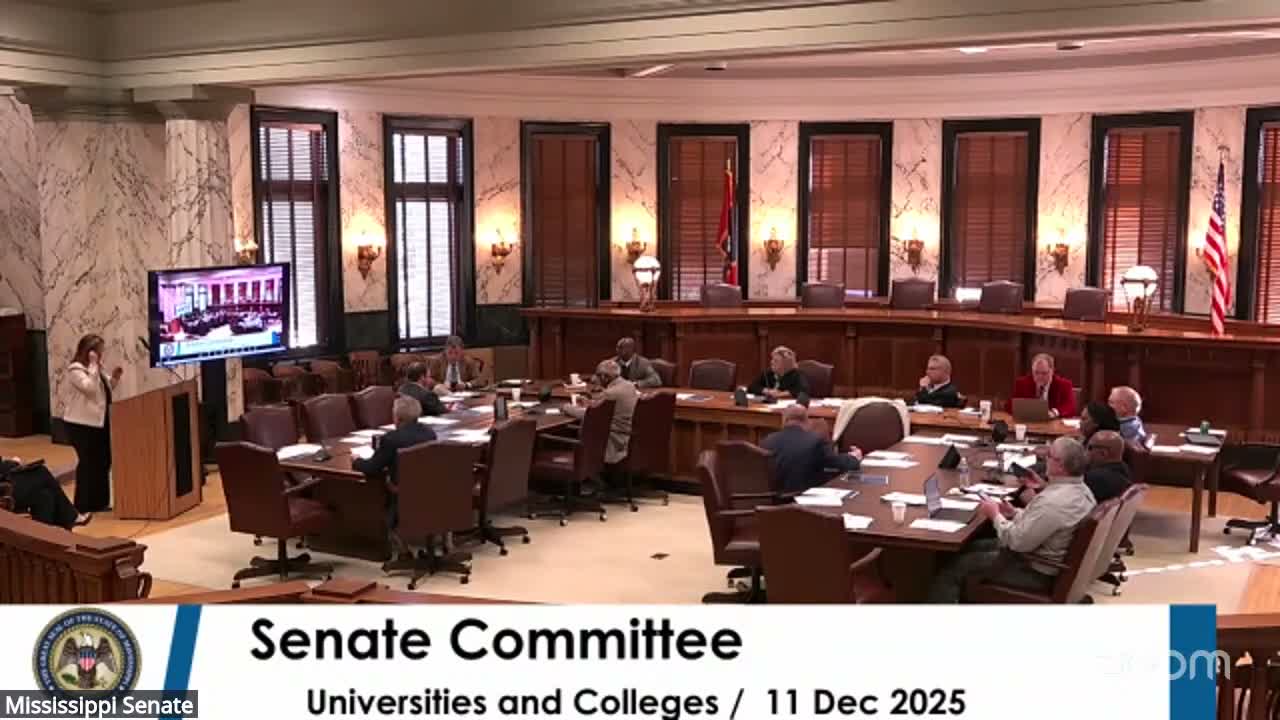
Summary
Presenters proposed a targeted, last-dollar grant for adult learners enrolled in priority occupations, recommending wraparound supports and small pilot funding ($1M) with full rollout estimates of $8—M'0M annually depending on scale.
Jennifer Rogers and Courtney Taylor presented a design for an "adult workforce promise" grant aimed at reengaging adult learners who are financially independent or have interrupted postsecondary pathways.
Courtney Taylor described the program as a grant-based, not loan-based, approach modeled on successful state programs such as Tennessee Reconnect and Michigan Reconnect. Key features she and other presenters recommended include last-dollar tuition and fee coverage after Pell and gift aid, required advising tied to employer needs, and optional stipends of $250—to—500 to offset childcare and transportation costs.
Taylor estimated a per-student tuition cost of roughly $1,000 to $1,200 and suggested a small pilot could begin at about $1 million. Full statewide rollout, she said, might be feasible in the $8—M to $9—M per year range given Mississippi's size; Tennessee spends about $19M annually to serve 20,000 students, she added as a point of comparison.
Committee members emphasized capacity constraints and asked whether community colleges have room to absorb large increases in adult enrollments. Courtney Taylor and others acknowledged limits and urged careful piloting and coordination between workforce agencies, rehabilitation services, community colleges and local employers.
Presenters recommended program design choices to maximize participation and minimize administrative burden: simple grant awards, clear prioritization of workforce-shortage programs (health care, IT, advanced manufacturing, construction, skilled trades), annual reporting requirements and caps on administrative costs.
Members asked for further cost modeling, steps to ensure participants remain in-state after credential completion, and data on anticipated participant counts; presenters agreed to provide more detailed estimates and to study retention and regional capacity.