
Advocates tell RDAC Connecticut needs better testing, centralized data and insurance protections for sickle cell and hemophilia
Get AI-powered insights, summaries, and transcripts
Subscribe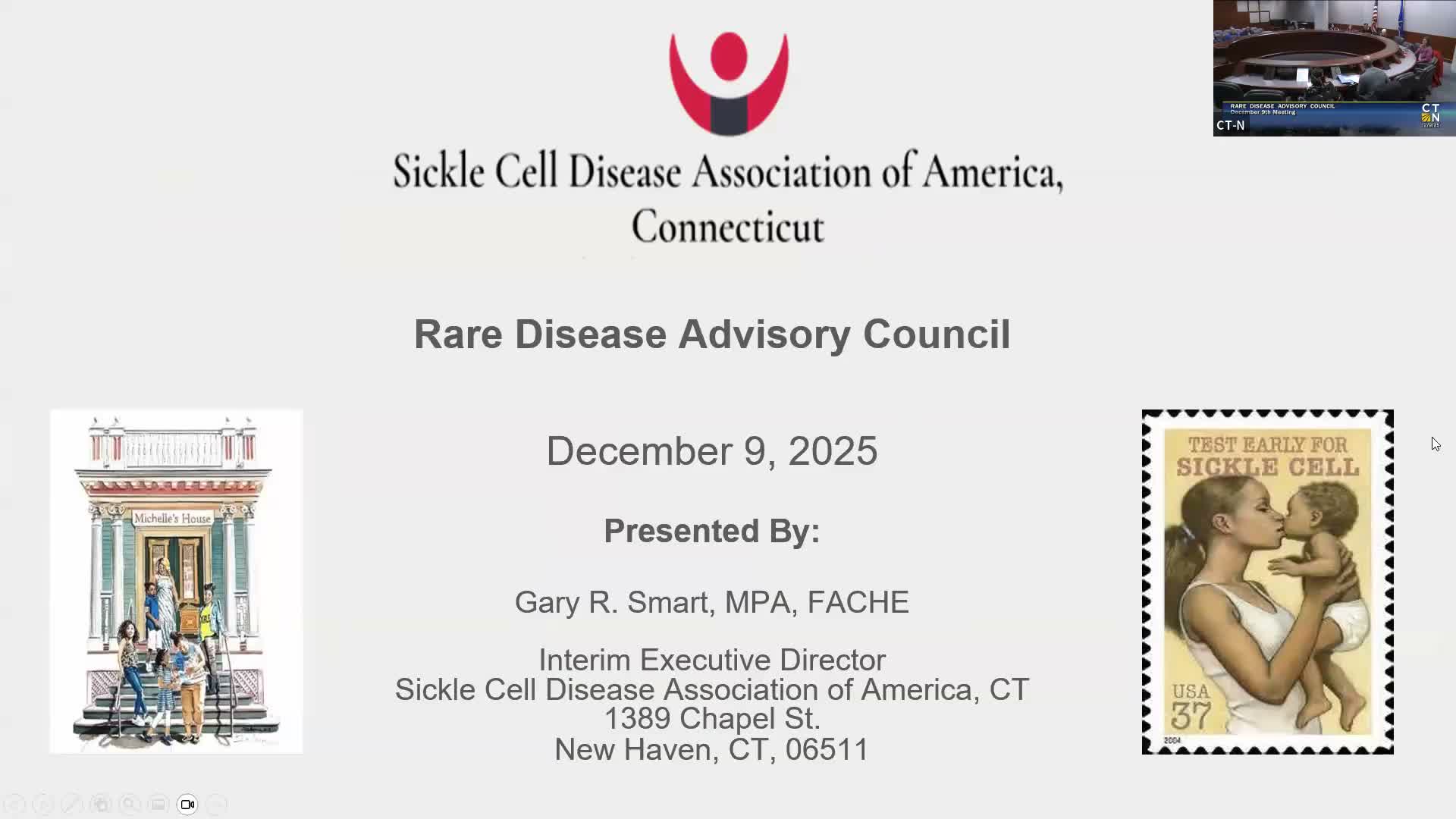
Summary
Speakers representing sickle cell and hemophilia communities described statewide gaps in case identification, data sharing, and family burdens from treatment costs and access; they urged coalition development, expanded trait testing, and policy supports.
Advocates at the Rare Disease Advisory Council meeting urged stronger statewide action on sickle cell disease and hemophilia, including centralized data, expanded testing, care coordination and insurance protections.
Gary Smart, interim executive director of the Connecticut chapter of the Sickle Cell Disease Association of America, described the biology and complications of sickle cell disease, estimated hundreds to thousands of Connecticut residents with sickle cell disease or trait, and proposed creating a statewide coalition and a central repository to make data and resources accessible to families and providers. Smart outlined prevention and education goals, school support and expanded trait testing.
Alyssa DeJean described the day‑to‑day burdens of caring for a child with severe hemophilia and said specialty medications can cost about $300,000 per patient per year. She described earlier experiences with training to give home infusions, difficulties when visiting‑nurse services were denied by insurers, and the administrative burden families endure to access therapies. She urged the state to protect patient access to specialty drugs, support research and ease family burdens so children can access treatment without repeated hospitalizations.
Both speakers asked RDAC and state officials to consider policies that improve access to treatment and to support families in navigating insurance and specialty pharmacy barriers. No formal vote or legislative action was taken at the meeting.