
Hillsborough County committee reviews A/E proposals for CDBG-DR single‑family housing; flags staffing, references
Get AI-powered insights, summaries, and transcripts
Subscribe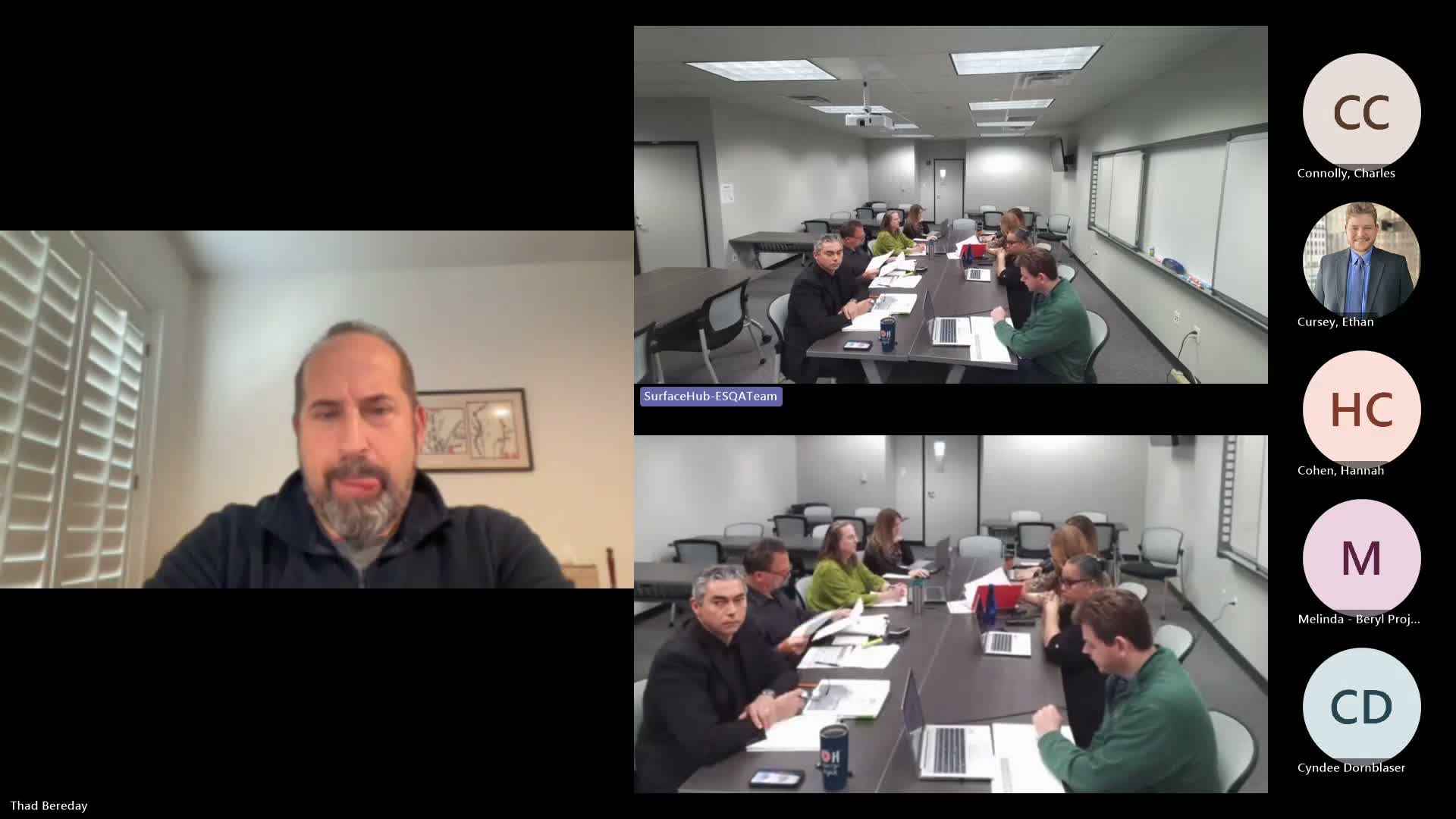
Summary
An evaluation committee reviewed eight eligible proposals for professional architectural and engineering services under RPS25‑379 (CDBG‑DR single‑family housing). Members praised firms' federal-compliance experience but raised repeated concerns about missing forms, capacity to scale and poor reference information; oral presentations will be scheduled.
HILLSBOROUGH COUNTY — An evaluation committee convened Nov. 7 to discuss proposals for RPS25‑379, the county’s solicitation for architectural and engineering services tied to Community Development Block Grant — Disaster Recovery (CDBG‑DR) single‑family housing work.
Ethan Kersey, the county buyer assigned to the project, told the committee the county received nine proposals but that one submittal, from Strive Engineering Group, was deemed unacceptable and removed from evaluation. Committee members said they would review the remaining proposals in alphabetical order and base any later scoring solely on materials in the submitted files and the forthcoming oral presentations.
Cheryl Howell, the county’s assistant county administrator for community impact, said the procurement seeks firms able to navigate federal disaster- recovery requirements and meet a constrained timeline. “This program is in response to two hurricanes that occurred last year,” Howell said. She told the group that the county’s evaluation framework is built around four weighted criteria: the firm’s ability and staff, relevant project experience, willingness and ability to meet schedule and budget, and current or projected workload. Howell also reminded members that HUD and FEMA rules apply and that CDBG‑DR funds must be spent within a limited window.
Committee members praised several proposers for demonstrated experience with FEMA and HUD requirements — including explicit references in some submittals to 2 CFR part 200, 24 CFR part 570 and Davis‑Bacon compliance — but flagged recurring weaknesses. Rob Parkinson, representing grant and budget oversight functions, said one common issue was missing or incomplete mandatory forms: “I contacted our procurement person to make sure something didn’t get missed when the files were brought over — missing the form SF‑330, missing substantive parts of the proposal,” Parkinson said.
Across multiple proposals members raised three consistent concerns: (1) limited in‑house architectural capacity or clarity about who would perform architectural work versus subcontractors; (2) insufficient explanation of schedule and budget management on large, multi‑task orders; and (3) inadequate reference contact information and low response rates from references.
Several members noted local or regional firms with useful Tampa Bay experience, while other firms presented strong engineering or project‑management tools but lacked clear single‑family or CDBG‑DR resume items. “They have a fairly robust municipal and federal client log,” one evaluator said of a proposer, while another added that some firms’ portfolios appeared to be more tailored to high‑end residential work than the scale of repair, elevation and reconstruction needed for this program.
The committee agreed that oral presentations will be important to clarify capacity and subcontractor arrangements. Kersey said proposers will get a roughly 15‑minute presentation slot with time for questions; Howell confirmed verbal clarifications can be considered part of the proposal record but no new written materials will be accepted.
On procurement administration, members asked staff to follow up on reference checks before scoring. Multiple evaluators urged proposers to provide government reference contacts and complete documentation; one member said missing reference responses should be treated as part of the proposers’ responsibility to demonstrate readiness.
Next procedural steps: staff will circulate schedules for oral presentations, continue reference checks, and return later for consensus‑based scoring. No motions or votes took place at the meeting.
The committee adjourned after the buyer said he would reach out to schedule the in‑person or virtual presentations and post procurement updates.