
Hialeah planning board backs rezoning for 33-unit building at 1002 and 1012 E. 19th St.
Get AI-powered insights, summaries, and transcripts
Subscribe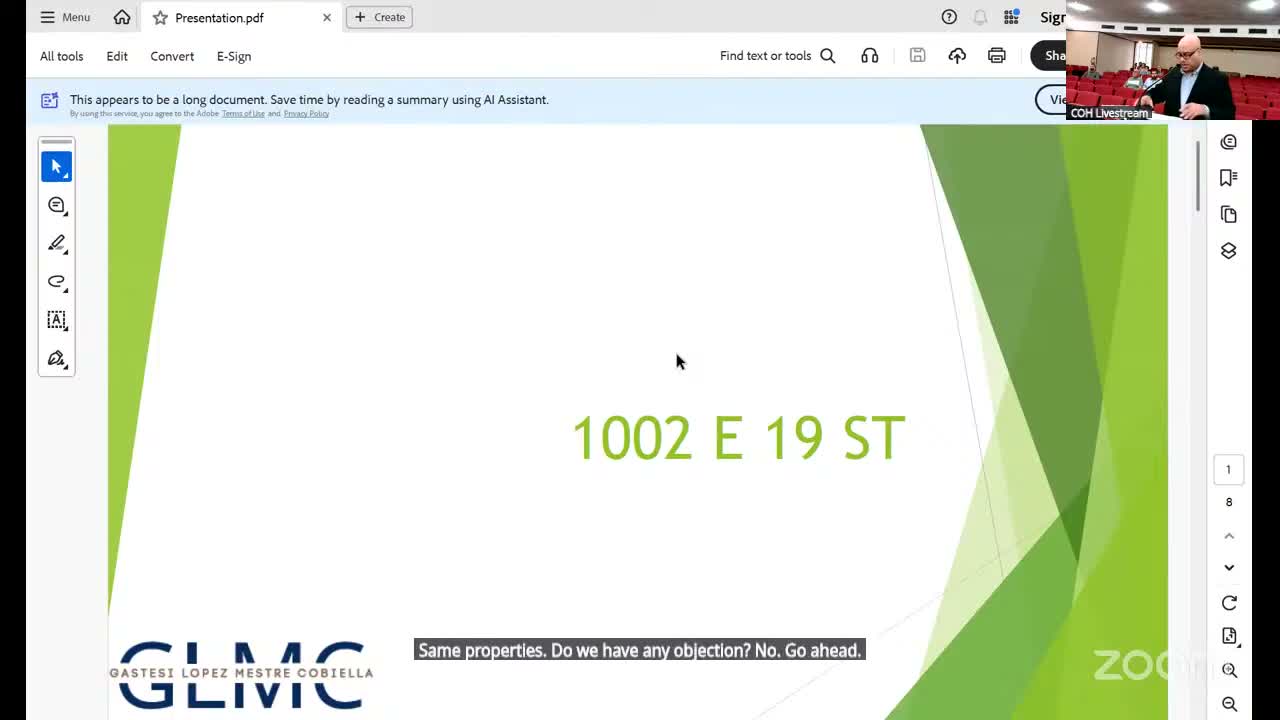
Summary
The Planning and Zoning Board voted to recommend rezoning two lots at E. 19th Street and E. 10th Avenue from single-family to transit‑oriented development for a four‑story, 33‑unit apartment building, approving variances and conditions including a one‑time parking mitigation payment; neighbors had submitted opposition letters citing parking and safety concerns.
HIALEAH, Fla. — The City of Hialeah Planning and Zoning Board on Nov. 19 recommended approval of a rezoning and related variances that would allow a four‑story, 33‑unit apartment building at 1002 and 1012 East 19th Street.
Planning staff told the board the two parcels sit inside the city’s Transit‑Oriented Development (TOD) district and that a companion land‑use amendment had been filed to change the parcels’ future‑use designation from low‑density residential to TOD. Staff described a project with ground‑floor parking providing 34 spaces (including two ADA spaces), three floors of residential units and a one‑space shortfall the developer would mitigate under the city’s parking‑mitigation rules.
“The staff finds that this deficiency is acceptable given that the property is located within the TOD District, which is intended to encourage the use of public transit, walking and bicycling,” the staff report said. Staff recommended approval with conditions, including a unity‑of‑title recorded with the Miami‑Dade Clerk and one‑time landscape and parking mitigation payments (the staff memo listed a parking mitigation amount of $25,420 to be paid at site plan or building permit stage).
Applicant Cesar Mesri said the project would be a four‑story building with 33 residential units and 34 parking spaces and that the design would meet the city’s TOD goals. Architect Manny Rells said unit sizes range from about 500–600 square feet for studios to roughly 700–900 for one‑bedrooms and around 1,000 for two‑bedrooms, and that on‑site drainage was engineered to contain stormwater and would require Hialeah water/sewer and paving and drainage approvals.
Neighbors submitted written opposition. A resident who read two letters into the record cited concerns including existing parking shortages, flooding and drainage risks, increased vehicle and pedestrian congestion, loss of neighborhood character and local safety incidents; the reader said the first letter was signed by neighbors within a 500‑foot radius (the reader later clarified the first letter bore 14 signatures). Staff and the applicant responded during the hearing, explaining the parking mitigation fund’s rules and noting that mitigation payments are restricted for parking‑improvement projects.
Board members debated the project’s fit within the TOD map and whether the change would accelerate loss of single‑family homes. Several members expressed sympathy for concerned neighbors while emphasizing the city’s housing needs and the TOD zoning objective to concentrate density near transit stations.
After discussion the board voted to approve the land‑use amendment and, subsequently, the rezoning and variance permits with the conditions recommended by staff. The motion to approve Item 3 was moved and seconded and passed by roll call.
The board’s recommendation will be forwarded to the City Council for final action in January 2026; staff referenced January council dates in the record. The conditions imposed by the board include recording a unity‑of‑title for the two parcels, paying required one‑time landscape and parking mitigation fees during the site‑plan/concurrency or building‑permit phase, and developing the site according to the signed and sealed plans submitted to staff.
The case record shows the project will return for final site‑plan and concurrency review and that the parking‑mitigation payment and landscape mitigation amount will be calculated during those reviews.