
Maricopa County supervisors review sweeping zoning ordinance overhaul, set vote for Dec. 10
Get AI-powered insights, summaries, and transcripts
Subscribe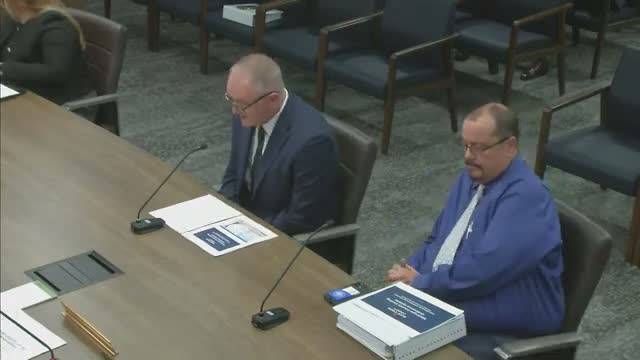
Summary
County planners presented TA 25001, a comprehensive modernization of Maricopa County’s zoning code that includes new rules for battery energy storage setbacks, limits on short-term rentals, ADU changes aligned with state law, administrative parking reductions and new rules for event venues; supervisors asked staff for guardrails and monitoring. (Vote scheduled Dec. 10.)
Tom Ellsworth, director of the Maricopa County Planning and Development Department, told the Board of Supervisors on Monday that a proposed text amendment (TA 25001) represents the most significant modernization of the county zoning ordinance in decades and aims to make the code clearer and easier to use. “This update began as a 2025 initiative from the chairman,” Ellsworth said, adding the rewrite replaces dense paragraphs with tables and charts and streamlines permitting to support housing availability and attainability.
The draft, which staff said was developed with a 16‑member task force and broad public outreach, reflects dozens of specific changes. Ellsworth said the county received input from more than 300 questionnaire participants and over 150 public comments on the draft posted for review, and that the task force identified 85 action items of which 39 are ready to incorporate in the current version.
Among the substantive changes: battery energy storage systems (BESS) are now defined as a discrete land use. The draft initially proposed a 500‑foot separation between large battery installations and residential uses and a 100‑foot property‑line setback. After consultation with fire authorities and the Planning and Zoning Commission, staff said the update removes the 500‑foot separation and retains a 100‑foot setback, which Ellsworth said is “consistent with national fire standards, specifically NFPA 855.” He and staff emphasized that rezoning remains available to impose additional, site‑specific compatibility conditions, such as landscaping or fencing, on projects that come forward by special approval.
Supervisors pressed staff on aesthetics and legal risk. Supervisor Brophy McGee asked whether waiving landscaping requirements would mean battery sites “won’t have to sort of blend into the area,” and warned of the difficulty of requiring hundreds or thousands of feet of continuous screening on large sites. Ellsworth responded that landscaping requirements between industrial/commercial and residential zones are now part of the proposed code and that rezoning cases can include customized buffering conditions. A supervisor who referenced the Ranger Energy Storage rezoning noted that the board previously required a 500‑foot buffer in that case; staff replied that rezoning continues to be the mechanism to set case‑specific conditions.
The update also addresses accessory dwelling units (ADUs) and short‑term rentals (STRs) to reflect recent state law changes. Ellsworth said the code will allow multiple ADUs depending on lot size—under one acre, a property may have one detached and one attached ADU; properties of one acre or more may have additional ADUs if they are deed‑restricted as affordable. To preserve neighborhood character, the draft limits STRs to one rental per property as a general rule and continues to allow multiple STRs only through a legislative Special Use Permit (SUP). Ellsworth cautioned that state statute still controls occupant and owner‑occupancy rules in certain ADU‑to‑STR situations.
Parking requirements are reorganized and streamlined. The draft retains a baseline requirement of two parking spaces per residential unit, adds standard ratios for offices and industrial uses (office: 1 space per 300 sq. ft.), and enables applicants to seek shared‑parking arrangements or reduced parking via a staff‑reviewed parking study at the plan‑of‑development stage instead of always requiring a public hearing. Several supervisors, including Brophy McGee and Supervisor Stewart, pushed back on relying on applicant‑commissioned parking studies, calling for guardrails on methodology and thresholds for when reductions should escalate to the Planning and Zoning Commission or the board.
County staff proposed three options and board oversight measures during the discussion: (1) keep the administrative reduction but require a department directive to set clear standards for parking studies and monitoring, (2) remove the administrative reduction, or (3) set a percentage threshold so that reductions larger than a specified percent (examples discussed included 20% and 50%) would require commission or board approval. County staff suggested a compromise—allow staff to approve modest reductions but require a higher threshold reduction to return to the board—and offered to provide a six‑month report on reductions requested and granted if the board approved the change.
The ordinance also introduces new rules for special event venues and temporary use permits (TUPs). Under the draft, event venues seeking legislative approval would generally need a minimum of three acres; temporary use permits would remain limited to 30 days within a six‑month period, and repeated use would trigger a SUP requirement. Ellsworth said the new SUP standard for event venues would include limits on hours, amplified music, parking (one parking space per two people of occupancy for events), and traffic control measures.
Staff proposed several administrative‑level changes intended to reduce re‑application burdens, including increasing plan‑of‑development validity from two to three years with the option for administrative renewals. Ellsworth also said the update removes some proposed scenic corridor changes (for example, portions related to State Route 74) from this phase to allow more focused public discussion in a future phase.
County Manager Jennifer (county manager) and supervisors praised staff for the speed and breadth of the rewrite; Ellsworth closed by thanking the task‑force members and staff for their work. The board was told the ordinance amendment will appear on the formal docket for a vote on Wednesday, Dec. 10.
Votes at a glance: At the end of the informal meeting, the board unanimously approved a motion to convene an executive session on other matters; the motion passed and the executive session was scheduled to begin at 11:15 a.m.
What comes next: The board will consider a formal motion and vote on the zoning ordinance update at its Dec. 10 meeting. Staff proposed a post‑implementation report option (six months after approval) to track parking reductions requested and the impacts of administrative approvals.