
Evanston council approves seven-year Axon contract for body cameras amid privacy questions
Get AI-powered insights, summaries, and transcripts
Subscribe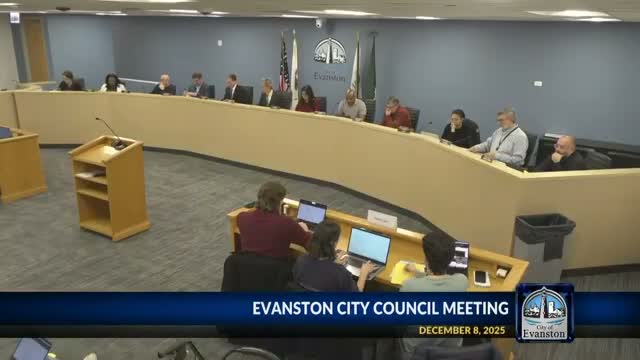
Summary
The City Council approved a seven-year renewal with Axon for body-worn cameras, cloud storage and a FUSIS real-time viewing system after debate on cost, surveillance risks and opt-out protections. Council approved the contract 6-3 after overturning a hold; staff emphasized the city retains data ownership.
The Evanston City Council voted to approve a seven-year contract renewal with Axon Enterprise Inc. for the city police department’s body-worn camera program, including in-car cameras, evidence management, redaction software and a FUSIS unified viewing system.
Deputy Chief Jody Wright told the council the department has worked with Axon for more than a decade and that the renewed agreement would bundle hardware, software, storage and training while offering guaranteed hardware refreshes and opt-out points at years three and six. "Customer controls and owns all rights, title and interest in customer content," Wright said, summarizing contract language and telling the council that evidence is stored in Microsoft Azure Government Cloud and that Axon does not sell or mine customer data.
The discussion focused on two main concerns: price and the FUSIS operational system that consolidates city-owned camera feeds into a single, real-time view. Several council members said the new package represented a significant increase in long-term cost. Councilmember Kelly said she wanted a clearer line‑item breakdown of what was new and what replaced existing services. "This is a big commitment," she said, asking for comparables with similar cities.
Deputy chief Wright and Corporation Counsel explained technical safeguards and legal limits. Wright said FUSIS "does not give us access to private cameras without an owner's consent" and that the system does not include facial recognition. Corporation counsel Alex (surname not given on the record) said subpoenas and FOIA requests are routed through the city and that Axon cannot unilaterally produce Evanston’s evidence.
Council members also asked about audit trails and alerts for unauthorized access. Wright described extensive audit logging and role‑based permissions and said the department can produce audit trail records in response to appeals or records requests. Axon representatives described FUSIS as a set of lightweight "cores" that stream requested feeds to the city’s operations center and said cores do not persistently store data.
After floor motions and a brief hold, the council voted to overturn the hold and then on the contract itself. The final roll call recorded six votes in favor and three against, approving the renewal. Supporters emphasized legal compliance, operational efficiency and the contract’s opt‑out protections; opponents warned of surveillance risks and asked for more procurement comparables and cost detail.
The council decision preserves the city’s stated data‑ownership controls in contract language while advancing a multi‑year program that staff said is necessary to meet state requirements for officer body-worn cameras and to support evidence handling. The city will adopt the contract and proceed with implementation under the terms approved by the council.