
State Rep. Tom O'Day briefs New Canaan committee on changes to 8-30g and urges local preparations
Get AI-powered insights, summaries, and transcripts
Subscribe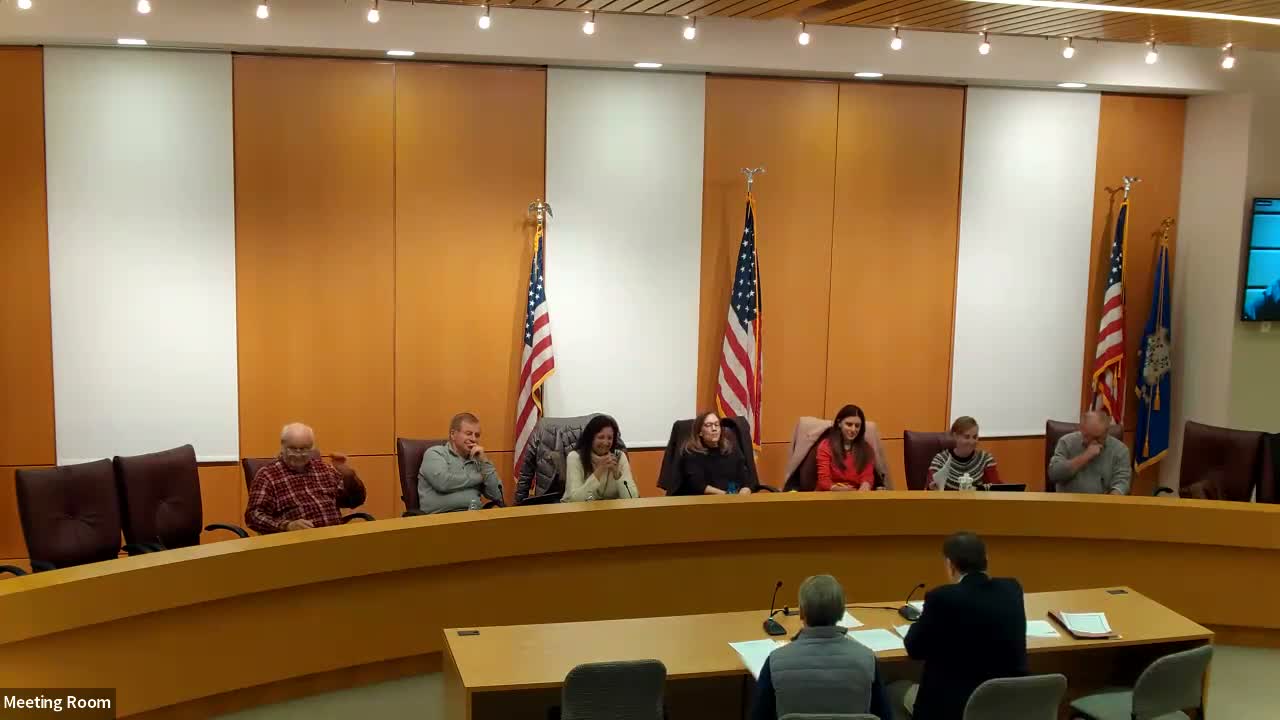
Summary
Representative Tom O'Day told the New Canaan Affordable Housing Committee that a recently signed, multi-section state housing bill changes how towns will be assigned fair-share targets, allows conversion of commercial properties to residential in some cases, and removes or lowers parking minimums for small projects. He urged local planning, COG coordination and legal review.
Representative Tom O'Day, a member of the state legislature, told the New Canaan Affordable Housing Committee on Dec. 8 that recent changes to Connecticut—s affordable-housing law will shift how housing requirements are set and urged towns to prepare their zoning and plans.
"If a builder came in and proposed an 8-30g project ... the town can buy it for a 5% premium over what the builder paid for it," O'Day said, describing a proposal that would give municipalities a right of first refusal on sites proposed under the law and require the town to build a portion of the proposed affordable units within eight years or face financial penalties. "That gives them discretion as to where to build it and in what form," he added.
The committee received an Office of Legislative Research analysis of the bill and a one-page summary O'Day distributed. He told members the statute has complex, multi-part provisions that towns must digest: regional councils of governments (COGs) will play a much larger role in setting "fair share" allocations; the state may build on state-owned land with limited local input (Section 48); and the law includes new language allowing conversion of commercial property to residential or mixed use, potentially "as of right" under certain sections (O'Day, SEG 994-1001).
O'Day also highlighted changes to parking minimums. "You cannot mandate minimum parking for 16 units or less," he said, noting that above 16 units a developer's parking needs assessment may govern the requirement. He warned the committee that ambiguities and drafting errors remain in the bill and that the administration will issue clarifications on entry points such as parking rules, fair-share calculations and moratorium eligibility.
The congressman urged New Canaan to work with WestCOG and the regional planner he named as a trusted advisor, and to have town counsel ready to interpret new rules. "My number-one priority for you would be to make sure you stay out in advance on the plan to make sure we can get the moratorium going forward," O'Day said, referring to municipal moratorium protections linked to approved local plans.
Committee members asked for practical clarifications: whether housing built on state-owned land would count toward local totals (O'Day said yes if built in New Canaan), how the COG and state Office of Policy and Management will reconcile regional and municipal numbers, and when the executive branch would publish interpretive guidance (O'Day said clarity was expected in the coming weeks during the short session).
O'Day encouraged members to flag drafting errors and to provide feedback: "If the group of you... see other mistakes with it, let us know because I do have the ear of the majority leader promising me to listen," he said.
What happens next: O'Day said the legislature will refine the statute in the next session and the administration will issue implementation details; he invited the committee to send specific technical comments through the town attorney or directly to his office.
The committee did not take any formal action on the bill during the meeting; members agreed to consult Town Counsel and WestCOG and to flag issues that might require local zoning or ordinance changes.
Ending: O'Day closed by offering to accept input from the committee and praising local staff and regional planners for their work on implementation questions.