
Oregon City hears study showing low local street volumes; commissioners weigh short-term traffic calming against waiting for TSP update
Get AI-powered insights, summaries, and transcripts
Subscribe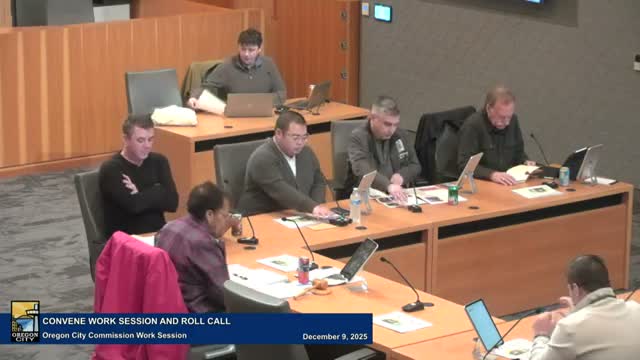
Summary
A DKS traffic study of 20 local streets found most have low daily volumes and 85th‑percentile speeds at or below 25 mph. Commissioners debated requiring traffic-calming during land-use approvals now versus incorporating standards in a Transportation System Plan update; staff will seek grant funding and return with interim options in 4–5 months.
A consultant presented results of a local street study showing most sampled streets in Oregon City have low daily vehicle volumes and 85th‑percentile speeds consistent with the 25 mph posted limit.
"Looking at the data that we've collected on these 20 locations, none of these streets are getting near that top threshold," Ria Velasowski of DKS told the commission, adding that only one site approached 1,000 average daily trips and that no sampled location exceeded about 31 mph at the 85th percentile.
The study covered 20 representative local streets across the city using speed and volume tubes. Staff told the commission the vendor gathered primarily weekday counts and that a few weekend counts were used at park-adjacent locations that attract recreation traffic. Ria said best practice generally treats roughly 1,000–2,000 vehicles per day as an upper threshold for local‑street livability and safety; most sampled streets were well under that range.
Commissioners used the presentation to consider timing and policy. Commissioner Mike Mitchell and Commissioner Scott Wilson urged the city to adopt at least interim measures tied to land‑use reviews so neighbors have measurable expectations when new subdivisions or developments add trips to local streets. "We had nothing we could measure against," Mitchell said, describing an earlier subdivision that produced unexpectedly high traffic in an adjacent neighborhood.
Commissioner Adam Marl argued for waiting and incorporating any new standards into the city’s forthcoming Transportation System Plan (TSP) update. Marl said the TSP would allow a more holistic review — identifying trigger points, consistent mitigation measures and how local streets interface with collectors and arterials — and cautioned that preemptive short-term requirements could be quickly revised later. Staff confirmed the study data would be preserved and could inform the TSP.
Staff described grant and timing constraints. City staff said state DLCD funding previously identified for TSP updates was reallocated and that the city plans to apply for a Transportation and Growth Management (TGM) grant when the next funding window opens (typically in May). Staff estimated two years or more from grant award to plan completion, including data collection and public engagement.
While several commissioners favored waiting for the TSP, the body asked staff to pursue grant opportunities and return with interim, lower‑cost actions that could be taken sooner — including better signage, targeted corridor pilots on higher‑speed local streets, and public information — and to report back in 4–5 months on grant status. The commission did not take formal action at the work session.
Next steps: staff will pursue grant funding and may present interim corridor pilot options; the commission scheduled a check‑in on progress.