
Ottawa County weighs converting CMH to independent authority as commissioners authorize strategy review
Get AI-powered insights, summaries, and transcripts
Subscribe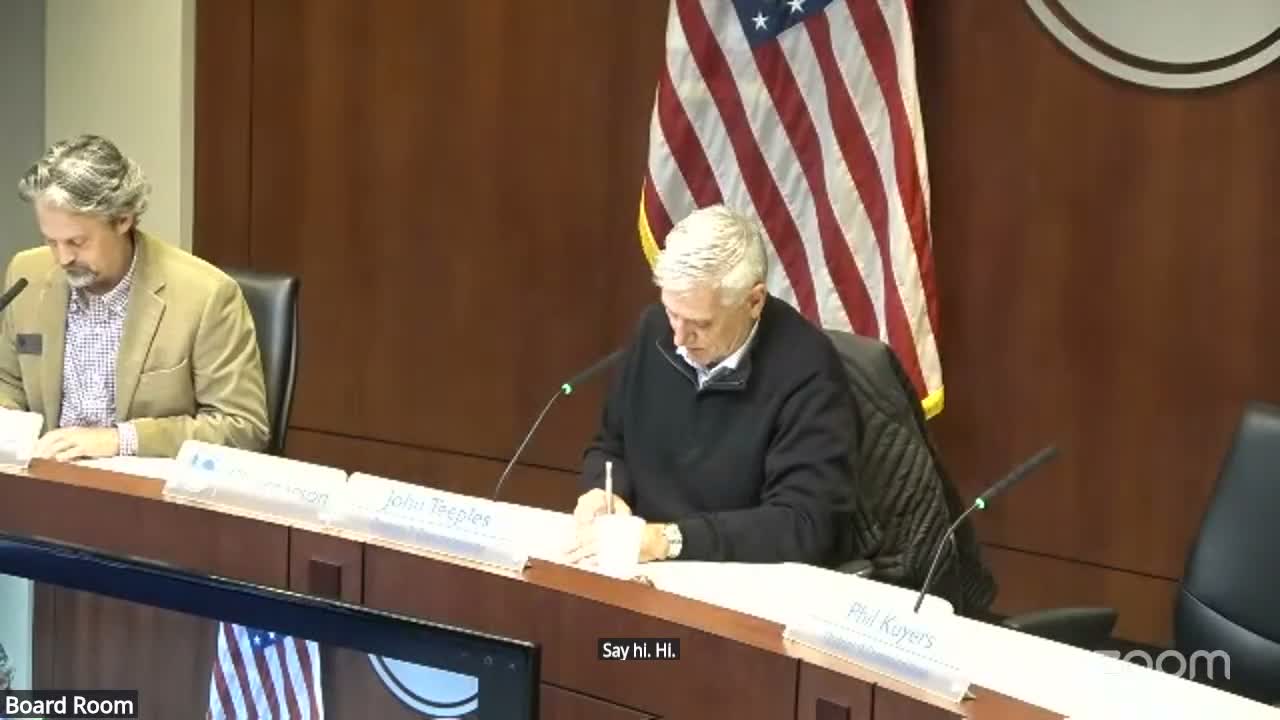
Summary
After a public briefing that put a potential $5.5 million CMH shortfall at the center of the discussion, the Ottawa County Board of Commissioners voted to direct the county administrator to develop a strategy and timeline to evaluate converting Community Mental Health to an authority; an earlier motion to go into closed session failed.
Ottawa County commissioners on Nov. 21 voted to direct the county administrator to develop a strategy and timeline to study whether to convert the county-run Community Mental Health (CMH) program into an independent authority, after a presentation that cited growing financial risk tied to Medicaid-managed care.
The board debated whether to begin that review in closed session before holding public hearings. A motion to go into closed session to consider counsel’s written opinion under the Open Meetings Act failed on a roll-call vote, but the board later approved, by voice, a motion authorizing staff to prepare a proactive plan intended “to minimize the financial risk to taxpayer dollars, retain quality employees, and ensure the continuation of quality mental health services,” with one commissioner recorded as opposed.
The briefing presented to commissioners said Ottawa County’s CMH may be facing a significant deficit for fiscal year 2024–25. "Right now, it looks like we have a $5,500,000 deficit," corporate counsel Doug Van Essen told the board during the presentation. County and CMH officials said that the structure of Medicaid-managed care — fixed per-capita payments from regional entities and unpredictable, high-cost individual cases — creates exposure for counties that directly operate entitlement services.
Dr. Brashears, the CMH chief executive, told commissioners that most Michigan CMHs converted to authorities years ago and urged a formal impact analysis. "We should be looking at this," he said, describing the authority option as an "arm’s-length arrangement" that can offer more flexibility to manage rapidly changing Medicaid rules and financial pressures.
Members of the public raised transparency concerns before the presentation. William Pettit, a Grand Haven resident and former Michigan attorney general office attorney, urged the board not to meet behind closed doors for this topic, saying "closed sessions are not normal." Several other residents asked why the county scheduled a special meeting two business days before a regular meeting and pressed for open hearings and clarity about the proposed change.
Presenters outlined three broad alternatives: restrict CMH to non-Medicaid services; maintain the status quo as a county department; or create a single-county CMH authority. Counsel and CMH staff described the authority option as potentially shifting the county general fund’s exposure away from Medicaid deficits under a statutory provision (counsel cited MCL 330.1205), while noting the authority itself and regional entities would still face fiscal risk.
Officials recommended public education and three public hearings across the county if the board wants to move forward. Van Essen said the statutory process and administrative steps typically take nine to 12 months; he recommended scheduling hearings in multiple county locations and said, if the board adopts a resolution, the statutory change generally takes effect one year after adoption unless the state approves an earlier transfer.
Commissioners who voted to authorize the administrator to prepare a strategy said they were acting to protect taxpayers and services while preserving options for thorough public vetting. Several commissioners asked for counsel’s opinion and other supporting materials to be made available to the board and public as work on the proposal proceeds.
The board’s next procedural step, as voted, is for the county administrator to return with a recommended timeline and a strategy that outlines steps (impact analysis, public hearings, contractual transition details and protections for staff and millage funds). The motion passed and the board returned to regular business and committee reports.
What’s next: The county administrator will develop and present a recommended approach and schedule; if the board decides to pursue an authority, the process includes notice and three public hearings followed by a resolution to create the authority and transition planning expected to take up to a year.
Quotes cited in this article are drawn directly from the Nov. 21 meeting transcript and public comments.