
Muskegon Commission approves waterfront development deal with West Michigan Dock, setting an 18‑month environmental review
Get AI-powered insights, summaries, and transcripts
Subscribe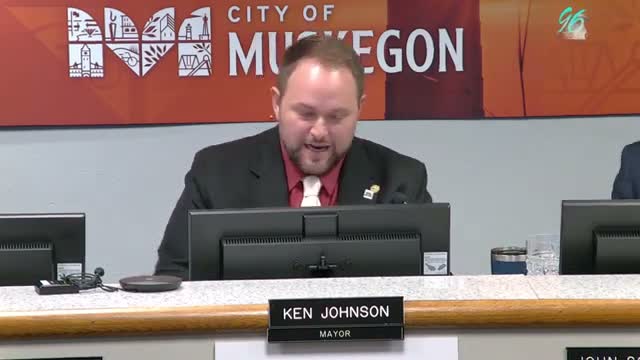
Summary
The Muskegon City Commission voted 4–2 to approve a development agreement with West Michigan Dock and Market (Sand Products) that would acquire shoreline parcels including an L-shaped slice of 3rd Street Wharf and pursue an option on the Verplank shoreline property for remediation, wetland restoration and future public access; an 18‑month due‑diligence window and appraisals are required before final acquisitions.
The Muskegon City Commission voted 4–2 on Dec. 9 to approve a development agreement with West Michigan Dock and Market, the local Sand Products company, that lays out a multi‑step framework to acquire and redevelop shoreline parcels now held in part by the city and private owners.
City officials said the agreement would immediately transfer a small L‑shaped parcel at 3rd Street Wharf into city ownership and give West Michigan Dock an 18‑month due‑diligence option to complete environmental assessments on a roughly 25‑acre Verplank parcel the company has the option to purchase. City manager staff told commissioners the timeline gives the city and the buyer space for baseline environmental studies, and a separate appraisal process will set purchase price terms.
“This is a tough vote,” the city manager said during deliberations, noting the agreement is the result of years of public engagement and multiple revisions to the draft. The manager said the pact is structured so the city can walk away during due diligence if remediation or other costs prove unworkable.
West Michigan Dock attorney and representative Chuck Kainstray told the commission the company has worked on similar projects for decades and intends to invest privately in port infrastructure if grant funding and approvals materialize. “I’ve been working, on this topic for almost 2 decades,” Kainstray said, adding that the company expects substantial private investment would be necessary to modernize port facilities.
Key elements approved by the commission include: an immediate transfer to the city of the 3rd Street Wharf L‑shaped parcel; a commercial grant allocation of $2.8 million designated for 3rd Street improvements; an 18‑month environmental due‑diligence period for the Verplank parcel and a later option window for the city to finalize acquisition; a baseline environmental assessment process; and an appraisal procedure with the option for a second appraisal if either party disputes the first valuation.
The development agreement makes clear that the port and shipping redevelopment costs are the private party’s responsibility. The city will partner on grant applications and may use targeted public funds for acquisition and public‑access improvements (for example, purchase and access improvements on the Verplank parcel), but municipal dollars are not expected to underwrite port infrastructure. The city manager said that if the city and West Michigan Dock pursue remediation and restoration on Verplank, they will seek external funding before tapping general city funds.
The agreement drew vocal public comment both for and against it during a large public‑comment period earlier in the evening. Supporters, including representatives from the Greater Muskegon Economic Development organization, Trinity Health and Muskegon-area colleges, said the plan would expand public access, boost tourism and position Muskegon to re‑establish modern port operations. Opponents and campground users warned losing portions of Fisherman’s Landing campground could reduce affordable waterfront recreation, and questioned long‑term access and maintenance commitments.
Several commissioners raised specific concerns about community costs, contingency plans if the Verplank option fails, campground operations, and whether equipment and campground assets conveyed to the buyer would be re‑used by the city. The manager said campground maintenance items would be inventoried and that day‑to‑day upkeep would transition to West Michigan Dock under the lease structure if the deal proceeds; the city retains authority over public parking lots adjacent to the site.
The measure passed with the following roll call: Commissioner Kilgo — yes; Commissioner Keener — no; Commissioner Gorman — yes; Commissioner Cochin — no; Vice Mayor St. Clair — yes; Mayor Johnson — yes.
Next steps under the development agreement include completion of the environmental baseline assessment during the 18‑month due‑diligence period, an appraisal process for the parcels, and joint applications for grant funding tied to remediation and public‑access improvements. The commission noted the deal does not convey any existing Mart Dock waterfront parcels to the city; it creates a framework that could enable West Michigan Dock to modernize operations and, at the same time, expand city‑owned shoreline for wetland restoration and public access over the longer term.
The commission’s action authorizes the mayor and city clerk to sign the development agreement as presented; environmental testing and appraisals remain prerequisites to any completed purchase and redevelopment.