
Heated public comments over impending censure of councilmember Sandoval dominate Salinas meeting
Get AI-powered insights, summaries, and transcripts
Subscribe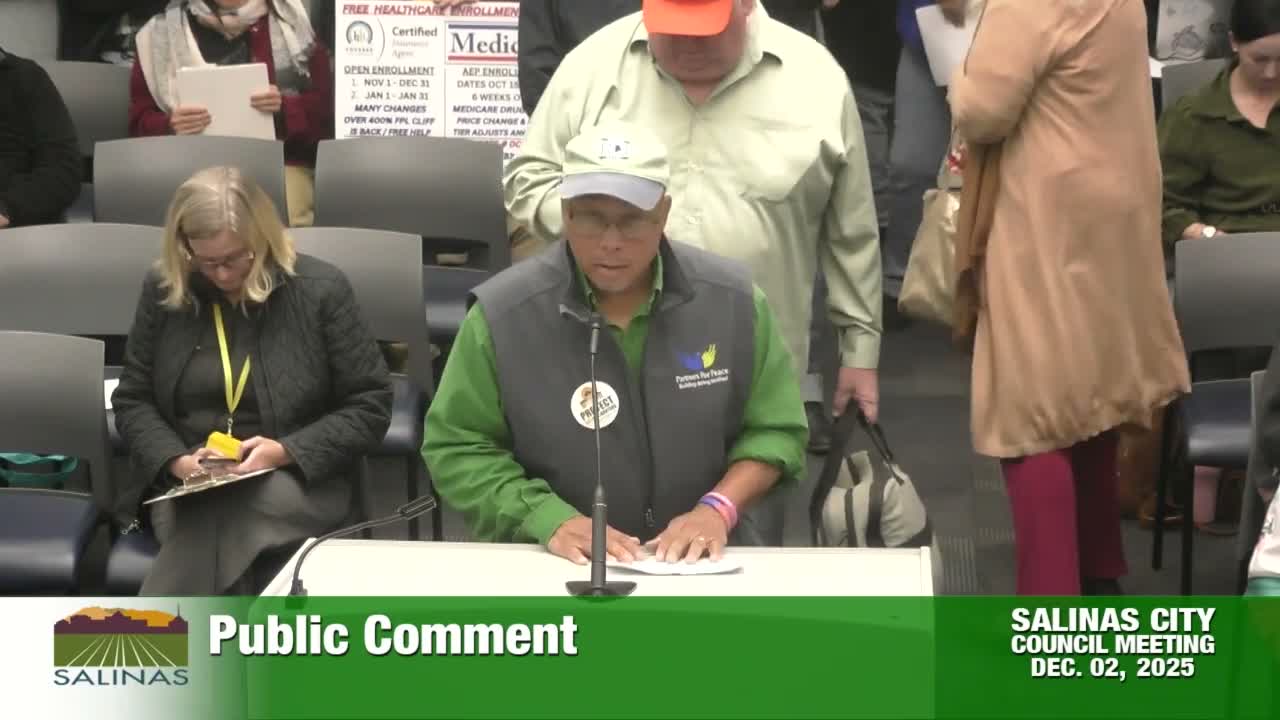
Summary
Public-comment speakers at the Dec. 2 Salinas council meeting overwhelmingly urged the council not to censure Councilmember Andrew Sandoval and voiced concerns about free speech, a DA investigation into petition signatures, campaign contributions and transparency.
A large and repeated theme of public comment at the Salinas City Council meeting on Dec. 2 centered on an impending censure of Councilmember Andrew Sandoval and allegations surrounding recent council conduct and a related District Attorney investigation. Multiple speakers accused city leadership of trying to silence a council member for exercising public-record requests, raising questions about transparency and posting critical social-media content.
Speakers cited a Monterey County District Attorney investigation they said had concluded with no finding of wrongdoing in a petition-drive complaint; one speaker summarized the DA's outreach as visits to dozens of addresses and interviews with dozens of signatories. Several residents and community groups told the council that the censure would amount to political retaliation and urged the council to focus on housing, safety and constituent services instead.
Other public commenters raised concerns about campaign donations from agricultural and real-estate interests, asserting a correlation between contributions and council action. Opposing views were also voiced: some residents said they supported censure and criticized the tone of certain councilmember social-media posts. City leaders did not take formal action on censure at this meeting but received sustained public input on how the council conducts internal discipline and responds to constituents' concerns.
Council leaders acknowledged the emotional tone of comments and stressed the need for improved communication and methods for conflict resolution; several members urged the council to focus on housing and other policy priorities. The public commentary provided a sustained airing of local political grievances that council members said they would take into account in upcoming agenda items.