
Committee recommends timeline, special meetings for appointed-officer evaluations
Get AI-powered insights, summaries, and transcripts
Subscribe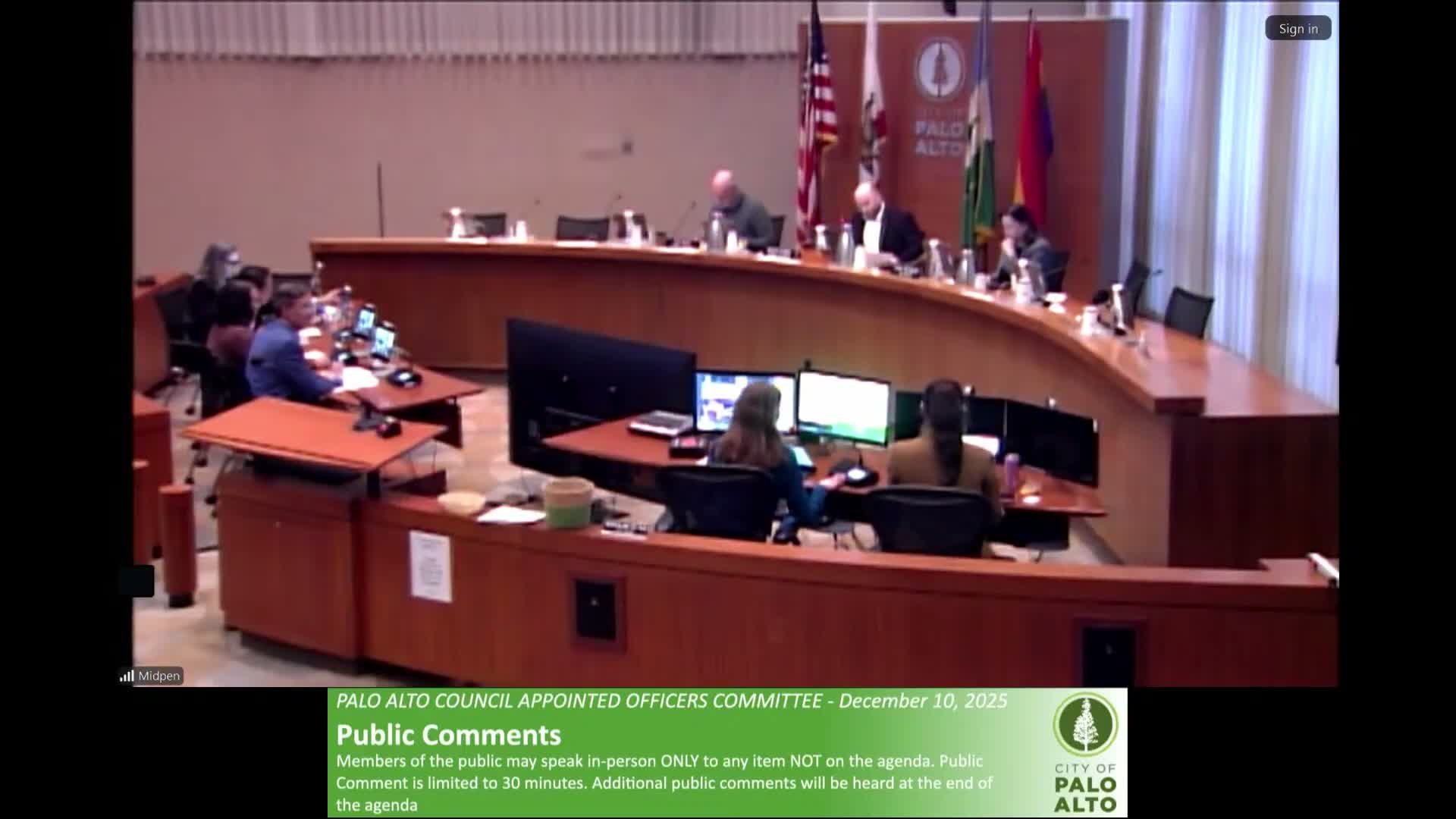
Summary
The CAO committee on Dec. 10 debriefed the city—s appointed-officer performance evaluation process and recommended timeline changes, using special meetings for in-person CAO interviews, collecting written comments in advance, and exploring public KPIs; staff will prepare a summary memo for council.
The Palo Alto Council Appointed Officer Committee on Dec. 10 debriefed the performance-evaluation process for appointed officers and recommended several procedural changes intended to speed reviews and shift them toward strategic, thematic feedback rather than isolated grievances.
Committee members and staff agreed that timely feedback is critical. An unnamed City Manager told the committee, "I think it's in everyone's interest to try to complete a a timely review," emphasizing that evaluations should align with the fiscal cycle so feedback can be operationalized. The City Attorney urged the group to "raise the conversation to a thematic level, and a strategic level," arguing the process should focus on recurring patterns and partnership between the council and executives rather than single incidents.
Members proposed holding one or more special meetings devoted to in-person CAO interviews so the council can avoid rushed regular agendas and have immediate, brief reflections after each interview. Council members also recommended giving councilors the option to submit written comments in advance so meetings focus on deliberation rather than wordsmithing drafts. Dan Rich, who prepared a memo on the process, said bringing a raw draft to the first full meeting and discussing it together would "be a lot more effective and efficient" and could shave weeks off the timeline.
Public participation and transparency were discussed. Public commenter Herb B. asked that when council and CAOs agree on key performance indicators (KPIs), those KPIs be published so public comments can be tailored to the measures being used. Staff noted that evaluation details discussed in closed session remain confidential but that KPIs tied to council goal-setting would be part of the public process.
Next steps: Dan Rich will prepare a summary memo of this discussion to circulate to the CAOs and the full council as an information item; the committee proposed a May kick-off for next year—s evaluation cycle and suggested the CAO committee could be empowered to implement the updated timeline with council notification. No formal motion was required or recorded on the evaluation-process recommendations.