
AUM seeks state approval for TVI certificate program supported by US Department of Education grant
Get AI-powered insights, summaries, and transcripts
Subscribe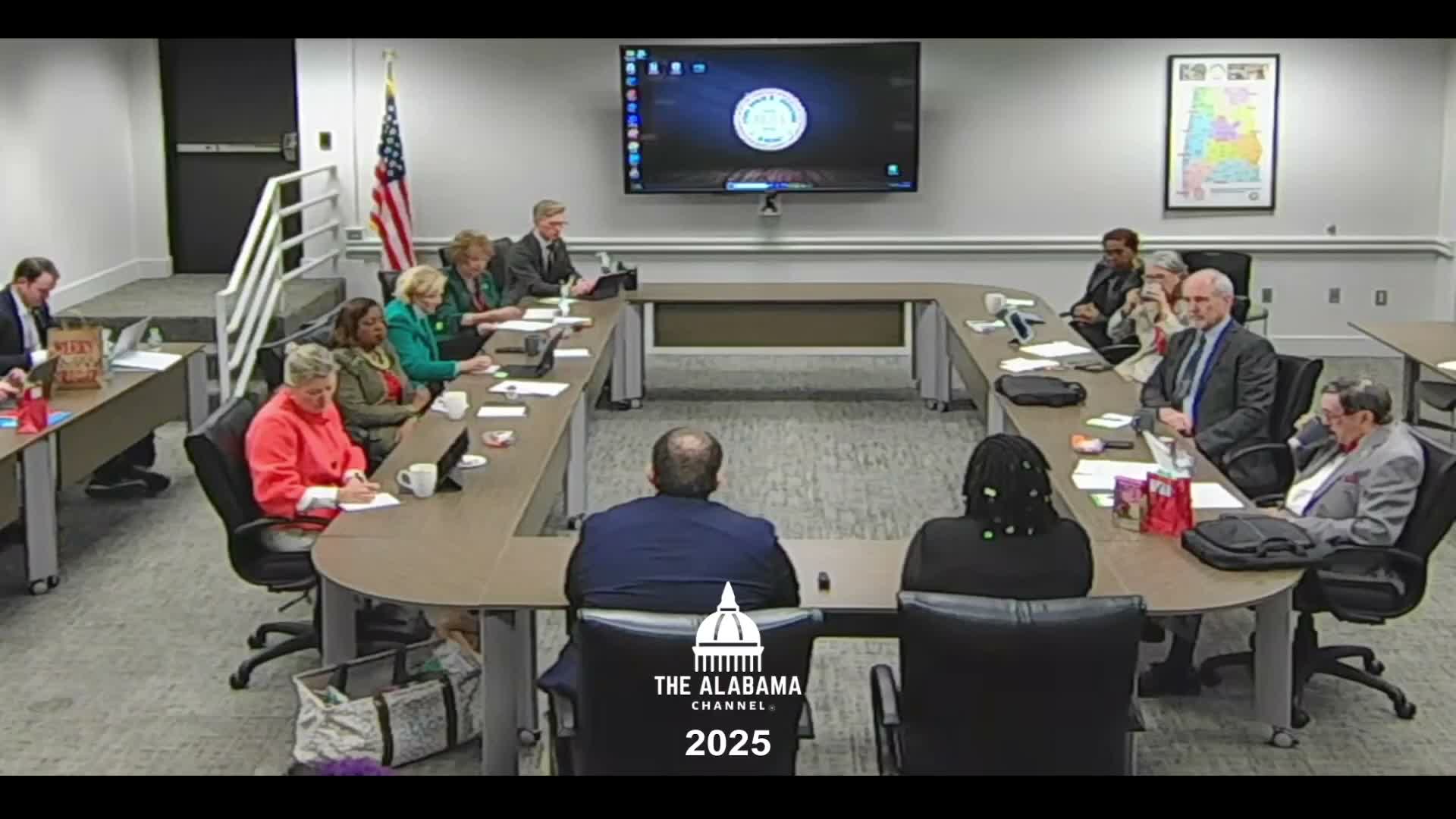
Summary
Alabama AUM presented a proposal to train Teachers of Students with Visual Impairments through a 21-credit advanced certificate, a practicum with the Alabama Institute for the Deaf and Blind, and a US Department of Education grant expected to fund roughly 10 students a year for four years (409250 total).
An unidentified AUM presenter told the Alabama State Board of Education that Auburn University at Montgomery (AUM) will offer an advanced program to prepare teachers to serve students with visual impairments, enrolling teachers who already hold certification.
The presenter said the certificate requires 21 credit hours (seven courses) covering braille, math braille (Nemec code), orientation and mobility, instruction for students with deafblindness and other specialized coursework, plus two advanced special-education courses. "We will be taking on students who already have a teaching certificate," the presenter said, noting students also will "be completing an intense practicum" run in partnership with the Alabama Institute for the Deaf and Blind.
The presenter told the board AUM received a US Department of Education grant to support the program and projected the grant would fund a minimum of 10 students per year for four years; she estimated the program could train "40 to 50 new TVIs for the state of Alabama" over five years. She said the program could also accept privately paying students and that AUM leadership (a provost) has pledged institutional backing even if the program yields low enrollment initially.
Board members asked whether the program could proceed without federal grant funds given changes at the US Department of Education; the presenter answered yes and said local education agencies (LEAs) have repeatedly requested more qualified teachers, calling it "a compliance issue." A board member asked whether the similar University of Alabama in Huntsville program had closed; the presenter said it closed after she left and described the field as "very niche," saying she is among only three or four specialists in the state.
Board discussion included questions about practicum logistics and summer intensive camps operated by the Alabama Institute for the Deaf and Blind, which the presenter described as part of the hands-on training. The presenter said the practicum will be mentored work tied to coursework and will sometimes place candidates at regional schools or within local districts to gain experience with both high-achieving students with visual impairments and students with multiple disabilities including deafblindness.
The board did not record a formal vote during this presentation; the presenter asked for the board92s approval to proceed with the program and invited questions.
Next steps: the presenter asked board members to approve the program moving forward and said AUM had the federal grant in hand to support the initial cohort.