
Historic-preservation advocates urge council to pause COA change tied to curb ramps
Get AI-powered insights, summaries, and transcripts
Subscribe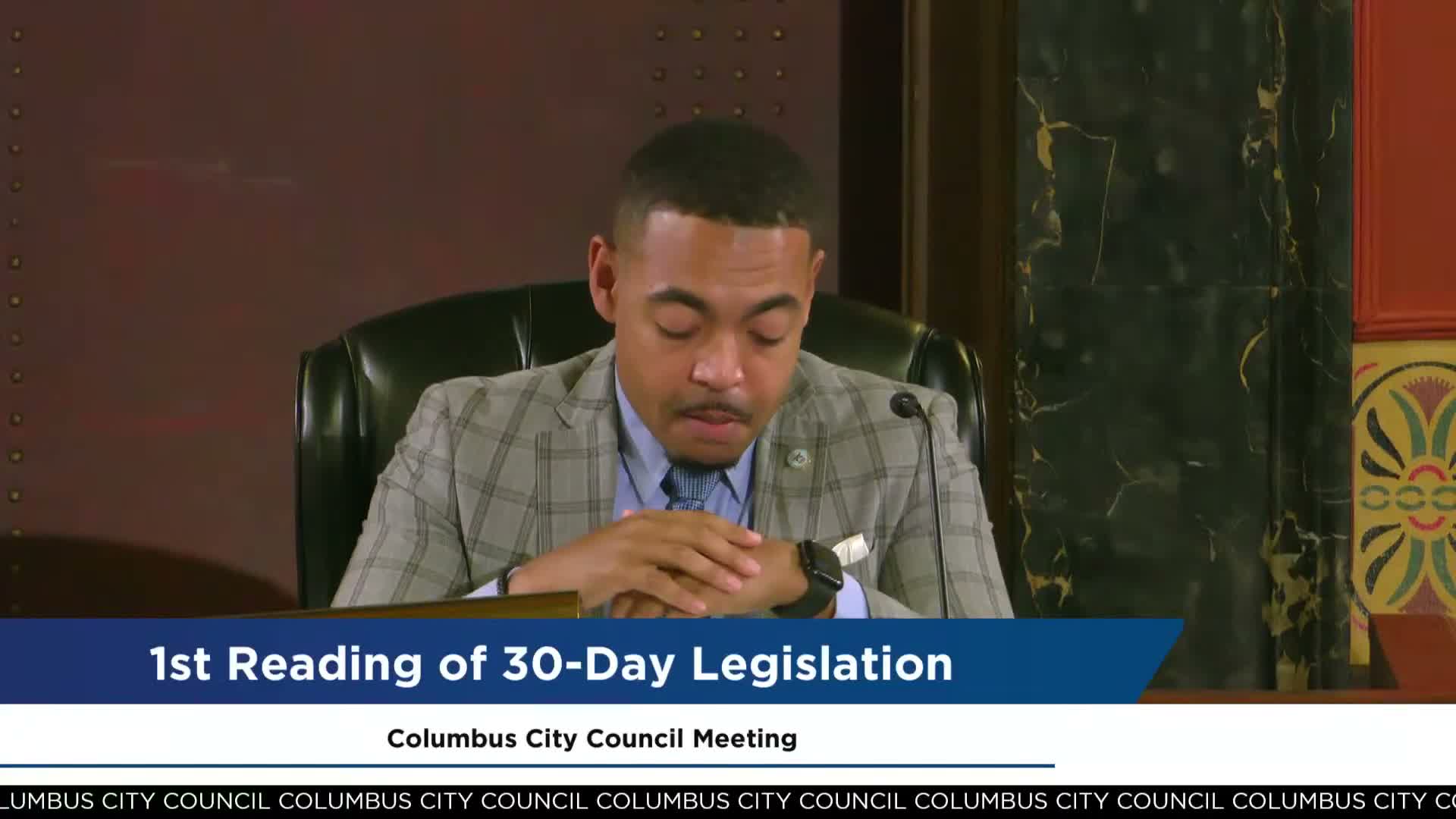
Summary
Speakers from the German Village Society and a historic commissions chair urged Columbus City Council to delay emergency action on an ordinance that would exempt certain city right-of-way work from Certificate of Appropriateness review, saying the draft risks altering private historic structures and excludes preservation experts from drafting.
Speakers representing German Village addressed council during the public-comment period for the first reading of ordinance 33-14, which would change how right-of-way work — including curb-ramp installations — interacts with the city's Certificate of Appropriateness (COA) process.
Courtney Thrain, executive director of the German Village Society, told council the COA is essential to ensure right-of-way work does not encroach upon or alter private historic structures. "If historic structures were to be altered, a COA would, of course, be required," she said, noting a neighborhood survey of 100 residents found 40% experienced issues with the city's enhanced water meter project related to placement and installation methods.
Anthony Meyer, president of the German Village Society, said there is "no genuine emergency" that would justify stripping protections or rushing the ordinance, and he urged the council to pause and allow the German Village Commission to review and provide input. "Excluding the GVC means the resulting ordinance is compromised," Meyer said, asking the council to table the proposal and work with preservation experts.
An appointed preservation-commission chair outlined four code-based paths (staff approvals, expedited COA issuance, prior-drafted emergency provisions, and public-safety exclusions) that could achieve timely accessibility work without removing oversight; the chair said the commission had not been contacted by the mayor's office or relevant departments on the draft legislation.
Council President Harden and other members emphasized that the legislation was at first reading and that second reading was scheduled next week, inviting more testimony and noting the opportunity to refine strategy between accessibility and preservation.
Next steps: The ordinance remained at first reading with further testimony welcomed before second reading. Council members indicated interest in finding a path that balances accessibility goals with historic-preservation review.