
Commission rejects 1.45% COLA for 2026, citing fiscal uncertainty
Get AI-powered insights, summaries, and transcripts
Subscribe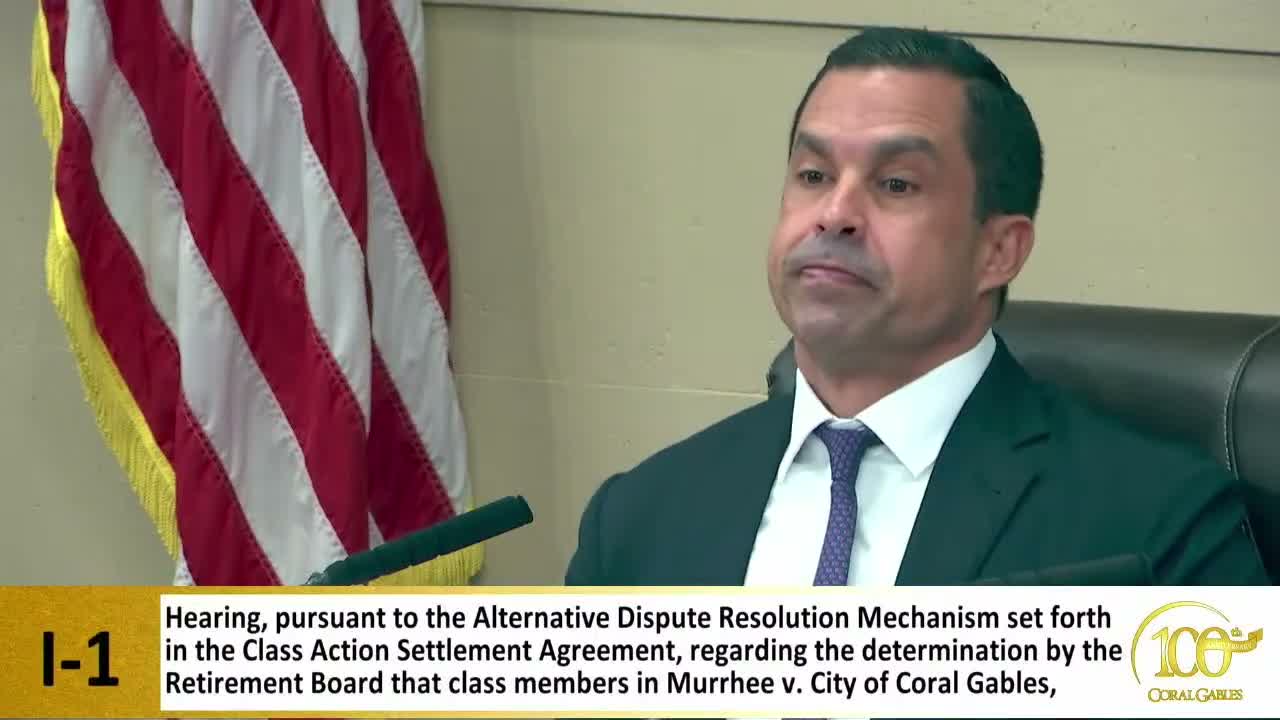
Summary
After a protracted hearing that included retiree testimony and finance staff analysis, the commission rejected the retirement board's proposed 2026 COLA (1.45%) by supermajority, directing further budget-year work and suggesting alternative approaches for retiree relief.
The City Commission rejected the Coral Gables Retirement Board’s recommendation to grant a 1.45% cost-of-living adjustment (COLA) for 2026 after a hearing under the settlement’s alternative dispute process.
Finance Director Diana Gomez presented the professional recommendation to reject, citing actuarial measures: the pension system’s cumulative net actuarial experience loss as of Sept. 30, 2024 was approximately $194.9 million; the unfunded actuarial liability (UAL) stood at about $169.8 million and had increased by roughly $12.8 million year-over-year; granting the proposed COLA would raise the UAL by about $5.25 million. Gomez told commissioners, “It is my professional recommendation that the city commission reject the board’s proposed 2026 COLA,” based on the statutory factors the commission must consider.
Retirees and former chiefs delivered emotional public comment describing financial strain and service-related health issues. A retired firefighter said the 1.45% adjustment “makes a huge difference” to prescription costs and household budgets; other speakers urged the commission to find lump-sum or budget-year alternatives if a recurring COLA was not prudent in the current fiscal outlook.
Commissioners debated the balance between honoring retirees’ expectations and protecting the retirement system’s long-term funding amid state-level uncertainty over municipal revenues. Vice Mayor Anderson and other commissioners noted potential state-level property-tax reform that could materially reduce local revenue streams and urged caution. After discussion the commission took a recorded vote to reject the retirement board determination; the motion carried by the required supermajority (4–1). Commissioner Castro voted no; Commissioners Fernandez, Lara, Vice Mayor Anderson and Mayor Vince Lago voted to reject.
What’s next: Commissioners asked staff to explore alternative, non-pension-funded relief options (for example, budget-year lump-sum payments or a dedicated annual line item) during the next budget cycle and to report back with options and fiscal impacts.