
Board debates EMDR training for school mental-health specialists; consent item pulled and voted separately
Get AI-powered insights, summaries, and transcripts
Subscribe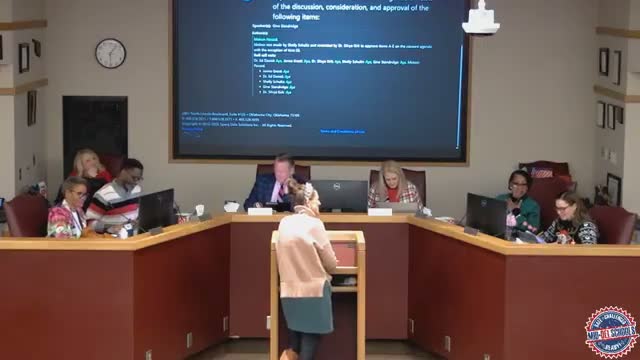
Summary
The board heard a lengthy presentation on EMDR and other trauma-focused techniques for licensed school mental-health specialists, confirming parental consent requirements and a limited session model; the related consent agenda item was pulled for discussion and later approved (vote tally not specified in transcript).
A staff presenter described trauma-focused therapies — including EMDR (Eye Movement Desensitization and Reprocessing) and Trust-Based Relational Intervention (TBRI) — and explained how licensed school-based mental-health specialists could use these techniques as part of short-term interventions. The presenter said training ensures clinicians use the techniques appropriately and emphasized parental consent and an intake process before any one-on-one counseling.
"EMDR is just another technique ... focused on kiddos with high need trauma," the presenter said, outlining that school-based specialists typically use such tools within a six- to eight-week intervention window and transition students to longer-term community providers when necessary. The presenter added that the district's mental-health specialists can often provide services sooner than community providers, where wait lists (for example, a six-month wait at one partner agency) were cited.
Board members asked whether schools should provide trauma-focused services rather than leaving them to outside providers, raised concerns about stretching specialist capacity, and pressed on cost and scope. One board member said the registration cost appeared significant and questioned whether providing that training in-house was an appropriate district role. Another board member emphasized the value of equipping mental-health staff with more tools to serve acute student needs.
The consent agenda item that included this training was pulled for separate consideration earlier in the meeting and later the board moved and seconded approval of the separated item (transcript records the motion and a second but does not include a roll-call tally). Presenters reiterated that parental consent would be required for individual counseling and that mental-health specialists use a referral and intake process to determine appropriateness. Several board members said parents retain the right to decline services.
Next step: staff will implement the training plan as outlined, with parental consent and referral safeguards, and monitor specialist caseloads and transitions to community providers as needed. The transcript does not include vote tallies for the consent-item approval.