
Heated debate in Pontiac HDC over re-siding at 75 Cherokee; porch and deck work approved, siding decision tabled
Get AI-powered insights, summaries, and transcripts
Subscribe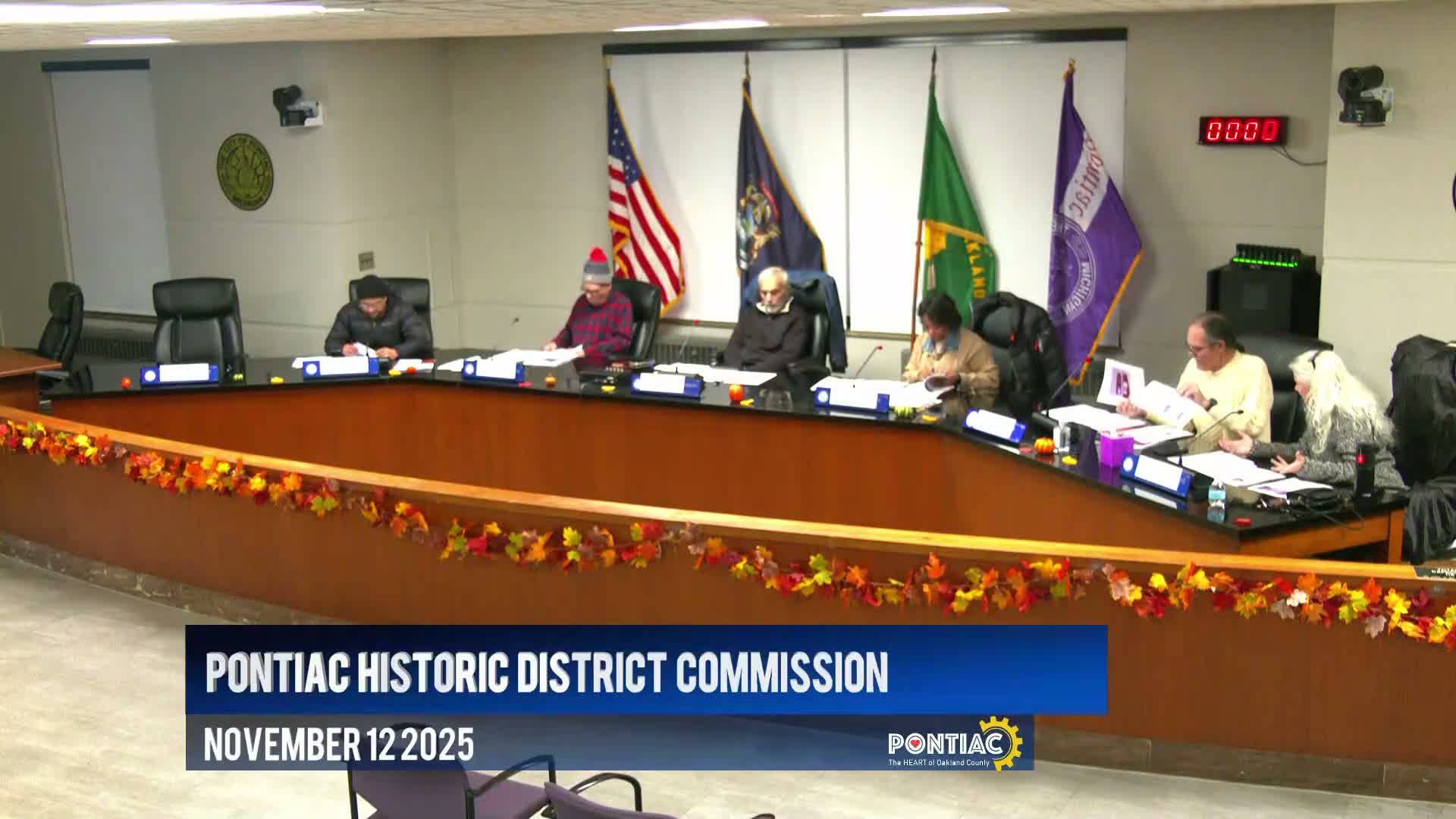
Summary
Commissioners approved reconstruction of a porch and rear deck and repair of window trim at 75 Cherokee, but after a lengthy, split debate they tabled a proposed wholesale siding replacement with fiber cement pending neutral expert assessments and legal review of an indemnification clause.
Commissioners at the Pontiac Historic District Commission on a contested application approved several specific repairs at 75 Cherokee but declined to decide on a homeowner—s request to replace the home—s exterior siding with fiber‑cement products.
Staff presented a multipart application for 75 Cherokee that included reconstruction of a north side porch using original fieldstone posts, reconstruction of the rear deck and staircase, repair of deteriorated window trim and a request — conditioned on the commission finding the siding "beyond repair" — to replace cedar-shake and wood lap siding with fiber cement. Paul, planning staff, also read a draft hold‑harmless/indemnification motion prepared by the law department to protect the city in the event previously installed unpermitted windows later require removal and cause damage to newly approved siding.
Homeowner James Manches said he had sought contractors on historic‑preservation lists and supplied a letter from Bloomfield Construction arguing that existing lap siding is split, cupped and warped and that whole sections must be replaced to warranty weather‑resistive barrier upgrades. "By doing complete sections, we eliminate this risk," the letter read, as quoted by Manches.
The commission then engaged in more than an hour of substantive debate. Opponents of wholesale replacement repeatedly cited the Secretary of the Interior—s standards and the HDC—s guideline preference for "repair over replacement." One commissioner argued that replacement "destroys the architectural structure of that building" and that the current siding could be repaired with scraping and selective replacement. Supporters of replacement countered that many district houses lack a modern weather‑resistive barrier, that replacement with a modern fiber product can improve the building envelope, reduce long‑term maintenance, and be executed with custom corner work to preserve visual character. Commissioner 12 urged considering a blower‑door test or neutral expert inspection to confirm building-envelope problems before denying siding replacement.
On discrete items the commission reached agreement. Commissioner (speaker 3) moved and the commission approved reconstruction of the north porch and staircase (incorporating fieldstone posts and matching spindle details), approval of the rear deck and staircase, and repair of window trim and sills; those motions passed by voice vote. For the siding, after prolonged discussion the commission voted to table the siding portion of the application so the applicant can provide neutral third‑party opinions itemizing which sections of siding are deteriorated and so staff can consult the city attorney about whether the building official or a neutral preservation expert should perform the review. The chair summarized the tabling vote as 5–1 in favor of tabling.
Paul said staff will ask the city attorney whether a building-official inspection, a neutral historic-restoration expert review, or specified third‑party letters should be required before allowing full siding replacement. The homeowner indicated willingness to provide contractor reports and to review the indemnification language.
Next steps: The siding request will return to the HDC after the applicant submits expert documentation and staff consults the city attorney on an acceptable review pathway. The commission—s votes approved the porch, deck and trim work to proceed to permitting; the siding question remains open pending neutral assessments.
Representative quotes: "By doing complete sections, we eliminate this risk," read homeowner James Manches as he summarized a letter from Bloomfield Construction describing the contractor—s approach to full-section replacement and house wrap requirements. Commissioner (speaker 10) opposing wholesale replacement: "None of it complies to the historic district. 0 of it." Commissioner (speaker 3) supporting pragmatic flexibility: "It gives us that look, it protects the siding, it has the texture, it's going to still maintain the profile."