
Rau River volunteer district asks Lane County for $230,000 to reach shovel‑ready status for two fire stations
Get AI-powered insights, summaries, and transcripts
Subscribe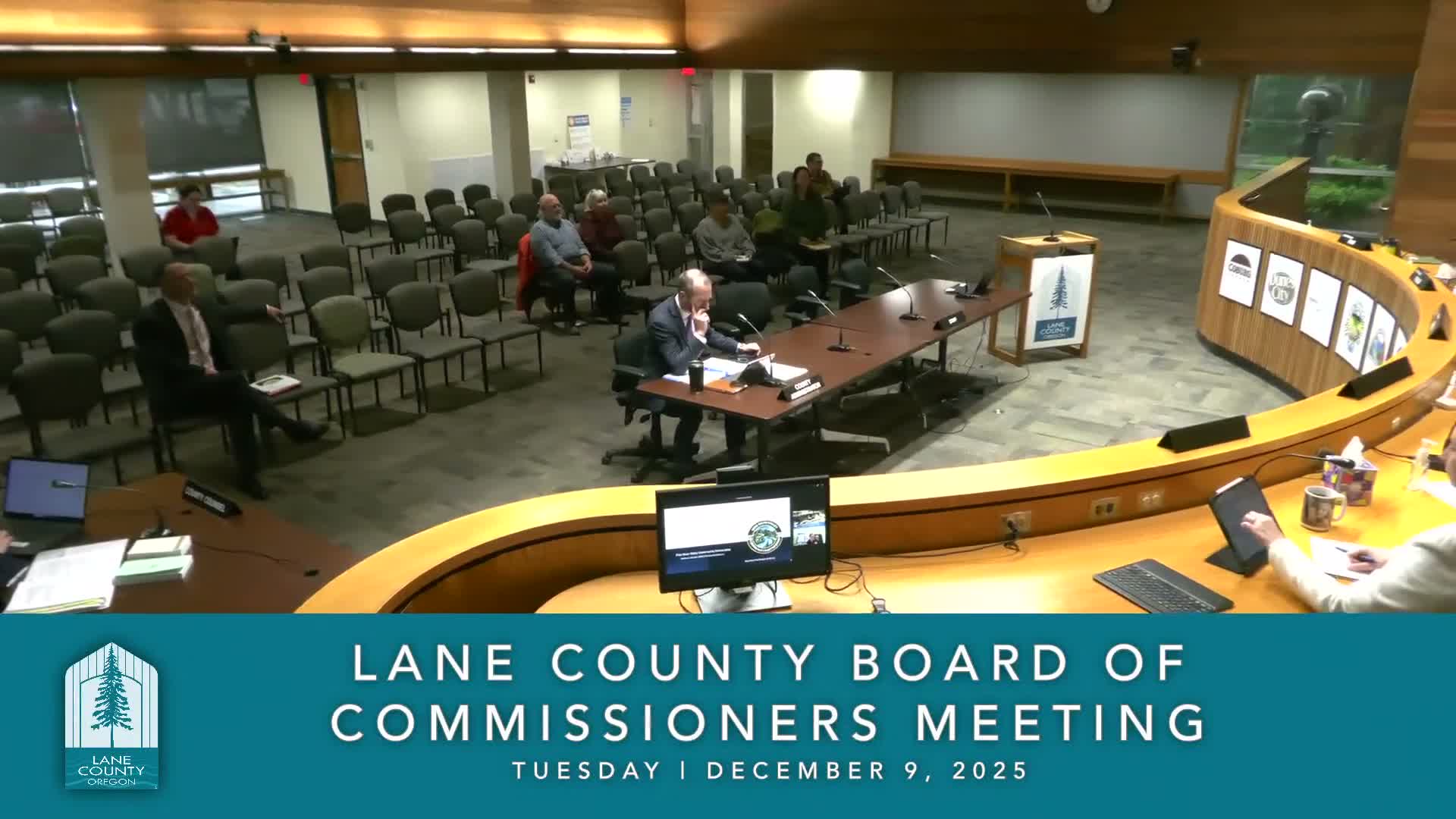
Summary
Rau River Fire Response nonprofit told the Lane County Board the community needs a new Dorena-area station and a remote ‘distant’ station; presenters requested $230,000 for preconstruction work and county help with permitting and grant co‑sponsorship to leverage federal and private funding.
Kathleen Insador, executive director of the Rau River Fire Response nonprofit, asked the Lane County Board of Commissioners on Dec. 9 for $230,000 to cover preconstruction costs that would make two planned fire stations shovel‑ready. Insador said the ask is intended to fund site survey and geotechnical work, civil and structural engineering, architectural design, utility extension and permit approvals, and other early‑stage tasks necessary for grant readiness.
"This is for site survey and geotechnical analysis, civil engineering, architectural plans, structural engineering plans, electrical plumbing design, permit approval," Insador told the board during the nonprofit’s presentation. She said the Dorena station is the larger project and the distant station is smaller and could be built more quickly once preconstruction is done.
Insador and Chief Walt Bernard described the local risk that the new stations are meant to address. Presenters noted a corridor above Dorena Lake where about 500 families live and where a wildfire that severs access could isolate residents from medical services and communications. Bernard also highlighted the district’s mutual‑aid role across south Lane and Goshen areas, and said volunteers have completed DPSST‑level firefighting and emergency medical trainings.
The presenters said the community has already completed environmental and permitting steps such as a phase‑1 assessment and traffic analyses, and that a resident donated a roughly 35‑acre parcel for the Dorena station. Insador said private foundations and federal grant programs have indicated support for construction, but that funders generally require a project to be shovel‑ready before committing construction dollars. Insador told the board the $230,000 would unlock about $4 million in federal and private funds, a presenter‑stated figure described in the presentation as a roughly 1,639% leverage from the county contribution.
In addition to the funding ask, the Rau River presenters requested county administrative assistance — technical support on permitting and environmental regulatory pathways, and county letters or co‑sponsorship for grants to improve competitiveness. They also asked to be placed on the county’s capital improvement planning horizon to signal long‑term commitment and bolster grant applications.
Commissioners expressed support for the volunteers and the proposal. Commissioner Buck said the county could reduce liability exposure by supporting the volunteer district and offered to pursue coordination with county grants and policy staff. Commissioner Trigger and others suggested combining the county’s grant and policy expertise with the district’s fundraising. No formal board vote was taken; staff indicated follow‑up work items and possible inclusion of the request in forthcoming budget discussions.
The board did not adopt or fund the request during the meeting; staff said they would follow up with the presenters and explore technical support and potential grant pathways.