
Lane County DA briefs commissioners on strained caseloads; proposes $5M public‑safety investment for prosecutors and support staff
Get AI-powered insights, summaries, and transcripts
Subscribe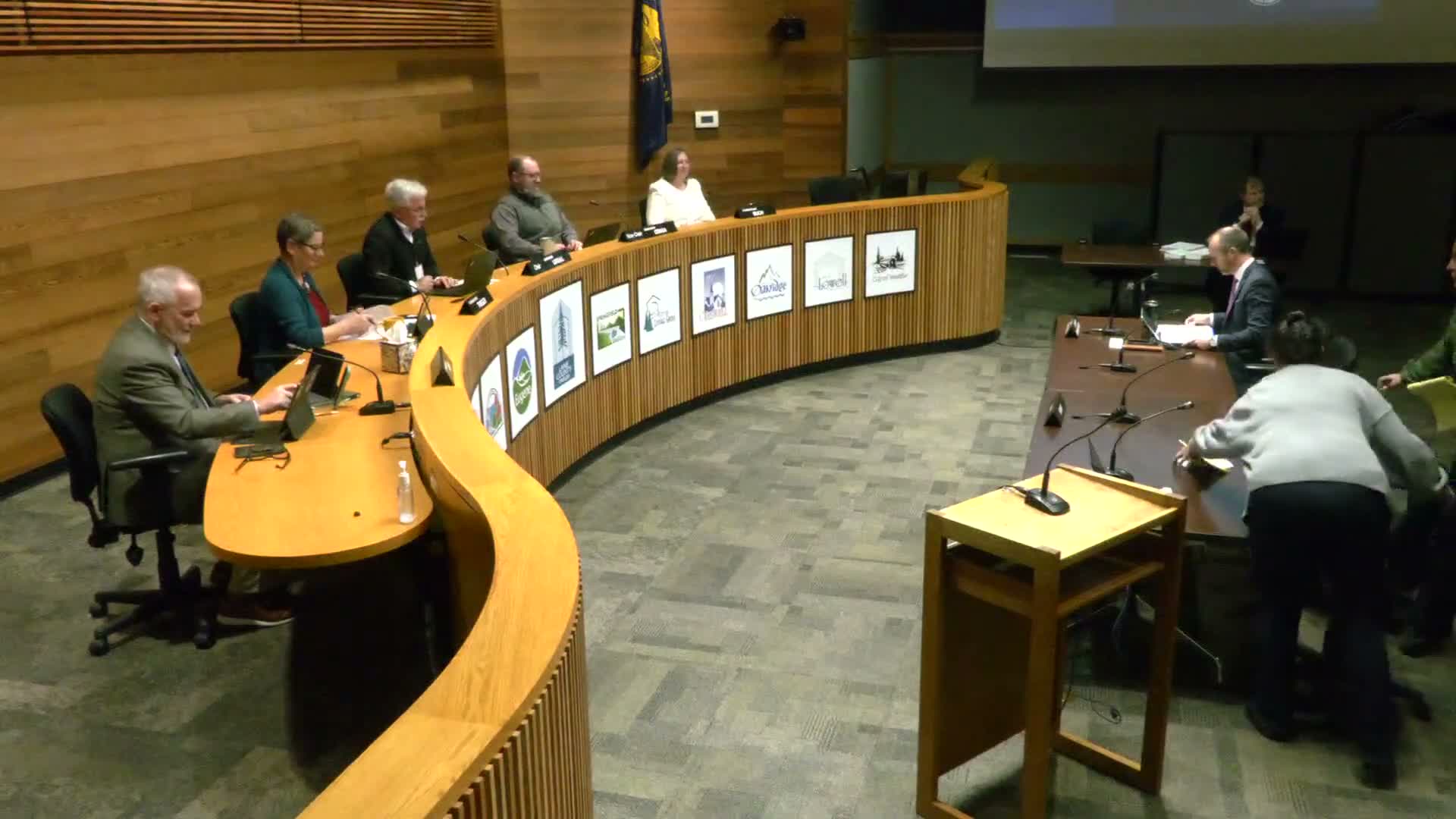
Summary
District Attorney Chris Perroza told the board his criminal division is understaffed amid surging discovery, expungements and public‑records demands and proposed a $5 million investment to add attorneys, investigators and victim advocates to speed prosecutions and improve service to rural communities.
District Attorney Chris Perroza told the Lane County Board on Dec. 9 that his criminal division is understaffed and operating under growing burdens from digital evidence, public‑records requests and appellate returns, and he outlined how additional staffing could change operations.
Perroza said the criminal division currently includes 24 criminal attorneys, 5 paralegals, 6 legal secretaries, 9 office assistants, only 2 investigators (down from 4) and 4 victim advocates. In the prior year his office received 6,560 criminal referrals from local law enforcement and filed 4,840 cases (about 73–74% of referrals). He also reported 358 probation‑violation filings, 112 public‑records requests, 18 public‑records appeals and roughly 1,337 expungements — a volume he said had increased by about 400% since 2022.
Perroza described the discovery burden from ubiquitous body‑worn camera and private surveillance video: "They're fantastic for finding truth," he said, "but they take an inordinate amount of time to ultimately be able to go through... and they are expensive to store." He said processing and redaction tasks are labor‑intensive and that courts now impose stricter discovery obligations with sanctions for failures.
To address those pressures, Perroza presented a public‑safety task‑force scenario that would invest roughly $5,000,000 in his office and the sheriff’s office and would add 10 deputy district attorneys (four entry‑level DDA‑1s, four DDA‑2s and two DDA‑3s), three legal secretaries, two office assistants, two investigators and four more victim‑service advocates. He said that level of investment could enable prosecution of an estimated 1,000–1,500 additional cases per year and would improve discovery turnaround, municipal court support for smaller cities and victim services.
Commissioners asked practical questions about evidence types (automated license‑plate readers and private CCT footage) and noted the need for careful messaging if seeking public funding; several commissioners said they supported continued work sessions and public outreach to frame a community‑facing proposal. Perroza acknowledged the broader system effects — more prosecutions would increase demand on parole and probation, and municipal courts are already stressed — and said the aim was to bring workloads closer to state and national averages.
No formal funding decision was made during the meeting. Commissioners and staff agreed to continue task‑force work, public messaging analysis and follow‑up budget conversations in the months ahead.