
Lane County warns of a $5M shortfall after regional waste exportation; staff seeks IGA with Springfield and SBF collections
Get AI-powered insights, summaries, and transcripts
Subscribe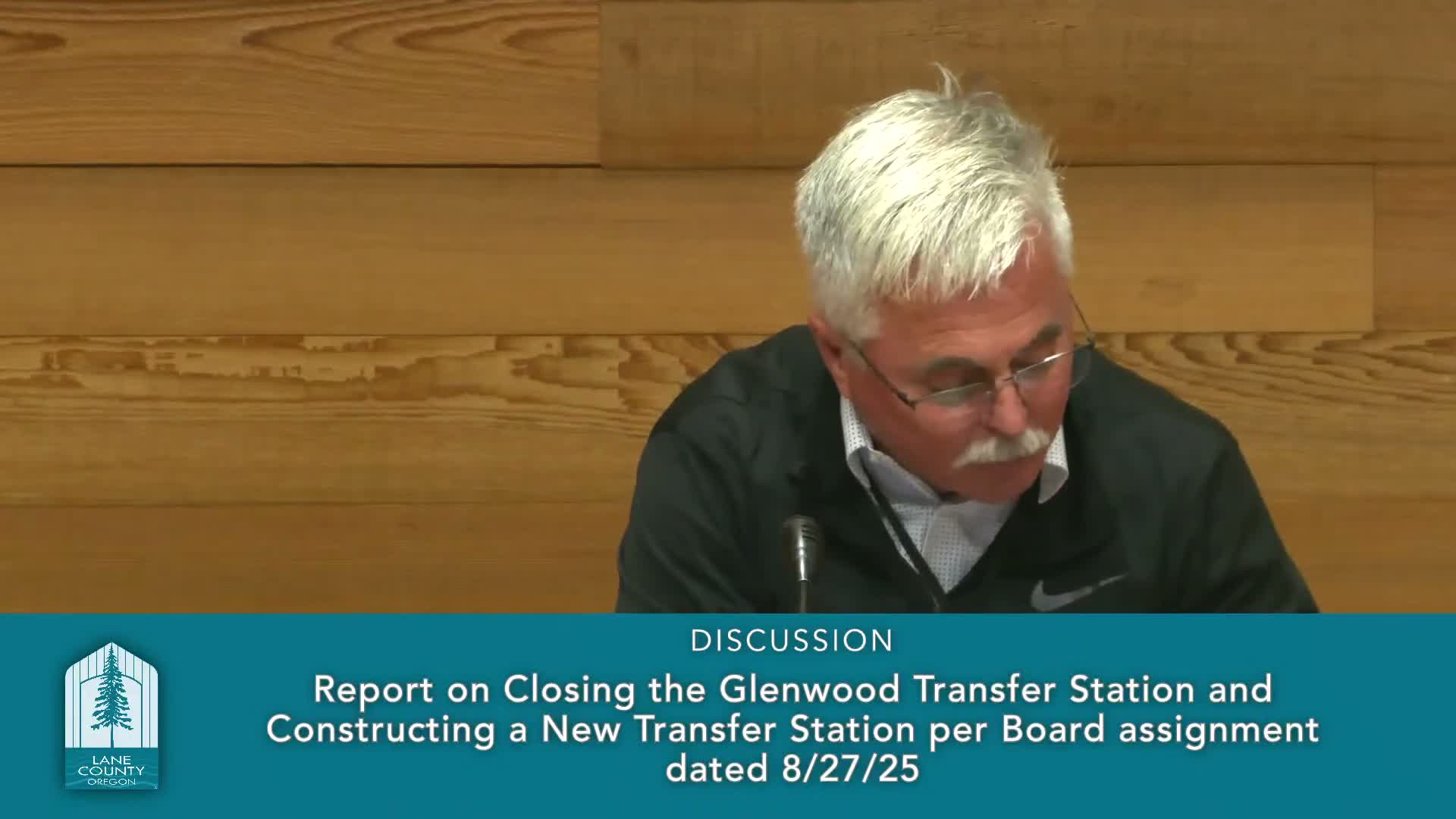
Summary
County staff told the board that exports of Lane County waste to out‑of‑county landfills (via Waste Connections subsidiaries) have reduced system‑benefit‑fee remittances and produced an estimated $5 million shortfall in the Solid Waste Fund; staff said it will pursue intergovernmental agreements, delinquent collections and further board work sessions.
Lane County staff told the Board of Commissioners on Dec. 9 that exportation of county‑generated waste by private companies has materially reduced system‑benefit‑fee (SBF) revenues and threatens the county’s ability to fund transfer stations, hazardous‑waste programs and needed landfill reserves.
Staff said the county adopted a system‑benefit‑fee ordinance in May 1999 intended to require haulers to remit a per‑ton fee for municipal solid waste generated inside Lane County but disposed out of county. The fee is used to support 15 county transfer stations, household hazardous‑waste services and recycling programs. Staff recounted the ordinance history and said the county previously worked with Eugene and Springfield on intergovernmental arrangements designed to make the fee enforceable.
Staff reported that Waste Connections Incorporated — the owner of local companies including Santa Pak and EcoSort — acquired Dry Creek Landfill (Medford) in 2022 and that EcoSort and other subsidiaries have been exporting waste rather than sending it to Lane County facilities. Staff said that Santa Pak had collected a line item called a "county user fee" (later relabeled "disposal fee" on some schedules) but did not remit those funds to Lane County; in a written response to the county, Waste Connections indicated it would not pay the fee and questioned the county’s authority to require payment.
Using Power BI analytics and tipping‑fee data, staff estimated they are tracking roughly 61,000 to 80,000 tons of waste exported (figures vary by reporting source) and approximated a more than $5,000,000 reduction in fee revenue to the solid‑waste fund over recent periods. Staff warned that absent remediation the county cannot build required reserves for the next landfill cell (planned for 2028), post‑closure liabilities, or the Clean Lane resource‑recovery facility the county had planned to fund.
Next steps presented to the board included continuing intergovernmental discussions with the City of Springfield (to secure an IGA or other enforcement mechanism), attempting to collect delinquent SBFs, refining analytics and bringing budgetary options to future work sessions (either to raise revenues or reduce services). Staff said they had received a cooperative response from some Cottage Grove haulers but a refusal from Waste Connections in the correspondence delivered that afternoon.
Commissioners asked for more granular rate and commercial–residential comparisons and discussed equity across jurisdictions; staff committed to provide further analyses and pursue legal and intergovernmental remedies as appropriate.