
City planner proposes major parking-reform ordinance to ease development; residents warn about street parking and deliveries
Get AI-powered insights, summaries, and transcripts
Subscribe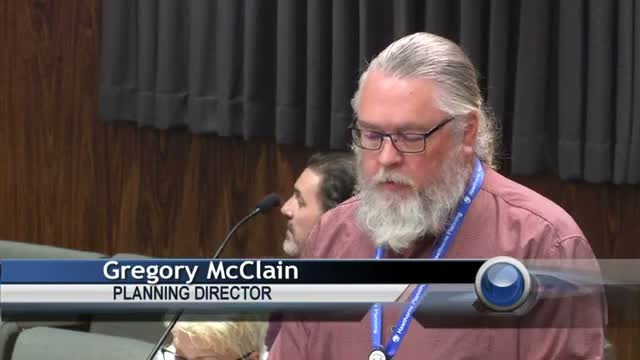
Summary
Planning Director Greg McLean presented a proposed overhaul to Hawthorne’s parking code aimed at reducing development barriers by simplifying commercial parking rules and lowering some residential requirements; residents at the hearing raised concerns about street parking competition, deliveries, and preferential parking pilots.
Planning Director Greg McLean presented a broad package of amendments Tuesday that would consolidate scattered parking rules, replace multiple commercial standards with a smaller set of rates based on gross square footage, introduce parking credits, and reduce some multifamily parking requirements as a way to encourage redevelopment.
McLean told the council the proposed reforms respond to evolving state laws that allow developers to seek parking waivers; by lowering the city’s baseline parking requirement he said developers would be less likely to pursue state waivers that would leave the city with under‑parked developments. “By lowering the required parking, I’m saying the city will be better off,” McLean said during the presentation.
Key proposals include: consolidating commercial parking standards from 18 to six categories; a 10–25% credit for nearby curb or off‑street public parking; retaining two parking spaces as the requirement for single‑family homes while removing an explicit garage requirement; and reducing multifamily parking to roughly one space per unit in many circumstances. McLean described guardrails: the planning director may flag projects for a professional parking study and the Planning Commission would decide contested cases.
During the public hearing residents raised practical concerns. Ruben Sanchez, representing the North Hawthorne Community Association, asked that the city consider preferential parking pilots and limits on the number of cars tied to individual rental units, saying some blocks are heavily used to store multiple vehicles. Another resident described safety and commercial‑vehicle delivery issues in narrow residential streets where delivery trucks can force drivers to weave into opposing lanes.
Council response: Members asked clarifying questions about rounding rules for fractional parking rates, the interplay with state density bonuses and transit‑proximate exceptions, and the planning director’s role in flagging projects. The Planning Commission previously recommended the ordinance (4–0 vote), McLean said.
What happens next: Council opened the public hearing, accepted comments, and moved to introduce the ordinance for further consideration and formal readings. The ordinance will return to the council with staff reports and any recommended edits after the planning process and CEQA determinations are complete.
Ending: The proposed overhaul would be a significant change to zoning practice in Hawthorne if adopted; councilmembers emphasized balancing development needs with street‑parking impacts for existing neighborhoods.