
Cotati adopts state-mandated cross-connection control plan; hazard assessments to be scheduled
Get AI-powered insights, summaries, and transcripts
Subscribe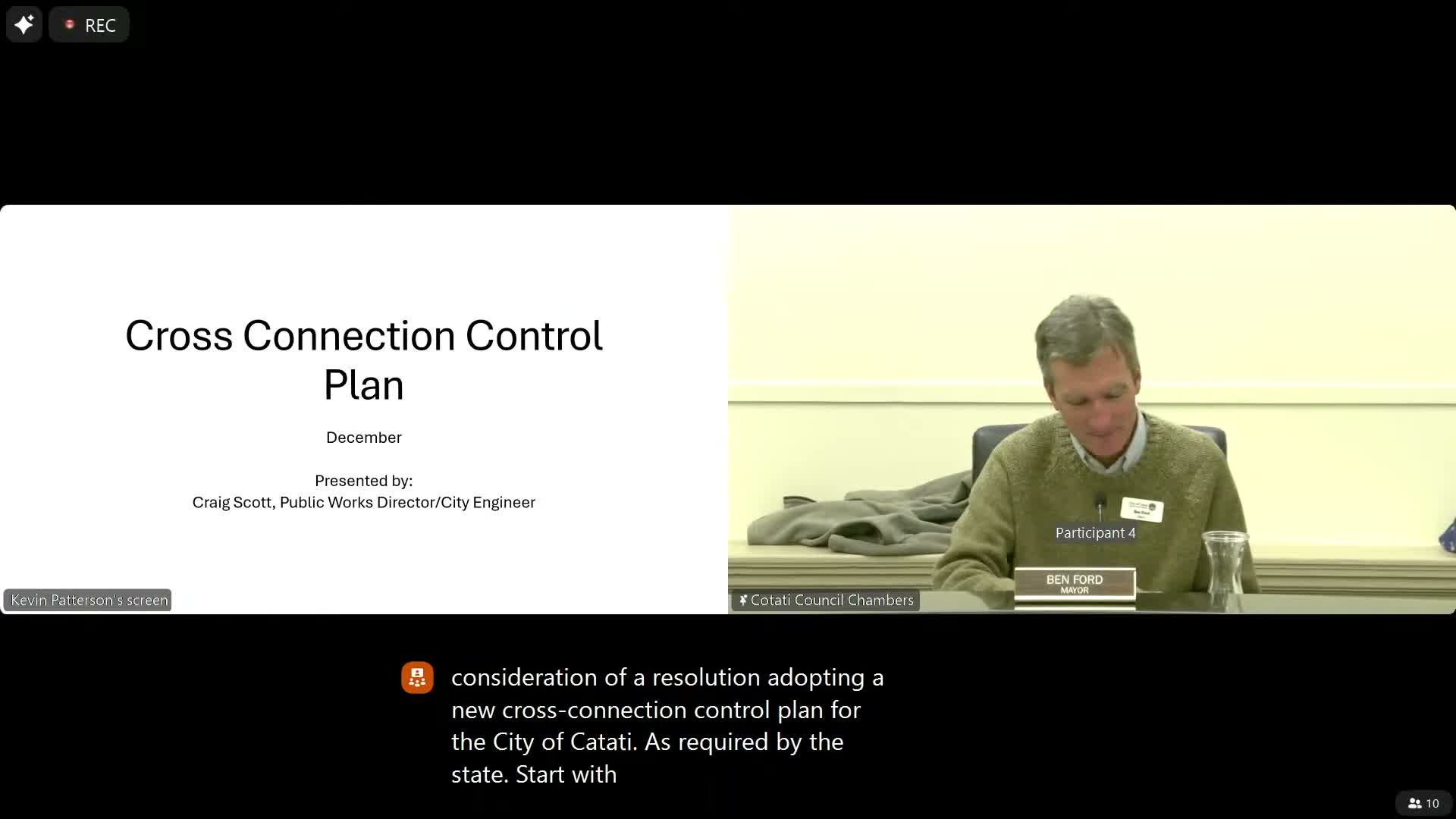
Summary
Following guidance in the State Water Board's cross-connection handbook (AB 1671), Cotati adopted a formal cross-connection control plan requiring hazard assessments, inventory and records management for roughly 2,700 service connections; staff said the plan sets survey timeframes and that costs for installing or replacing assemblies would fall primarily to affected customers.
The Cotati City Council adopted a cross‑connection control plan required by Assembly Bill 1671 and the State Water Resources Control Board's handbook. The plan formalizes policies and procedures for preventing backflow into the public drinking water system, establishes a schedule for hazard assessments and strengthens records‑management and enforcement protocols.
Public Works Director and City Engineer Craig Scott summarized the program: Cotati has about 2,700 service connections, roughly 600 of which currently have backflow prevention assemblies and about 40 of those are city‑owned. The plan requires an inventory of devices, annual testing and the completion of hazard assessments within the timeframes spelled out in the plan (the document lists seven years for initial survey of facilities without prior assessments and 15 years for some residential multifamily categories). Scott told the council the state strongly recommends above‑ground installation of assemblies and that replacing or relocating older underground assemblies will be required when triggered by major repairs or property changes.
Council members pressed staff on workload and likely costs for hiring certified testers to complete hazard assessments. Scott and staff said the initial administrative work was done in-house but that hiring contractors to perform comprehensive hazard assessments would likely be required; while staff did not provide a final cost estimate, they noted the city has up to the plan's schedule windows to complete the work and will return with procurement and budget recommendations.
Citizen Neil Hancock asked whether the city's advanced meters could be used to detect reverse flow events; staff said AMI devices measure usage and some can register reverse flow but state testing regulations are prescriptive and virtual meter reads do not replace certified physical testing. The council adopted the plan on a unanimous vote.