
Consultants recommend governance, prevention and navigation spending for Florence’s opioid settlement funds
Get AI-powered insights, summaries, and transcripts
Subscribe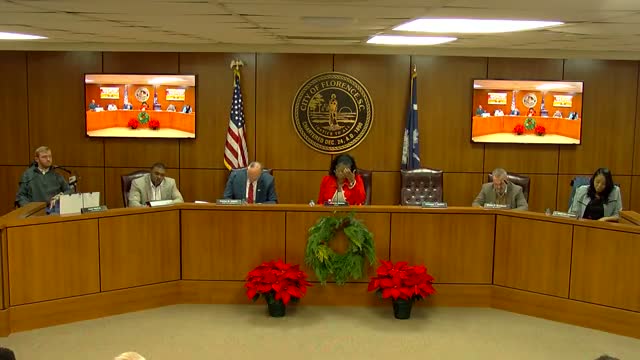
Summary
A Stedman Group presentation laid out a community action plan for roughly $4.5 million in opioid settlement dollars, recommending governance, transparency and a roughly 5-year budget split across prevention, treatment/navigation and recovery ecosystem investments.
Consultants from the Stedman Group presented a community action plan to Florence City Council for how the city might spend its share of statewide opioid litigation settlements, recommending a governance structure, public dashboards and a multi-year allocation targeting prevention, treatment access and longer-term recovery supports.
The presenters said Florence City is estimated to receive approximately $4.5 million over 18 years from statewide opioid settlements and that the city has about $560,000 currently available to allocate. Stedman Group presenters Brianna Robles and Courtney Lane described a plan split across three strategic priorities: prevention/community awareness and harm reduction (recommended allocation: $200,000 over five years), treatment access and navigation (recommended allocation: $140,000 over five years), and bolstering the recovery ecosystem including housing and peer support (recommended allocation: $160,000 over five years), with additional funds for governance, evaluation and an opioid response coordinator.
Presenters said their process combined secondary data analysis with focus groups, interviews and community meetings and that the plan prioritizes access for uninsured and underinsured residents, stronger resource navigation, naloxone distribution and evaluation measures to track outcomes. Courtney Lane described governance options that could be city-led or a city–county–community collaboration and advised establishing transparency tools to report spending and reach.
Council members asked about overdose and fatality rates; presenters said higher local fatality rates appear to be driven in part by limited detox and treatment access for uninsured residents and rural access challenges. Councilors discussed possible collaboration with county partners, tying opioid settlement spending into broader recovery and homeless services, and scheduling follow-up governance and budget planning at a retreat.
What’s next: Council did not take an appropriation vote at the meeting but requested follow-up on governance, potential county coordination and budget timing so the city can align settlement spending with local needs and existing provider capacity.