
Judge and advocates testify on mental‑health code update; witnesses urge safeguards, lived‑experience input
Get AI-powered insights, summaries, and transcripts
Subscribe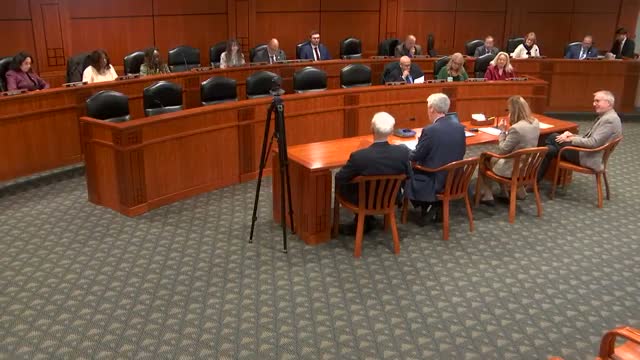
Summary
Judge Milton Mack and multiple advocates testified in favor of House bills 4412–4414 to modernize Michigan’s mental health code, emphasizing earlier intervention and assisted outpatient treatment; advocates urged clarified guardrails, inclusion of guardians and peers, and oversight of hospital practices.
Witnesses told the House Health Policy Committee that House bills 4412–4414 would modernize Michigan’s mental health code to permit earlier intervention, expand who may conduct evaluations in limited circumstances, and broaden tools such as assisted outpatient treatment (AOT) and mediation.
Judge Milton Mack, a retired Wayne County probate judge and chair of the Mental Health Diversion Council, described the bills as aimed at "reducing barriers in treatment for people with serious mental illness and promote recovery while reducing the use of emergency departments, hospitalization, incarceration, and homelessness." He cited county outcomes saying Calhoun County saw hospitalization fall and arrests drop among a small cohort ordered into AOT, and said Genesee County’s larger program shows high compliance and reductions in hospitalizations and incarceration.
Judge Mack described several concrete changes in the bills: expanding eligibility for outpatient‑only petitions (allowing family members to petition), permitting certain psychiatric nurse practitioners or physician assistants to testify under a psychiatrist’s supervision for outpatient petition needs, creating mediation pathways that providers or families can use to resolve disputes without immediately going to probate court, and ensuring treatment continues while petitions are pending.
Several committee members pressed on safeguards for under‑resourced communities. Representative Carter asked how the bills would prevent unnecessary hospitalization for people without insurance or with transportation or access barriers. Judge Mack and others responded that the bills are intended to reduce hospitalization and expand outpatient options; they said electronic petitions and testimony from supervised psychiatric nurse practitioners could increase access.
Kate Dahlstrom of NAMI (Grant Traverse affiliate) supported the bills broadly but urged revisions. She warned that AOT is underused or unevenly applied in parts of the state, questioned provisions that allow bachelor‑level social workers to conduct pre‑admission screening with RN supervision, and urged explicit inclusion of guardians, support persons and peer‑support specialists in treatment planning and service provision. She recommended stronger hospital‑quality oversight and greater involvement of people with lived experience in drafting and implementation.
Georgia McGee, a patient advocate and former social worker, urged trauma‑sensitive approaches and warned against wrongful involuntary commitments. She alleged that several psychiatric hospitals had engaged in fraud (the witness named Havenwick, Forest View and Center Creek and cited a settlement amount in her testimony) and called for oversight of hospitals and probate courts. The transcript records these allegations but does not include a response from the committee or administration staff in this hearing.
Committee members acknowledged the need for fine‑tuning and for including lived experience in implementation details. The committee then moved on after taking written testimony and public comments; no final committee vote on these bills is recorded in this transcript.