State Parks asks for $4.25M in exception authority; seeks digital archives funding and equipment replacement
Get AI-powered insights, summaries, and transcripts
Subscribe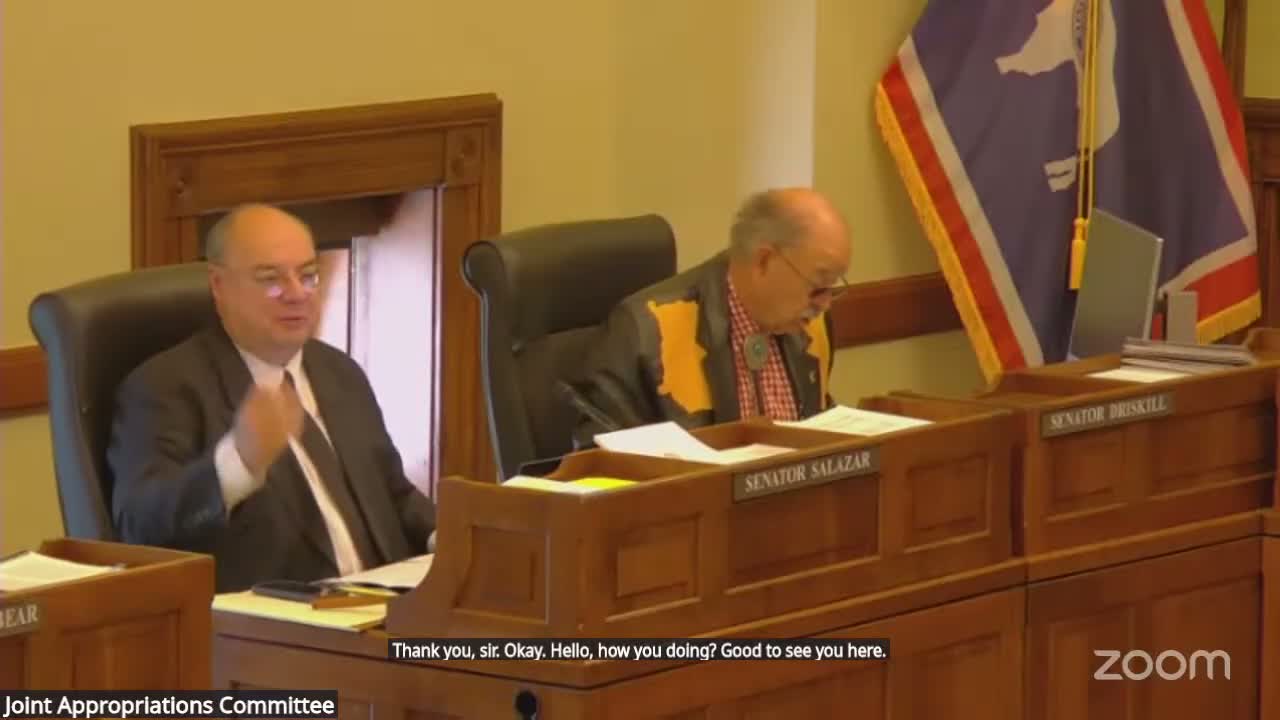
Summary
The Department of State Parks and Cultural Resources told the Appropriations Committee it needs $4.247M in exception spending authority for seven priorities — including $1.1M for the Cultural Trust Fund, $133,924 for digital archives licensing, motorized‑trails equipment, and heavy equipment replacement — and discussed cost‑allocation policy with budget staff.
The Department of State Parks and Cultural Resources presented its BFY27 budget to the Joint Appropriations Committee and outlined seven prioritized exception requests totaling $4,247,000 in additional spending authority. Director Dave Glenn said the agency’s standard budget is $68.23 million, of which about $32.24 million is general fund, and that the agency narrowed requests to essentials following guidance from the governor.
Glenn described the agency’s three divisions (cultural resources, state parks, and a small director’s office) and highlighted the Wyoming State Archives’ responsibilities under state records‑retention laws. The first major exception request the department emphasized was $1,100,000 in other‑funds spending authority for the Wyoming Cultural Trust Fund, a change the director said is needed to accommodate new SF70 rules that let the treasurer’s office set grantable amounts later in the fiscal cycle. Glenn told the committee the request is strictly spending authority — the department cannot spend more than the treasurer’s final number and funds would remain in the corpus if not allocated.
Priority unit 249 sought $133,924 in general funds for digital archives licensing and maintenance (one‑time $91,728; ongoing $42,196). Glenn said statutes cited in testimony (90‑2‑406 and 90‑2‑408) require agencies to maintain records according to retention schedules and explained the agency maintains a physical warehouse of paper records as well as a growing digital repository. The requested licensing would expand the ability for agencies to ingest and retrieve records electronically, reducing multi‑week turnaround times for full file requests.
Other priorities included routine spending‑authority requests for the motorized trails program (funded primarily by sticker fees — snowmobile resident $50, nonresident $75, commercial ~$150), purchases of replacement heavy equipment and snowcats, and consolidation of certain halftime positions into full‑time roles (described as net‑to‑0 budget reorganizations). Glenn said many pieces of heavy equipment are decades old and that lack of backup equipment can cause safety and service interruptions in remote areas.
In extended questioning, Budget Director Hibbert walked committee members through statewide cost allocation mechanics (SWCA/SWICAP), the federal allowable‑cost targeting strategy, and the de minimis indirect rate approach; he emphasized that federal and special‑revenue targeting increases federal reimbursement but can alter the net resources available for local grants. Hibbert explicitly stated the state does not bill local governments for statewide cost allocation and discussed tradeoffs committees face when choosing allocation policy.
Glenn and deputies answered committee questions about recruitment challenges for park superintendents (Glendo vacancy since May), the arboretum contract with the City of Cheyenne (agency has encumbered funds and the city owns/operates the facility), and the need to continue biennial heavy equipment replacement requests. The committee did not take formal votes on State Parks’ exception requests during the hearing.
What happens next: staff said they will provide requested follow‑up details (cost‑allocation examples and income/fee breakdowns) before markup; committee members asked for additional revenue and expenditure breakdowns by program.