
Mechanism prosecutor briefs Council: most international trials finished, urges UN Secretariat to keep assistance role
Get AI-powered insights, summaries, and transcripts
Subscribe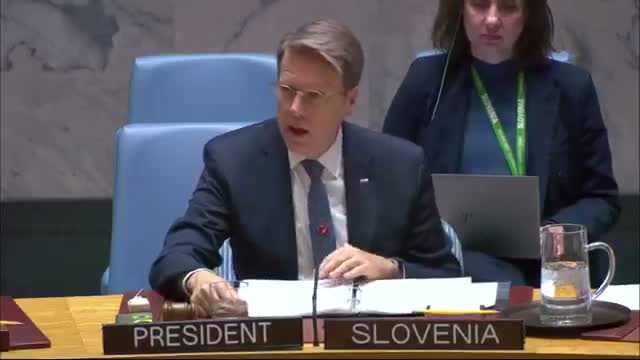
Summary
Serge Brammert, the Mechanism prosecutor, told the Council the Mechanism largely completed its original mandate to pursue ICTY and ICTR fugitives, detailed growing assistance to national authorities, and recommended transferring residual assistance and archives functions to the United Nations Secretariat to sustain technical support.
Serge Brammert, Mechanism prosecutor, told the Council that the Mechanism for International Criminal Tribunals has largely completed its original mission and urged that residual assistance functions be retained within the United Nations system to support ongoing domestic prosecutions.
Brammert opened by saying that details were provided in his written progress report and that his remarks would focus on the Council's upcoming review. "Here we are today: all ICTR and all ICTY fugitives have been accounted for," he said, summarizing years of arrests and trials that, he said, once seemed unlikely to conclude.
Why it matters: Brammert argued that although international trials of fugitives have been concluded, substantial work remains at the national level. He described a sustained and growing demand from domestic prosecutors for evidence, investigative files, and other technical assistance, and recommended that the assistance mandate be transferred to the United Nations Secretariat so the UN can continue to provide that support.
Key facts and figures: Brammert said that when the Secretary-General reported in 2009 there were 15 fugitives at large. He cited the arrest of Kabuga in May 2020 and a subsequent arrest in May 2023, and said those developments completed the Mechanism's outstanding fugitives caseload. He told the Council his office's assistance workload has grown from roughly 100 requests per year in 2012 to nearly 400 requests annually in recent years, and that the office has received more than 4,000 requests for assistance since the Mechanism began operations.
Support to national jurisdictions: Brammert detailed how the office expanded evidence-sharing, prepared investigative dossiers for national prosecutors, and began "direct case assistance" to help partners moving referred cases toward trial. He said domestic authorities have prosecuted referred cases, citing work in Bosnia and Herzegovina and Rwanda and increased activity by third states through extraditions and prosecutions.
Outstanding gaps and international cooperation: Noting that "many victims and survivors are still waiting for justice," Brammert said Rwandan authorities still seek more than 1,000 alleged fugitives and that more than 1,000 war-crimes cases remain outstanding in the countries of the former Yugoslavia. He raised concern about a recent arrest in South Africa, saying the individual "remains in South Africa" and is "effectively blocking proceedings before the Mechanism and South African courts," and called for Council engagement with South African authorities.
Residual functions and archives: The Secretary-General has been asked to report on options for three residual functions'assistance to national jurisdictions, enforcement of sentences, and management of the archives'and Brammert said his office supports those recommendations. He argued that transferring the assistance mandate to the Secretariat would allow the United Nations to continue providing "invaluable technical assistance to member states." He also said the Mechanism will retain an important role in presenting information in early-release applications and in ensuring protective measures for witnesses are addressed.
Conclusion and next steps: Brammert concluded that, with continued Council support, "the Mechanism accomplished its most important mission" by finalizing the last trials of ICTR and ICTY fugitives and that accountability now shifts primarily to domestic authorities. He offered the office's readiness to assist Council deliberations and provide any further information the Council may request. The presiding officer thanked Brammert for his briefing and opened the floor to Council members.
All quotations and attributions in this article are taken from Brammert's briefing as recorded in the Council transcript.