Assembly hearing: staffing shortfalls and facility changes limit DOCS programming, witnesses say
Summary
Witnesses at an Assembly Corrections Committee hearing warned that staffing shortages, program‑staff vacancies and resource shifts connected to HALT and facility closures have reduced access to educational, vocational and therapeutic programming across DOCS facilities.
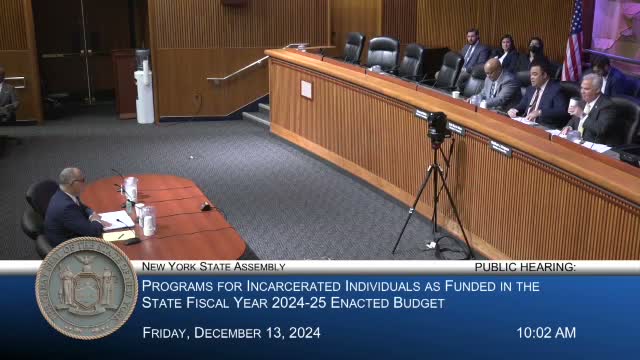
The New York State Assembly Standing Committee on Correction convened a public hearing where DOCS and outside witnesses described widespread staffing shortages and program interruptions that they say are constraining rehabilitative and reentry services. Chair Eric Martin Delon opened the session to examine whether existing programs are being used at full capacity and to assess their impact on recidivism and public safety.
Committee members heard Commissioner Daniel Martisell III outline DOCS programming, including academic and vocational offerings, higher‑education partnerships (30 providers in 37 facilities) and reentry services such as transitional housing and help obtaining identity documents. Martisell cited a 19 percent three‑year return‑to‑custody rate and said nearly 90 percent of those discharged this year left DOCS facilities with active Medicaid coverage. He also acknowledged that vacancies in security, medical and program staff have forced operational changes.
Union and oversight witnesses pressed the committee on the effects of staffing and of the Humane Alternatives to Long Term Solitary Confinement law (HALT). Matt Kiel of the New York State Correctional Officers and Police Benevolent Association said staffing shortfalls have forced program closures and reassignments and argued HALT has redirected officer posts to residential rehabilitation units; he said the system has seen rising violence since HALT implementation. The Correctional Association reported a 16.2 percent systemwide vacancy rate for program staff and noted vacancy rates exceeding 30 percent at several facilities, with consequences including long waitlists, cancelled classes and reduced family visiting access.
Members also questioned the impact of recent facility closures (Great Meadow and Sullivan). Commissioner Martisell said DOCS either stood up programs at new sites or worked with providers to preserve college programming and that a statutorily required report to legislative leaders will be filed within 60 days; he told the panel his office retained "over 94%" of staff associated with those closures, a figure challenged in oral testimony by union witnesses who reported a higher number of resignations.
Committee members said they will follow up on recruitment and retention strategies, potential statutory changes to improve transparency about program availability and whether additional funding is required to sustain programming and family visits. Several witnesses urged the Assembly to prioritize reporting requirements and funding to ensure program continuity as DOCS implements statewide initiatives.
The committee did not take formal action at the hearing and indicated follow‑up meetings and requests for data and reports may follow.