
North Dakota Supreme Court weighs whether bad immigration advice vitiated Emmanuel Tia’s plea
Get AI-powered insights, summaries, and transcripts
Subscribe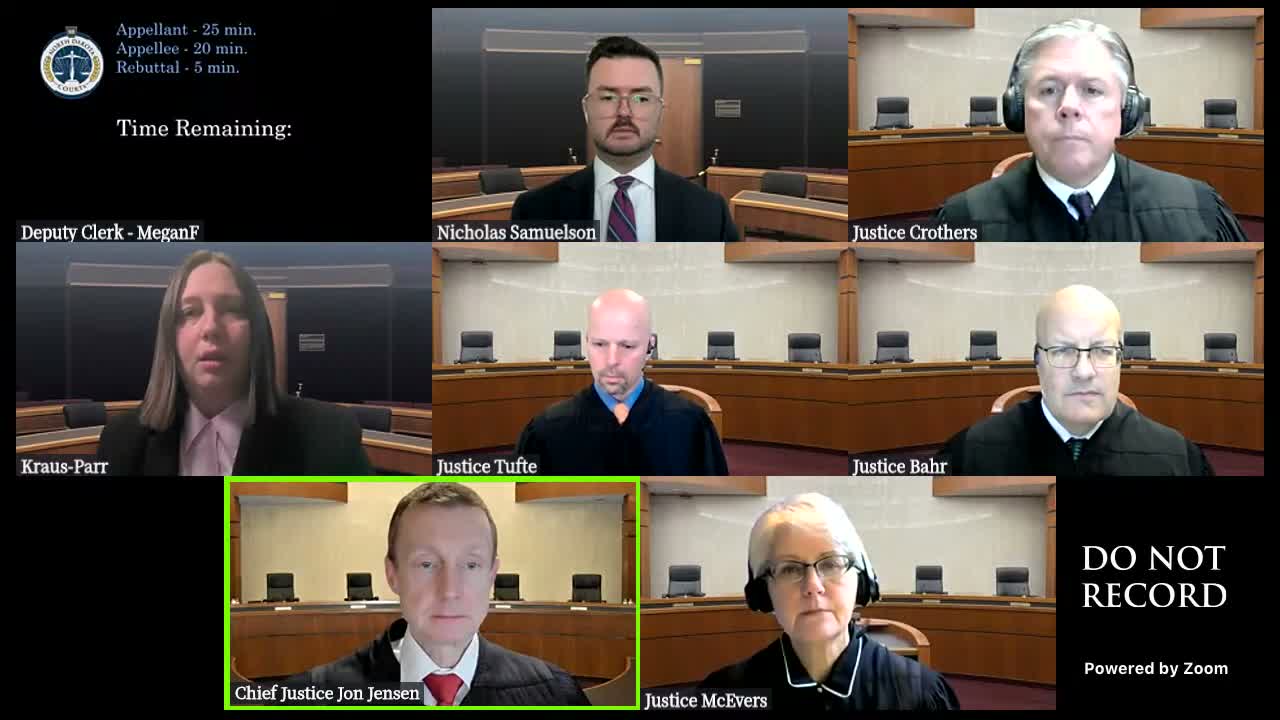
Summary
At oral argument in Emmanuel Tia v. State, petitioner’s counsel said defense advice that misdemeanor pleas would avoid immigration consequences was legally incorrect and deprived Tia of a knowing plea; the state argued the plea produced substantial benefits and the record shows counsel consulted immigration counsel.
The North Dakota Supreme Court on oral argument Monday heard whether defense counsel’s immigration advice rendered petitioner Emmanuel Tia’s plea unknowing, involuntary and the product of ineffective assistance of counsel.
Kiara Krausspar, counsel for petitioner-appellant Emmanuel Tia, told the court the case arises from a post-conviction petition after a change of plea. "The statute is the exact same for both charges ... So they are deportable, mandatory deportable," Krausspar said, arguing the advice Tia received — that resolving cases as misdemeanors or serving under a fixed number of days would avoid immigration consequences — was "categorically incorrect" under federal immigration law and thus his plea was not knowing or voluntary.
Why it matters: Krausspar said Tia, who moved to the United States from Liberia in 2010 and is the father and primary provider for a wife and three U.S.-born children, would not have accepted the plea if he had understood the immigration consequences. Her presentation stressed that three protection-order violations and a related domestic-violence/terrorizing matter were resolved together and that the plea produced immigration consequences that were not properly explained.
State’s response and record issues: Nicholas Samuelson, counsel for the State of North Dakota, said Padilla and related precedents require counsel to inform noncitizen clients of clear immigration consequences but only to warn of risk where consequences are unclear. He told the court the record shows defense counsel consulted an immigration adviser (Miss Swanson) on the related domestic-violence matter and negotiated a global resolution that dismissed a felony, amended a domestic-violence charge, and produced time-served sentences on remaining counts. "Under Padilla, defense attorneys are obliged to inform noncitizen clients that a conviction will result in mandatory deportation," Samuelson said, while arguing the district court correctly found counsel’s performance was reasonable and that Tia had not carried his burden on prejudice under Strickland.
Timeliness and jurisdiction: A justice asked whether the district court should first have resolved a statute-of-limitations question; Samuelson acknowledged the district court noted untimeliness but reached the merits and the state did not cross-appeal that threshold issue. Samuelson said the state rested its argument on the merits.
Legal issues the justices probed: Justices pressed on (1) whether the federal statute’s language makes deportation mandatory or whether federal prosecutorial discretion can produce non-deportation in practice; (2) whether a defense attorney who obtains advice from an immigration specialist can be ineffective if the specialist’s advice later proves incorrect; and (3) whether the Strickland prejudice prong is met where the plea produced tangible benefits (dismissal or reduction of charges and time served).
Counsel’s closing points: Krausspar emphasized family consequences, noting Tia’s youngest child was four at the time of the hearing and that Tia financially supports his family; she urged the court that he would have taken a different course but for the incorrect advice. Samuelson reiterated that a global benefit to Tia made withdrawing the plea unlikely to be rational.
Disposition: After questioning and rebuttal, the court took the matter under advisement.
Next steps: The court did not rule at argument; a written opinion resolving whether the conviction must be vacated or the post-conviction denial affirmed will follow when the court issues its decision.