
Madison County supervisors press for ADA fixes, direct staff to gather elevator and bathroom cost estimates
Get AI-powered insights, summaries, and transcripts
Subscribe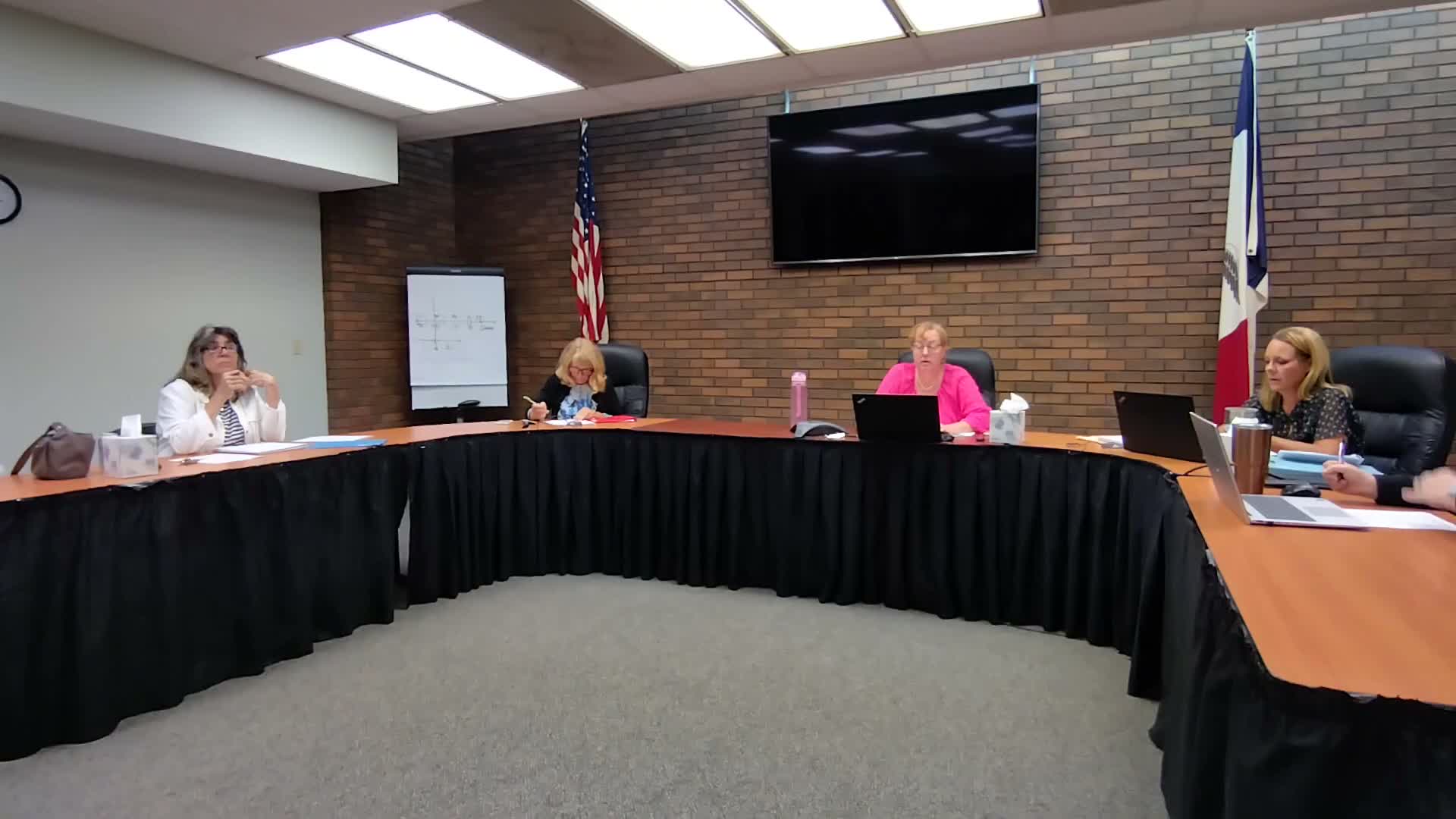
Summary
At a facilities-focused work session, Madison County supervisors agreed to pursue an ADA self-evaluation and to gather bids and cost estimates for an elevator, a main‑floor accessible bathroom, office reshuffling, and historic-review requirements; staff were also asked to explore reusing or selling the county's public-health building.
Madison County supervisors spent their work session on the county’s aging facilities, centering on Americans with Disabilities Act (ADA) compliance for the courthouse and options for short‑ and long‑term accommodations.
Speaker 1, who opened the facilities discussion, said the state told the county that “you have to have bathrooms accessible” in addition to an ADA‑compliant entry, and that the county should either relocate certain functions to an ADA‑compliant building or begin an ADA self‑evaluation and transition plan to show good‑faith progress. The board agreed to contact the state ADA liaison and to involve state historic‑preservation staff before altering the courthouse’s fabric.
Why it matters: Supervisors said the courthouse currently lacks sufficient accessible facilities: the historic interior elevator is too small for many users and retrofitting it may require exterior work that would trigger historic‑preservation review and raise costs. Speaker 6 described the elevator retrofit as likely “well over a million dollars,” while Speaker 4 emphasized consulting engineers and historic‑preservation officials before work begins.
What the board directed: The board tasked staff to get specific cost estimates and vendor recommendations for three items — a main‑floor ADA restroom, a new or retrofitted elevator (including any exterior shaft required), and the cost to retrofit the assessor’s office to accommodate relocation. Speaker 1 said she would follow up with the ADA liaison about whether a multi‑year transition plan would satisfy state requirements. Supervisors also agreed to present gathered bids and options at the next regular meeting in about two weeks.
Other facilities topics: Supervisors discussed reusing the county’s 3,600‑square‑foot public‑health building (plus a 3,600‑sq‑ft basement on about 1.5 acres) for offices or selling it; Speaker 1 noted an assessed value of about $375,000 and said proceeds could help fund accessibility projects. The board explored short‑term moves into the annex — which has accessible restrooms and an elevator — and several members suggested shuffling the assessor, treasurer, and other offices to create accessible public access without immediately renovating the historic courthouse interior.
Public‑health logistics: The board discussed relocating monthly vaccination clinics to the new EMS building, which Speaker 1 said is already ADA compliant. Board members raised logistics and equipment questions: payments to outside providers were reviewed, and Speaker 7 said strict vaccine‑storage protocols (including temperature logs) may mean the county must retain appropriate refrigeration unless a partner county handles shots. An earlier estimate of a $75,000 refrigerator purchase was discussed and then questioned; Speaker 1 said the county has since identified alternatives and that the larger purchase may not be required.
Maintenance and repairs: Supervisors reviewed building maintenance needs including ongoing roof leaks and dome maintenance. Speaker 4 described an imminent roofing repair plan (secondary drains and new channels) and recommended obtaining bids for dome re‑caulking and lift rental; rough budget placeholders were discussed and the board asked for formal cost proposals.
Custodian duties and organizational changes: A proposed resolution to return duties (HR, board clerk, some IT responsibilities) to the auditor’s office prompted discussion about the statutory phrase “custodian of the courthouse.” Speaker 2 proposed striking the custodial language from the current resolution and drafting a separate resolution to clarify responsibilities and transition timing; the board agreed to prepare revised language and consider an effective date in October if needed.
What’s next: The board will gather bids, ADA guidance and historic‑preservation advice, and cost estimates for the elevator, restroom and office retrofits and will report back at the next regular meeting. No formal policy or capital appropriation was adopted at the work session; supervisors directed staff to compile data to inform a future, formal decision.
Quotes that capture the discussion include Speaker 1’s summary of the state’s guidance: “you have to have bathrooms accessible,” and Speaker 4’s caution to “get bids and numbers” and involve historic‑preservation staff before penetrating foundation walls.
The work session concluded with direction to staff rather than immediate action; the board adjourned to reconvene for a regular meeting.